
Rohit Sehrawat v. State of NCT of Delhi & Anr., 2026
The overlapping allegations made against two different individuals during the same period raised a prima facie doubt requiring judicial examination.
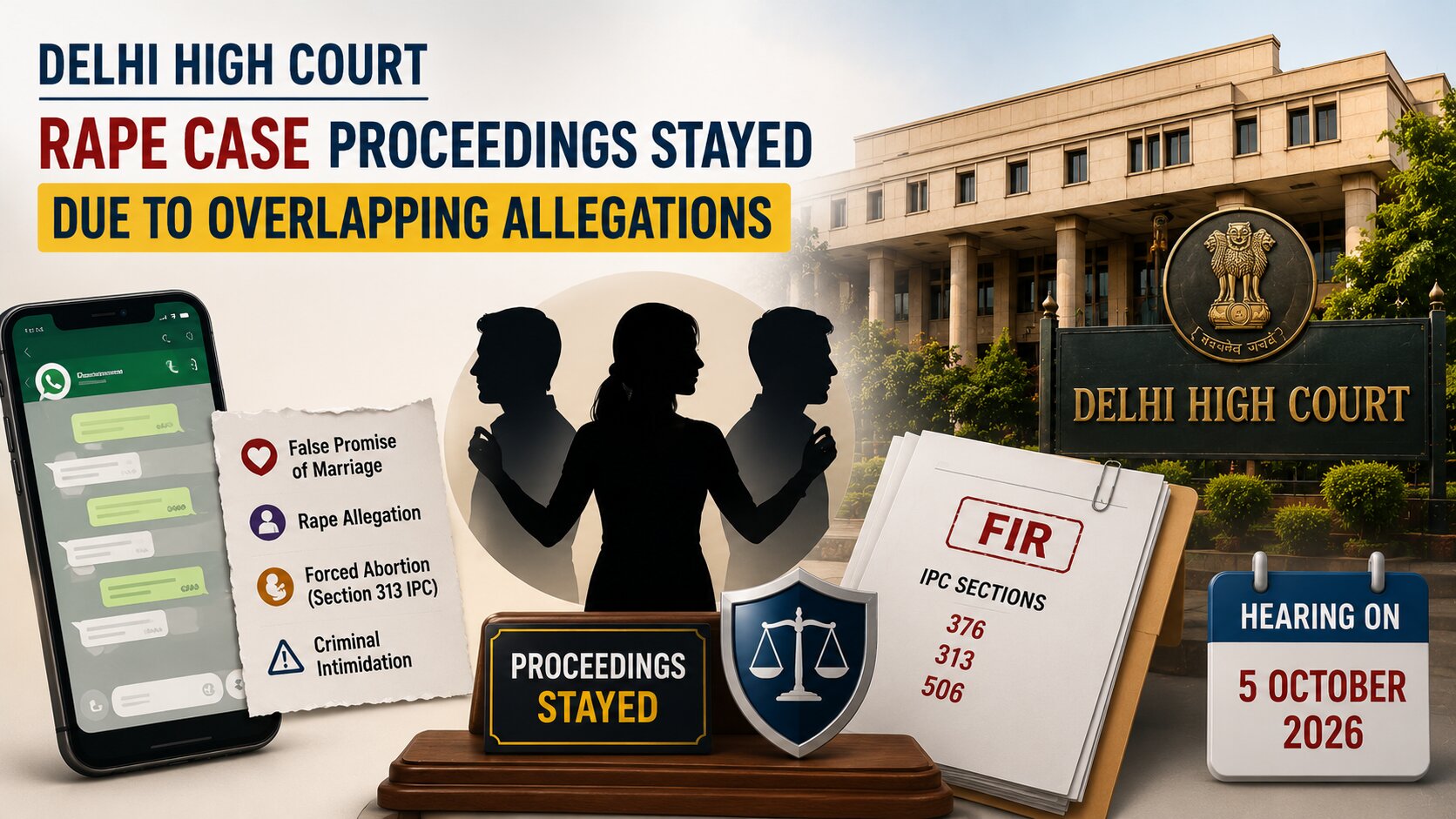
Judgement Details
Court
Delhi High Court
Date of Decision
20 July 2026
Judges
Justice Prateek Jalan
Citation
Acts / Provisions
Facts of the Case
-
The petitioner sought quashing of an FIR registered against him under Sections 376, 313 and 506 IPC.
-
The FIR alleged that the petitioner established a physical relationship on the false promise of marriage between 2018 and 2023.
-
The petitioner contended that the complaint was malicious and motivated.
-
He pointed out that the complainant had lodged four complaints involving sexual allegations against different persons during 2024–2025.
-
Out of those complaints, two resulted in closure reports, while one was settled.
-
The petitioner relied upon another complaint lodged by the same woman in Jaipur against another individual (Sagar Sharma), wherein she alleged that she entered into a physical relationship on the false promise of marriage during substantially the same period (2018–2024).
-
The petitioner argued that it was improbable that the complainant could have simultaneously acted upon false promises of marriage allegedly made by two different individuals during the same period.
-
It was also pointed out that allegations under Section 313 IPC were made in both cases.
-
The petitioner further relied upon an earlier complaint filed by the complainant before the Women Police Station, Rewari, which had ended in a settlement wherein she had agreed to end the relationship, refrain from communication and not file further complaints.
-
Despite the settlement, the present FIR came to be registered nearly two years later.
-
The petitioner approached the Delhi High Court seeking quashing of the FIR and interim protection.
Issues
-
Whether the overlapping allegations of rape on the false promise of marriage against two different persons during the same period created a prima facie doubt requiring judicial examination?
-
Whether simultaneous allegations of acting upon false promises of marriage made by two different individuals affected the credibility of the prosecution case at the interim stage?
-
Whether the facts of the case justified the grant of interim protection by staying the criminal proceedings?
-
Whether the earlier settlement between the petitioner and the complainant was relevant while considering the petition for quashing?
-
Whether the petition disclosed sufficient grounds for consideration under the High Court's inherent jurisdiction?
Judgement
-
The Delhi High Court issued notice on the petition and granted interim relief.
-
The Court observed that the allegations in the present FIR substantially overlapped with allegations made by the complainant in another criminal case filed in Jaipur against another individual.
-
It observed that where a complainant alleges entering into sexual relationships on the false promise of marriage with two different persons during the same period, the matter raises a prima facie doubt requiring judicial scrutiny.
-
The Court held that the issue deserved detailed consideration before permitting the criminal trial to proceed.
-
The Court also noted the petitioner's submission regarding the complainant's multiple complaints against different persons and the outcomes of those proceedings.
-
It took note of the earlier settlement entered into between the petitioner and the complainant before the Women Police Station, Rewari.
-
The Court referred to the Supreme Court decisions in Mahesh Damu Khare v. State of Maharashtra and Samadhan v. State of Maharashtra, reiterating that every failed romantic relationship does not amount to rape merely because it initially involved a promise of marriage.
-
Considering the overall circumstances, the Court stayed the proceedings pending before the Sessions Court.
Held
-
The issue warranted consideration before the criminal trial could proceed.
-
Proceedings before the Sessions Court were stayed.
-
The observations were prima facie and made only for the purpose of granting interim relief.
-
The petition for quashing remains pending for final adjudication.
Analysis
-
The judgment does not decide the merits of the allegations but focuses on whether the circumstances justified interim judicial protection.
-
The Court emphasized that overlapping allegations involving identical promises of marriage during the same period may legitimately require closer scrutiny.
-
By granting interim relief, the Court sought to prevent the continuation of criminal proceedings until the legal issues raised by the petitioner are properly examined.
-
The reliance on Mahesh Damu Khare and Samadhan reinforces the principle that every failed relationship or broken promise of marriage does not automatically constitute rape.
-
The Court carefully avoided making any final findings regarding the truthfulness of the complainant's allegations, leaving those questions for final adjudication.
-
The decision highlights the importance of the High Court's inherent jurisdiction to prevent possible abuse of the criminal process where exceptional circumstances exist.
-
At the same time, the Court merely stayed the proceedings and did not quash the FIR, thereby maintaining a balance between the interests of the accused and the complainant.
-
The judgment illustrates that prima facie inconsistencies in multiple criminal complaints may justify judicial intervention at the interim stage, without prejudging the ultimate outcome.