Parliament Passes Bill to Rename Kerala as ‘Keralam’; President Gives Assent, Name Change Awaits Gazette Notification
Lexpedia News · 12 August 2026 · 20 min read
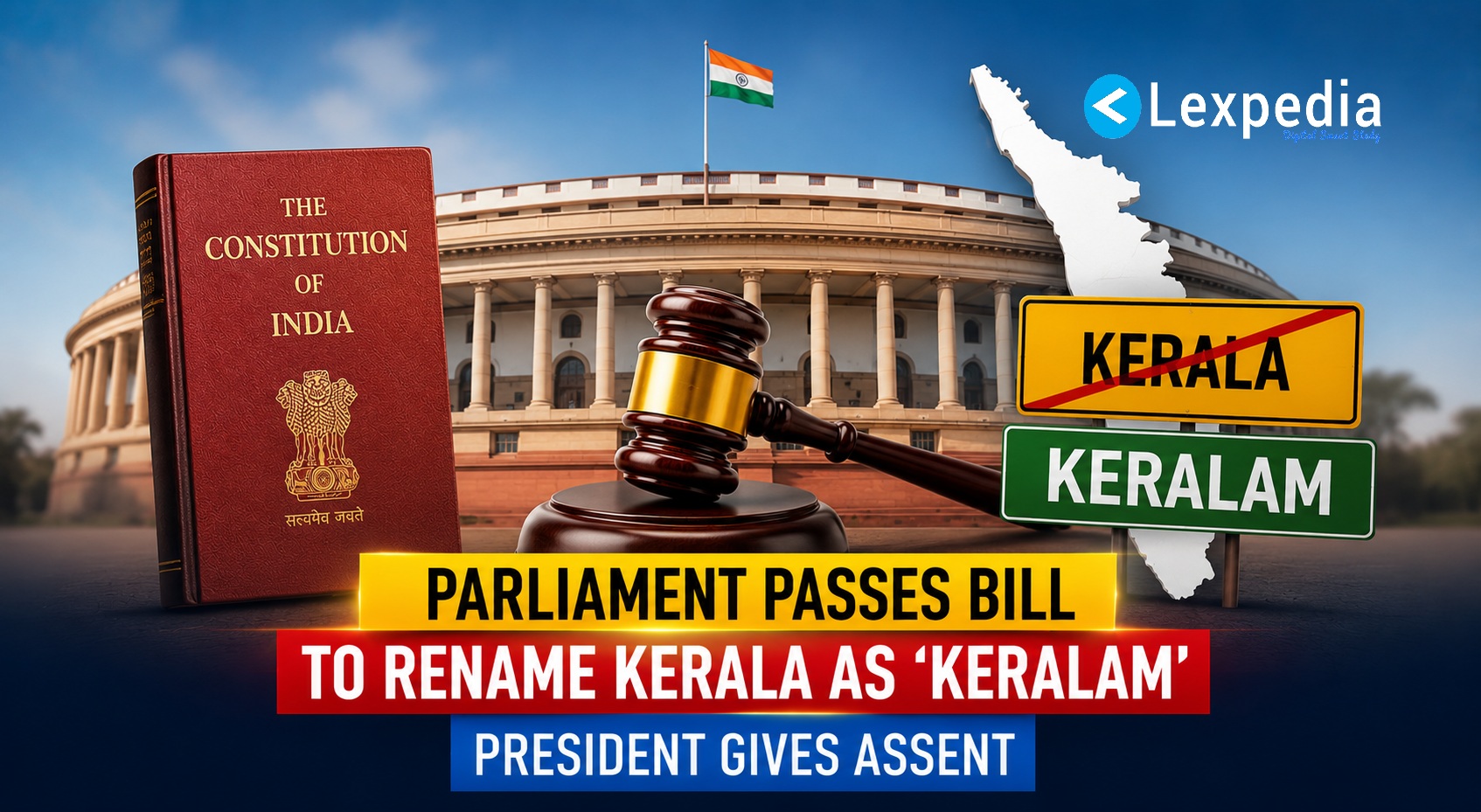
In a significant constitutional and administrative development, Parliament has passed the Kerala (Alteration of Name) Bill, 2026, paving the way for the State of Kerala to be officially known as “Keralam.” The Bill was passed by the Lok Sabha on August 11, 2026, and by the Rajya Sabha on August 12, 2026.
The legislation has since received the assent of President Droupadi Murmu, completing the parliamentary and presidential stages of the process. However, the name change itself is to take effect from a date appointed by the Central Government through an Official Gazette notification. Therefore, while the legislation has become law, the appointed date for the operational change remains an important next step.
The development follows a unanimous resolution of the Kerala Legislative Assembly in June 2024, requesting the Union Government to alter the State's constitutional name from “Kerala” to “Keralam.”
Bill Passed by Both Houses of Parliament
The Kerala (Alteration of Name) Bill, 2026 was introduced in the Lok Sabha on August 10, 2026 by Union Minister of State for Home Nityanand Rai on behalf of the Union Government.
The Lok Sabha passed the Bill on August 11, followed by the Rajya Sabha on August 12. The Rajya Sabha cleared the legislation by voice vote. During the discussion, MPs across political parties broadly supported the proposal, while some members used the occasion to raise demands concerning the renaming of other States, cities and railway stations.
The Bill provides for the necessary constitutional amendments to replace references to “Kerala” with “Keralam” in the relevant provisions.
PRS Legislative Research records the legislative journey as follows: introduction in the Lok Sabha on August 10, passage in the Lok Sabha on August 11 and passage in the Rajya Sabha on August 12.
President Droupadi Murmu Gives Assent
The legislative process moved forward after President Droupadi Murmu gave her assent to the Bill.
With presidential assent, the legislation has become law. However, the Act does not mean that every official document, signboard or government record changes automatically on the date of assent.
The legislation provides for the change to take effect from an “appointed day” notified by the Central Government in the Official Gazette. Until that appointed day is notified, the administrative transition remains to be implemented.
This distinction is important because several reports have described the State as having already been “renamed” immediately after Parliament passed the Bill. Legally, the more precise position is that Parliament has passed the legislation, the President has assented to it, and the operative name change will take effect on the appointed date notified by the Central Government.
Why Is Kerala Being Renamed as Keralam?
The principal reason behind the proposal is to bring the State's official constitutional name in line with its Malayalam name, “Keralam.”
The Kerala Legislative Assembly's June 24, 2024 resolution noted that the State is called “Keralam” in the Malayalam language, while the First Schedule of the Constitution records its name as “Kerala.”
The resolution also referred to the linguistic basis on which States were reorganised and the historical demand for a unified State for Malayalam-speaking people. The Assembly unanimously requested the Union Government to take steps under Article 3 of the Constitution to alter the name to “Keralam.”
The Union Cabinet subsequently approved the proposal on February 24, 2026. The Prime Minister's Office stated at the time that the Cabinet decision reflected the will of the people of Kerala and was intended to strengthen the connection with the State's cultural heritage.
Constitutional Procedure Under Article 3
The renaming of a State is governed by Article 3 of the Constitution of India.
Article 3 empowers Parliament to legislate for:
- formation of new States;
- increase or diminution of the area of a State;
- alteration of the boundaries of a State; and
- alteration of the name of a State.
However, a Bill seeking to alter the name of a State cannot be introduced in either House of Parliament without the recommendation of the President.
Where the proposal affects the name, area or boundaries of a State, the President must refer the Bill to the concerned State Legislature for expressing its views within the period specified in the reference.
The views of the State Legislature are part of the constitutionally prescribed process, but Parliament ultimately exercises the legislative power to enact the change.
Kerala Assembly Had Already Supported the Change
The present legislation follows an earlier resolution passed by the Kerala Legislative Assembly on June 24, 2024.
The Assembly unanimously requested that the name of the State be changed from Kerala to Keralam. The Union Government subsequently processed the proposal through the Ministry of Home Affairs and other relevant governmental departments.
After the President referred the Bill to the State Legislature in 2026, the Kerala Legislative Assembly again unanimously approved the proposal in July 2026.
The July approval was significant because the ruling and opposition parties came together to endorse the Presidential reference concerning the proposed name change.
What Exactly Will Change in the Constitution?
The legislation primarily seeks to alter the constitutional references to the State's name.
The First Schedule of the Constitution, which contains the names and territorial descriptions of the States and Union Territories, will be amended to substitute “Keralam” for “Kerala.”
Reports on the enacted legislation also indicate consequential changes to other constitutional references, including the Fourth Schedule and references to Kerala in Articles 31A and 290A, so that the constitutional terminology corresponds with the new name.
The legislation also contains consequential provisions dealing with references to the State's former name in existing laws and legal or official documents.
Will Existing Laws and Legal Proceedings Become Invalid?
No.
A change in the name of a State does not ordinarily invalidate its existing laws, court proceedings, contracts, government orders or other legal instruments merely because they contain the earlier name.
The legislation contains consequential provisions intended to ensure continuity. References to “Kerala” in existing legal and official material will, after the name change takes effect, be read in accordance with the new legal name “Keralam.”
The legislation also enables the appropriate government to make adaptations or modifications to existing laws for the purpose of giving effect to the name change.
Thus, the renaming is essentially a constitutional and administrative change in nomenclature, rather than the creation of a new State.
What About Government Offices and Documents?
Once the appointed date is notified, the name change is expected to have consequences across government administration.
Government departments, official websites, statutory authorities, boards, corporations and other institutions may have to update references to the State.
This could eventually include:
- government stationery and letterheads;
- official seals and signboards;
- government websites and mobile applications;
- certificates and official records;
- statutory notifications;
- public-sector institutions;
- government boards and corporations;
- maps and official publications; and
- other administrative material.
The transition is expected to occur progressively rather than requiring every reference to be changed simultaneously on the date of presidential assent.
A Linguistic and Cultural Change
The proposed change is principally rooted in linguistic and cultural identity.
“Keralam” is the name commonly used for the State in Malayalam, while “Kerala” has been the English constitutional name.
The Union Government has presented the move as recognition of the State's cultural and linguistic identity. The Prime Minister's Office, while announcing the Cabinet decision, said the proposal reflected the will of the people of the State and was consistent with efforts to strengthen the connection with India's cultural heritage.
What Happened During the Parliamentary Debate?
The Bill received broad support in Parliament.
During the Rajya Sabha discussion, MPs from different political parties welcomed the change. Some members, however, used the debate to raise other pending or proposed name-change demands.
Among the demands reported during the discussion were proposals relating to West Bengal, Patna and other places.
The Union Government indicated that other name-change proposals could be considered through the established legal and administrative process.
The discussion therefore also brought the broader issue of renaming States and places in India into the parliamentary spotlight.
How Does the Change Compare With Earlier State Renamings?
India has previously changed the names of several States.
Notable examples include:
- United Provinces → Uttar Pradesh in 1950;
- Madhya Bharat and other territorial changes during the reorganisation of States;
- Uttaranchal → Uttarakhand in 2006; and
- Orissa → Odisha in 2011.
The Kerala-Keralam change is different in one important respect: it is primarily intended to align the constitutional English name with the State's Malayalam name, rather than creating an entirely new territorial or political entity.
Does Kerala Become a New State?
No.
The legislation does not create a new State and does not alter Kerala's territory, boundaries, capital, legislative structure or constitutional status as a State of India.
It changes the official name of the existing State.
The constitutional power being exercised is therefore the power under Article 3(e) to alter the name of an existing State.
What Happens Next?
The next key step is the issuance of an Official Gazette notification appointing the date from which the name change will take effect.
Until that appointed date is notified, the legal transition is not yet fully operational across government administration.
Once the appointed day comes into force, the State will officially use “Keralam” in constitutional, statutory and governmental references, subject to the transitional provisions contained in the legislation.
The government will then have to implement the corresponding administrative changes across its departments and institutions.
Legal Significance
From a constitutional law perspective, the development is significant because it demonstrates the operation of Article 3 in changing the name of an existing State.
The process also illustrates the constitutional relationship between the Union Government, President and State Legislature in matters concerning alteration of a State's name.
The State Legislature initiates the political demand through a resolution, the Union Government processes the proposal, the President refers the Bill to the State Legislature for its views, and Parliament ultimately exercises its legislative authority to enact the change.
The Kerala case is notable for the unanimous support at the State level and the relatively broad parliamentary acceptance of the proposal.
Current Legal Status: Kerala or Keralam?
As of August 19, 2026, the most accurate description is:
The Kerala (Alteration of Name) Bill, 2026 has been passed by both Houses of Parliament and has received Presidential assent. The legislation provides for the State to be known as “Keralam” from an appointed date to be notified by the Central Government in the Official Gazette.
Therefore, headlines stating that Parliament has “passed the Bill to rename Kerala as Keralam” are accurate. However, stating that the State has already completed every administrative aspect of the name change would be premature until the appointed-day notification is issued.
Key Dates
June 24, 2024: Kerala Legislative Assembly unanimously passed a resolution seeking the name change.
February 24, 2026: Union Cabinet approved the proposal to change Kerala's name to Keralam.
June 17, 2026: President referred the Bill to the Kerala Legislative Assembly for its views.
July 2026: Kerala Legislative Assembly unanimously approved the Presidential reference.
August 10, 2026: Kerala (Alteration of Name) Bill, 2026 introduced in Lok Sabha.
August 11, 2026: Lok Sabha passed the Bill.
August 12, 2026: Rajya Sabha passed the Bill by voice vote.
August 2026: President Droupadi Murmu gave assent to the legislation.
Next step: Central Government to notify the appointed date for the name change through the Official Gazette.
Conclusion
The passage and Presidential assent to the Kerala (Alteration of Name) legislation mark the culmination of a process that began with the Kerala Assembly's unanimous resolution in 2024.
The change from “Kerala” to “Keralam” is primarily a linguistic and cultural correction intended to align the State's constitutional name with its Malayalam identity.
While the legislative process is now substantially complete, the appointed-day Gazette notification remains crucial for determining when the new name becomes operational for official and legal purposes.
संसद ने ‘केरल’ का नाम बदलकर ‘केरलम’ करने वाला विधेयक पारित किया; राष्ट्रपति की मंजूरी के बाद अब Gazette Notification का इंतजार
एक महत्वपूर्ण संवैधानिक और प्रशासनिक घटनाक्रम में संसद ने Kerala (Alteration of Name) Bill, 2026 को पारित कर दिया है, जिससे केरल का आधिकारिक नाम “केरलम” किए जाने का रास्ता साफ हो गया है। विधेयक को 11 अगस्त 2026 को लोकसभा और 12 अगस्त 2026 को राज्यसभा ने पारित किया।
इसके बाद राष्ट्रपति द्रौपदी मुर्मू ने विधेयक को मंजूरी दे दी, जिससे संसदीय और राष्ट्रपति स्तर की प्रक्रिया पूरी हो गई है। हालांकि, नाम परिवर्तन तुरंत प्रशासनिक रूप से लागू नहीं होगा। कानून के अनुसार यह परिवर्तन उस तारीख से प्रभावी होगा जिसे केंद्र सरकार Official Gazette में अधिसूचित करेगी। इसलिए कानून बन जाने के बावजूद इसके लागू होने की तारीख की आधिकारिक अधिसूचना अभी महत्वपूर्ण अगला कदम है।
यह घटनाक्रम जून 2024 में केरल विधानसभा द्वारा सर्वसम्मति से पारित प्रस्ताव के बाद सामने आया है, जिसमें केंद्र सरकार से राज्य का संवैधानिक नाम “Kerala” से बदलकर “Keralam” करने का अनुरोध किया गया था।
संसद के दोनों सदनों ने पारित किया विधेयक
Kerala (Alteration of Name) Bill, 2026 को केंद्रीय गृह राज्य मंत्री नित्यानंद राय ने 10 अगस्त 2026 को लोकसभा में पेश किया।
लोकसभा ने इसे 11 अगस्त को पारित किया, जबकि राज्यसभा ने 12 अगस्त को विधेयक को मंजूरी दी। राज्यसभा में विधेयक voice vote से पारित हुआ।
चर्चा के दौरान विभिन्न राजनीतिक दलों के सांसदों ने broadly प्रस्ताव का समर्थन किया। हालांकि, कुछ सांसदों ने इसी अवसर पर अन्य राज्यों, शहरों और रेलवे स्टेशनों के नाम बदलने से संबंधित मांगें भी उठाईं।
विधेयक में संविधान के संबंधित प्रावधानों में आवश्यक संशोधन करके “Kerala” के स्थान पर “Keralam” करने का प्रावधान किया गया है।
PRS Legislative Research के अनुसार विधेयक 10 अगस्त को लोकसभा में पेश हुआ, 11 अगस्त को लोकसभा से और 12 अगस्त को राज्यसभा से पारित हुआ।
राष्ट्रपति द्रौपदी मुर्मू ने दी मंजूरी
विधायी प्रक्रिया आगे बढ़ते हुए तब पूरी हुई जब राष्ट्रपति द्रौपदी मुर्मू ने विधेयक को अपनी मंजूरी दे दी।
राष्ट्रपति की मंजूरी के बाद यह विधेयक कानून बन गया है। हालांकि, इसका यह अर्थ नहीं है कि राष्ट्रपति की मंजूरी की तारीख से ही प्रत्येक सरकारी दस्तावेज, बोर्ड या रिकॉर्ड में नाम तुरंत बदल जाएगा।
कानून में यह व्यवस्था है कि नाम परिवर्तन एक “appointed day” से प्रभावी होगा, जिसे केंद्र सरकार Official Gazette में अधिसूचित करेगी।
इसलिए कानूनी रूप से अधिक सटीक स्थिति यह है कि संसद ने कानून पारित कर दिया है, राष्ट्रपति ने इसे मंजूरी दे दी है और अब केंद्र सरकार को अधिसूचना जारी कर वह तारीख तय करनी है, जिस दिन से नाम परिवर्तन प्रभावी होगा।
केरल का नाम ‘केरलम’ क्यों किया जा रहा है?
नाम परिवर्तन का मुख्य उद्देश्य राज्य के आधिकारिक संवैधानिक नाम को उसके मलयालम नाम “Keralam” के अनुरूप करना है।
24 जून 2024 को केरल विधानसभा द्वारा पारित प्रस्ताव में कहा गया था कि मलयालम भाषा में राज्य का नाम “Keralam” है, जबकि संविधान की First Schedule में इसका नाम “Kerala” दर्ज है।
विधानसभा के प्रस्ताव में यह भी उल्लेख किया गया कि भारत में भाषाई आधार पर राज्यों के पुनर्गठन के संदर्भ में मलयालम भाषी लोगों के लिए एकीकृत राज्य की मांग का ऐतिहासिक महत्व रहा है। विधानसभा ने सर्वसम्मति से केंद्र सरकार से संविधान के Article 3 के तहत नाम बदलने की प्रक्रिया शुरू करने का अनुरोध किया था।
इसके बाद 24 फरवरी 2026 को केंद्रीय मंत्रिमंडल ने केरल का नाम बदलकर केरलम करने के प्रस्ताव को मंजूरी दी। प्रधानमंत्री कार्यालय ने उस समय कहा था कि यह निर्णय राज्य के लोगों की इच्छा और भारत की सांस्कृतिक विरासत से जुड़ाव को मजबूत करने की दिशा में है।
संविधान के Article 3 के तहत प्रक्रिया
किसी राज्य का नाम बदलने की संवैधानिक शक्ति Article 3 of the Constitution of India में निहित है।
Article 3 संसद को निम्नलिखित के संबंध में कानून बनाने की शक्ति देता है:
- नए राज्यों का गठन;
- किसी राज्य का क्षेत्र बढ़ाना;
- किसी राज्य का क्षेत्र कम करना;
- राज्य की सीमाओं में परिवर्तन; और
- किसी राज्य का नाम बदलना।
हालांकि, राज्य का नाम बदलने वाला विधेयक संसद के किसी भी सदन में राष्ट्रपति की recommendation के बिना पेश नहीं किया जा सकता।
यदि प्रस्ताव किसी राज्य के नाम, क्षेत्र या सीमा को प्रभावित करता है, तो राष्ट्रपति को संबंधित राज्य की विधानसभा को विधेयक भेजकर उसके विचार प्राप्त करने होते हैं।
राज्य विधानसभा के विचार संवैधानिक प्रक्रिया का अनिवार्य हिस्सा हैं, लेकिन अंतिम कानून बनाने की शक्ति संसद के पास रहती है।
केरल विधानसभा पहले ही दे चुकी थी समर्थन
वर्तमान कानून की पृष्ठभूमि में 24 जून 2024 को केरल विधानसभा द्वारा पारित सर्वसम्मत प्रस्ताव महत्वपूर्ण है।
विधानसभा ने केंद्र सरकार से राज्य का नाम Kerala से Keralam करने का अनुरोध किया था। इसके बाद केंद्र सरकार ने गृह मंत्रालय और अन्य संबंधित विभागों के माध्यम से प्रस्ताव पर प्रक्रिया आगे बढ़ाई।
2026 में राष्ट्रपति द्वारा विधेयक को राज्य विधानसभा के पास भेजे जाने के बाद केरल विधानसभा ने फिर से सर्वसम्मति से प्रस्ताव का समर्थन किया।
जुलाई 2026 का यह समर्थन विशेष रूप से महत्वपूर्ण था क्योंकि ruling और opposition दोनों पक्षों ने राष्ट्रपति के reference से संबंधित प्रस्ताव का समर्थन किया।
संविधान में क्या बदलेगा?
विधेयक का मुख्य उद्देश्य संविधान में राज्य के नाम से संबंधित प्रावधानों को बदलना है।
संविधान की First Schedule, जिसमें राज्यों और केंद्र शासित प्रदेशों के नाम तथा उनके क्षेत्र का विवरण दिया गया है, में “Kerala” के स्थान पर “Keralam” किया जाएगा।
रिपोर्टों के अनुसार कानून में Fourth Schedule तथा संविधान के Articles 31A और 290A में मौजूद संबंधित संदर्भों में भी आवश्यक consequential changes किए गए हैं, ताकि संविधान में राज्य का नाम समान रूप से “Keralam” हो।
क्या पुराने कानून और न्यायिक कार्यवाही समाप्त हो जाएंगी?
नहीं।
राज्य का नाम बदलने से उसके पुराने कानून, अदालतों में लंबित मामले, सरकारी आदेश, अनुबंध या अन्य कानूनी दस्तावेज केवल इसलिए अमान्य नहीं हो जाएंगे क्योंकि उनमें पुराने नाम “Kerala” का उल्लेख है।
कानून में आवश्यक consequential provisions शामिल किए गए हैं ताकि पुराने कानूनी और आधिकारिक संदर्भों में “Kerala” को नाम परिवर्तन लागू होने के बाद नए नाम “Keralam” के अनुरूप पढ़ा जा सके।
कानून सरकार को मौजूदा कानूनों में आवश्यक adaptations और modifications करने की अनुमति भी देता है।
इसलिए यह परिवर्तन मुख्यतः संवैधानिक और प्रशासनिक nomenclature में बदलाव है, न कि किसी नए राज्य के निर्माण की प्रक्रिया।
सरकारी कार्यालयों और दस्तावेजों पर क्या असर पड़ेगा?
जब केंद्र सरकार appointed date अधिसूचित कर देगी, उसके बाद सरकारी प्रशासन में कई स्तरों पर नाम परिवर्तन लागू किया जाएगा।
संभावित रूप से निम्नलिखित में बदलाव किए जाएंगे:
- सरकारी stationery और letterheads;
- सरकारी seals और signboards;
- सरकारी websites और mobile applications;
- certificates और official records;
- statutory notifications;
- public-sector institutions;
- सरकारी boards और corporations;
- maps और official publications; तथा
- अन्य administrative documents।
यह परिवर्तन संभवतः चरणबद्ध तरीके से लागू होगा और राष्ट्रपति की मंजूरी के दिन ही हर सरकारी रिकॉर्ड में बदलाव करना आवश्यक नहीं होगा।
भाषाई और सांस्कृतिक पहचान से जुड़ा बदलाव
यह नाम परिवर्तन मुख्य रूप से भाषाई और सांस्कृतिक पहचान से जुड़ा है।
मलयालम में राज्य को सामान्यतः “Keralam” कहा जाता है, जबकि अंग्रेजी में संविधान में “Kerala” नाम दर्ज है।
केंद्र सरकार ने इस बदलाव को राज्य की भाषाई और सांस्कृतिक पहचान को मान्यता देने के रूप में प्रस्तुत किया है। प्रधानमंत्री कार्यालय ने फरवरी में कैबिनेट के निर्णय की जानकारी देते हुए कहा था कि यह फैसला राज्य के लोगों की इच्छा को दर्शाता है और देश की सांस्कृतिक विरासत के साथ जुड़ाव को मजबूत करने की दिशा में है।
संसद में चर्चा के दौरान क्या हुआ?
विधेयक को संसद में व्यापक समर्थन मिला।
राज्यसभा में विभिन्न राजनीतिक दलों के सांसदों ने नाम परिवर्तन का समर्थन किया। हालांकि, कुछ सदस्यों ने इस दौरान West Bengal, Patna और अन्य स्थानों के नाम बदलने से संबंधित मांगें भी उठाईं।
केंद्र सरकार की ओर से कहा गया कि अन्य नाम परिवर्तन प्रस्तावों पर भी निर्धारित कानूनी और प्रशासनिक प्रक्रिया के अनुसार विचार किया जा सकता है।
इस प्रकार इस विधेयक की चर्चा ने भारत में राज्यों और स्थानों के नाम बदलने के व्यापक प्रश्न को भी संसद में चर्चा के केंद्र में ला दिया।
पहले भी बदले जा चुके हैं राज्यों के नाम
भारत में पहले भी कई राज्यों के नाम बदले गए हैं।
प्रमुख उदाहरण हैं:
- United Provinces → Uttar Pradesh — 1950;
- Uttaranchal → Uttarakhand — 2006;
- Orissa → Odisha — 2011।
Kerala से Keralam का परिवर्तन इस अर्थ में अलग है कि इसका मुख्य उद्देश्य राज्य के संवैधानिक अंग्रेजी नाम को उसके स्थानीय मलयालम नाम के अनुरूप करना है।
क्या ‘केरलम’ एक नया राज्य होगा?
नहीं।
इस कानून से कोई नया राज्य नहीं बन रहा है और न ही राज्य के क्षेत्र, सीमाओं, राजधानी, विधानसभा या भारत के एक राज्य के रूप में संवैधानिक दर्जे में कोई बदलाव किया जा रहा है।
केवल मौजूदा राज्य के आधिकारिक नाम में बदलाव किया जा रहा है।
इसलिए यह Article 3 के तहत मौजूदा राज्य का नाम बदलने की शक्ति का प्रयोग है।
अब आगे क्या होगा?
अब सबसे महत्वपूर्ण अगला कदम केंद्र सरकार द्वारा Official Gazette में appointed date की अधिसूचना जारी करना है।
उस तारीख तक नाम परिवर्तन की पूरी प्रशासनिक प्रक्रिया लागू नहीं होगी।
जब appointed day प्रभावी हो जाएगा, तब संवैधानिक, वैधानिक और सरकारी संदर्भों में राज्य का आधिकारिक नाम “Keralam” होगा।
इसके बाद केंद्र और राज्य सरकार को विभिन्न विभागों और संस्थानों में संबंधित प्रशासनिक बदलाव लागू करने होंगे।
संवैधानिक महत्व
संवैधानिक कानून की दृष्टि से यह घटनाक्रम महत्वपूर्ण है क्योंकि यह दिखाता है कि Article 3 के तहत संसद किस प्रकार किसी मौजूदा राज्य का नाम बदल सकती है।
यह प्रक्रिया Union Government, President और State Legislature के बीच संवैधानिक संबंधों को भी स्पष्ट करती है।
राज्य विधानसभा राजनीतिक मांग के रूप में प्रस्ताव पारित करती है, केंद्र सरकार प्रस्ताव पर प्रक्रिया आगे बढ़ाती है, राष्ट्रपति संबंधित राज्य विधानसभा से विचार मांगते हैं और अंततः संसद अपने विधायी अधिकार का प्रयोग करते हुए नाम परिवर्तन को कानून का रूप देती है।
Kerala का मामला इसलिए भी महत्वपूर्ण है क्योंकि राज्य स्तर पर इसे सर्वसम्मति से समर्थन मिला और संसद में भी प्रस्ताव को व्यापक राजनीतिक समर्थन प्राप्त हुआ।
वर्तमान कानूनी स्थिति: Kerala या Keralam?
19 अगस्त 2026 तक सबसे सटीक कानूनी स्थिति यह है:
Kerala (Alteration of Name) Bill, 2026 संसद के दोनों सदनों से पारित हो चुका है और राष्ट्रपति की मंजूरी प्राप्त कर चुका है। कानून के अनुसार राज्य का नाम “Keralam” उस appointed date से प्रभावी होगा जिसे केंद्र सरकार Official Gazette में अधिसूचित करेगी।
इसलिए यह कहना सही है कि संसद ने Kerala का नाम Keralam करने वाला Bill पारित कर दिया है। लेकिन यह कहना कि नाम परिवर्तन से संबंधित प्रत्येक प्रशासनिक प्रक्रिया पहले ही पूरी हो चुकी है, तब तक सही नहीं होगा जब तक केंद्र सरकार appointed date की अधिसूचना जारी नहीं करती।
महत्वपूर्ण तारीखें
24 जून 2024: केरल विधानसभा ने राज्य का नाम बदलने के लिए सर्वसम्मत प्रस्ताव पारित किया।
24 फरवरी 2026: केंद्रीय मंत्रिमंडल ने Kerala से Keralam नाम परिवर्तन के प्रस्ताव को मंजूरी दी।
17 जून 2026: राष्ट्रपति ने विधेयक को केरल विधानसभा के विचार के लिए भेजा।
जुलाई 2026: केरल विधानसभा ने राष्ट्रपति के reference को सर्वसम्मति से मंजूरी दी।
10 अगस्त 2026: Kerala (Alteration of Name) Bill, 2026 लोकसभा में पेश हुआ।
11 अगस्त 2026: लोकसभा ने विधेयक पारित किया।
12 अगस्त 2026: राज्यसभा ने विधेयक को voice vote से पारित किया।
अगस्त 2026: राष्ट्रपति द्रौपदी मुर्मू ने विधेयक को मंजूरी दी।
अगला चरण: केंद्र सरकार द्वारा Official Gazette में appointed date की अधिसूचना जारी की जाएगी।
निष्कर्ष
Kerala (Alteration of Name) legislation का संसद से पारित होना और राष्ट्रपति की मंजूरी मिलना उस प्रक्रिया का महत्वपूर्ण चरण है, जिसकी शुरुआत 2024 में केरल विधानसभा के सर्वसम्मत प्रस्ताव से हुई थी।
“Kerala” से “Keralam” नाम परिवर्तन मुख्यतः एक भाषाई और सांस्कृतिक बदलाव है, जिसका उद्देश्य राज्य के संवैधानिक नाम को उसके मलयालम नाम के अनुरूप करना है।
हालांकि विधायी प्रक्रिया अब लगभग पूरी हो चुकी है, लेकिन appointed-day Gazette notification यह निर्धारित करने के लिए महत्वपूर्ण होगी कि नया नाम आधिकारिक और कानूनी रूप से कब से प्रभावी होगा।