BCI Bars 'Day in Chamber' & 'Lawyer Life' Reels: Mandatory Digital Ethics Code Issued for Law Students and Interns
Lexpedia News · 18 July 2026 · 10 min read
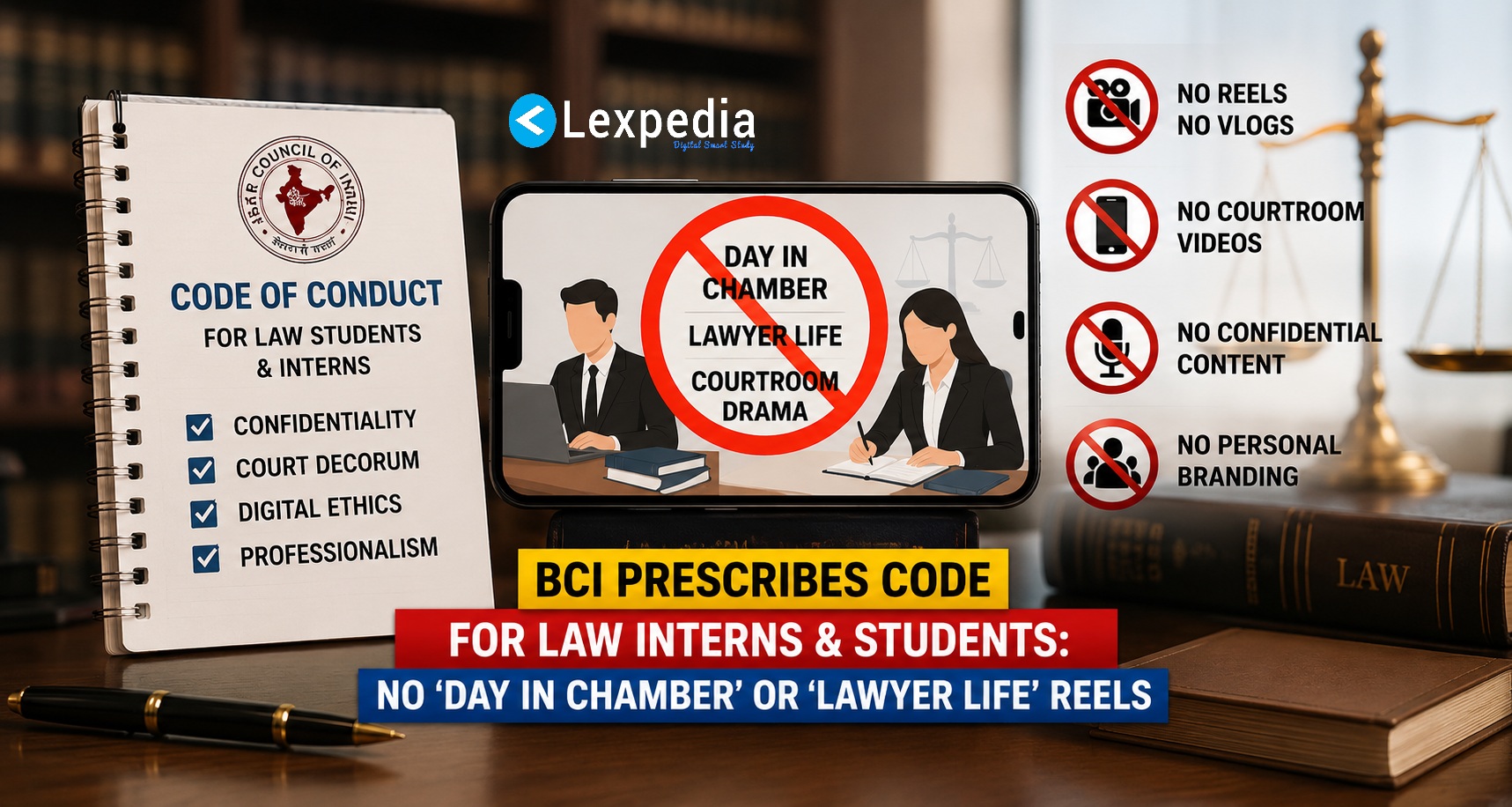
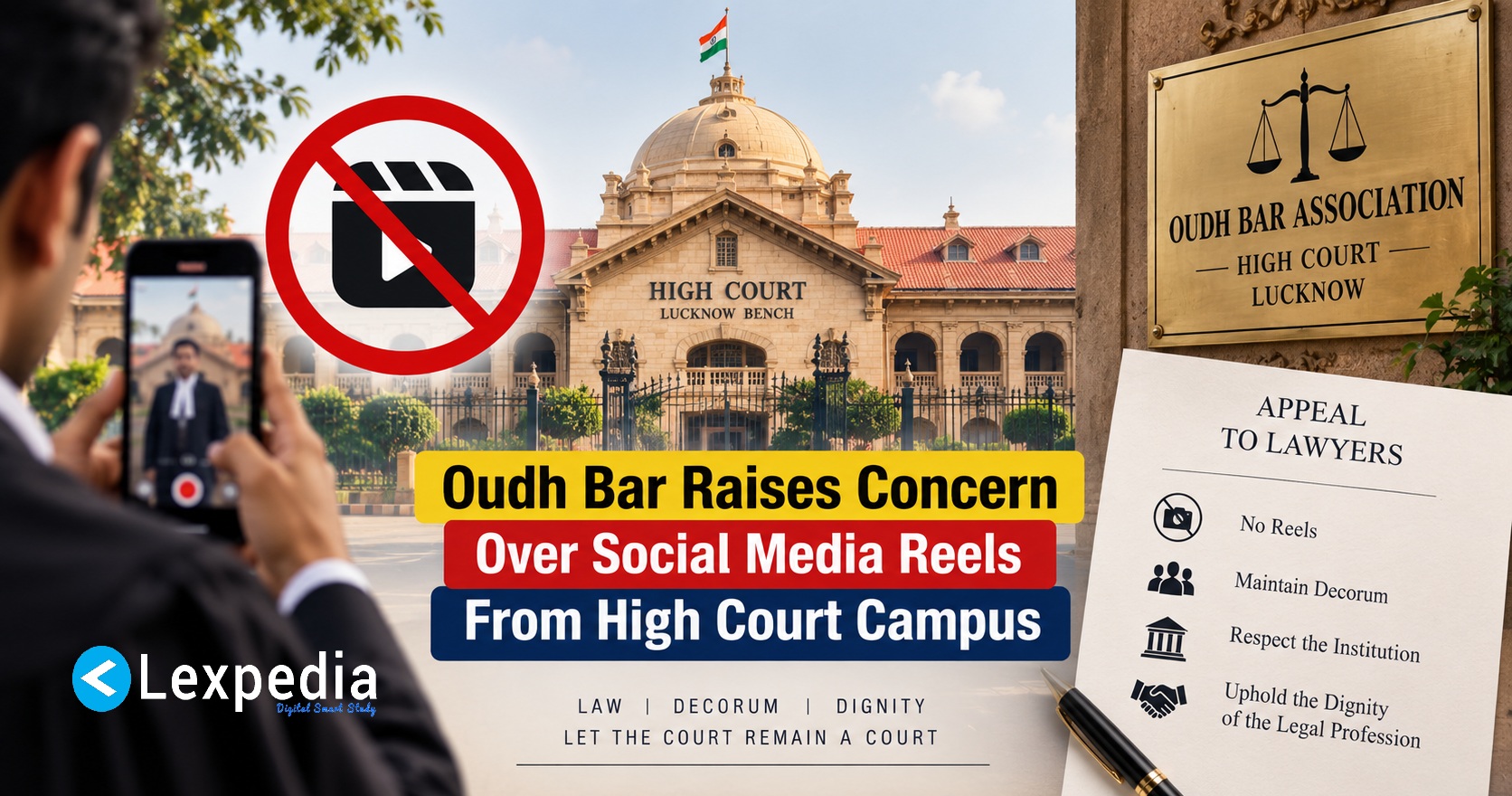
In a landmark move aimed at protecting the dignity of the legal profession, client confidentiality, and the sanctity of court proceedings, the Bar Council of India (BCI) has issued a comprehensive Code of Conduct for law students and interns, placing strict restrictions on the manner in which they may use social media during internships. The Council has specifically prohibited popular social media trends such as "Day in Chamber," "Lawyer Life," "Courtroom Drama," and similar reels or vlogs that portray internship experiences or court-related activities for online engagement. The directions form part of the BCI's wider 37-page Circular regulating social media usage by advocates, law students, interns, and legal educators, issued on July 17, 2026.
The BCI observed that internships are intended to inculcate discipline, legal research skills, drafting ability, court craft, humility, professional ethics and responsibility, and not to create opportunities for social media branding or digital popularity. According to the Council, the growing practice of recording internship experiences, filming inside court premises and projecting professional associations through short-form videos has the potential to compromise confidentiality and diminish public confidence in the justice delivery system.
The circular introduces one of the most significant compliance measures for legal education institutions by making it mandatory for every law student to execute a written undertaking before undertaking any internship. In addition, every Centre of Legal Education has been directed to obtain a separate standardized undertaking from every student at the time of admission to LL.B., LL.M., Ph.D., diploma, certificate and other law-related programmes. These undertakings will form part of the student's institutional record and are intended to ensure compliance with professional ethics and digital conduct standards throughout legal education.
Under the new Code, interns and law students have been expressly prohibited from recording, photographing or publishing content relating to court proceedings, virtual hearings, client conferences, chamber discussions, legal research, pleadings, briefs, case files, judicial data, court visits, law offices and chambers, unless specifically authorised under applicable court rules or with written permission where required. The BCI has clarified that access obtained during internships is solely for educational purposes and cannot be converted into social media content.
The Council has also barred students from uploading photographs or videos revealing courtrooms, judges, advocates, client documents, chamber interiors, legal files or confidential work. Even where such material appears harmless, the BCI has cautioned that it may violate professional confidentiality or adversely affect the dignity of judicial institutions.
One of the most notable features of the circular is the specific prohibition against content popularly known on social media as "Day in Court," "Day in Chamber," "Internship Reveal," "Case File," "Courtroom Drama," or "Lawyer Life." According to the BCI, such content often trivialises judicial work and transforms legal training into entertainment, thereby undermining the seriousness of the profession. The Council has therefore directed interns not to create reels, vlogs or posts suggesting privileged access to judges, senior advocates, confidential legal work or court proceedings.
The circular further prohibits interns from using internships under Judges, Advocates, Senior Advocates, Tribunals, Law Officers, Government Authorities, Law Firms or Public Authorities as a means of personal branding or follower generation on digital platforms. Posting photographs in advocate robes, court buildings, court corridors or chambers in a manner inconsistent with professional decorum has also been prohibited.
Recognising the growing misuse of Artificial Intelligence (AI), the BCI has extended the Code to prohibit interns from creating or circulating AI-generated images, deepfakes, synthetic videos, manipulated audio, face-swapped visuals or voice-cloned content depicting judges, advocates, litigants, witnesses or court proceedings. The Council has expressed concern that such content may mislead the public, damage institutional credibility and compromise the integrity of the justice delivery system.
The circular places particular emphasis on professional confidentiality. Referring to the Supreme Court's 2025 judgment in In Re: Summoning Advocates Who Give Legal Opinion Or Represent Parties During Investigation Of Cases and the protection accorded under Section 132 of the Bharatiya Sakshya Adhiniyam, 2023, the BCI reiterated that privileged communications between advocates and clients are legally protected. If investigative agencies themselves cannot compel disclosure of privileged communications in ordinary circumstances, interns, juniors, associates, clerks and support staff certainly cannot record or publicise chamber discussions, client interactions, pleadings, drafts or litigation strategy through social media.
To strengthen institutional compliance, the BCI has directed all Law Universities, Law Colleges and Centres of Legal Education to introduce compulsory modules on Digital Ethics, Court Decorum, Confidentiality and Professional Responsibility as part of legal education. Educational institutions have also been instructed to maintain registers of undertakings executed by students and organise awareness programmes regarding ethical use of social media. Internship coordinators, Bar Associations, law firms and chambers have similarly been advised to develop internal protocols preventing unauthorised recording, photography or circulation of confidential legal material. Senior advocates have also been encouraged to mentor interns regarding ethical digital conduct.
The BCI has clarified that the circular should not be treated as a routine advisory but as a serious regulatory framework intended to preserve the credibility of the legal profession in the digital era. The move comes at a time when the Supreme Court of India is also examining a Public Interest Litigation seeking regulation of advocates' use of social media for advertising and client solicitation. While that matter remains pending and no final judicial determination has yet been delivered, the present circular constitutes an administrative and professional code issued by the statutory regulator governing the legal profession.
Legal experts believe the new Code marks one of the most comprehensive attempts by the Bar Council of India to regulate digital behaviour within the legal profession. By extending ethical obligations to law students even before they enter practice, the BCI seeks to ensure that professional responsibility, confidentiality and respect for judicial institutions remain fundamental values throughout legal education and beyond.
बार काउंसिल ऑफ इंडिया ने 'Day in Chamber' और 'Lawyer Life' रील्स पर लगाई रोक: विधि छात्रों और इंटर्न के लिए अनिवार्य डिजिटल आचार संहिता जारी
बार काउंसिल ऑफ इंडिया (BCI) ने कानूनी पेशे की गरिमा, मुवक्किलों की गोपनीयता तथा न्यायालयों की मर्यादा को सुरक्षित रखने के उद्देश्य से विधि छात्रों एवं इंटर्न के लिए एक व्यापक डिजिटल आचार संहिता (Code of Conduct) जारी की है। इस नई व्यवस्था के तहत इंटर्नशिप के दौरान सोशल मीडिया पर लोकप्रिय हो चुके "Day in Chamber", "Lawyer Life", "Courtroom Drama", "Internship Reveal" जैसे रील्स, व्लॉग और अन्य प्रचारात्मक सामग्री बनाने पर स्पष्ट रोक लगा दी गई है। ये दिशा-निर्देश 17 जुलाई 2026 को जारी BCI के 37 पृष्ठों के व्यापक परिपत्र का हिस्सा हैं, जो अधिवक्ताओं, विधि छात्रों, इंटर्न तथा विधि शिक्षकों के सोशल मीडिया उपयोग को विनियमित करता है।
BCI ने कहा है कि इंटर्नशिप का उद्देश्य छात्रों में अनुशासन, कानूनी अनुसंधान, ड्राफ्टिंग कौशल, न्यायालयीन कार्यप्रणाली की समझ, विनम्रता, पेशेवर नैतिकता और उत्तरदायित्व विकसित करना है, न कि सोशल मीडिया पर लोकप्रियता या व्यक्तिगत ब्रांडिंग प्राप्त करना। परिषद ने यह भी कहा कि अदालतों, चैंबरों और कानूनी कार्य से जुड़े वीडियो या रील्स बनाना न्याय प्रणाली में जनता के विश्वास को प्रभावित कर सकता है तथा पेशेवर गोपनीयता का उल्लंघन कर सकता है।
परिपत्र के अनुसार अब प्रत्येक विधि छात्र को किसी भी इंटर्नशिप पर जाने से पहले लिखित घोषणा-पत्र (Undertaking) देना अनिवार्य होगा। इसके अतिरिक्त प्रत्येक LL.B., LL.M., Ph.D., डिप्लोमा, सर्टिफिकेट तथा अन्य विधि पाठ्यक्रमों में प्रवेश के समय भी छात्रों से अलग से मानकीकृत घोषणा-पत्र लिया जाएगा। यह घोषणा-पत्र संस्थान के रिकॉर्ड का स्थायी हिस्सा रहेगा और छात्र की डिजिटल एवं पेशेवर आचार संहिता के पालन की जिम्मेदारी सुनिश्चित करेगा।
नई आचार संहिता के तहत विधि छात्रों एवं इंटर्न को न्यायालय की कार्यवाही, वर्चुअल सुनवाई, मुवक्किलों की बैठक, चैंबर चर्चा, कानूनी शोध, केस फाइल, प्लीडिंग, ब्रीफ, न्यायिक अभिलेख, न्यायालय भ्रमण, विधि कार्यालय अथवा चैंबर से संबंधित किसी भी सामग्री का रिकॉर्डिंग, फोटोग्राफी अथवा प्रकाशन करने से प्रतिबंधित किया गया है, जब तक कि संबंधित न्यायालय के नियमों या सक्षम प्राधिकारी द्वारा स्पष्ट अनुमति न दी गई हो। BCI ने स्पष्ट किया है कि इंटर्नशिप के दौरान प्राप्त पहुंच केवल शिक्षण एवं प्रशिक्षण के उद्देश्य से होती है, न कि सोशल मीडिया सामग्री तैयार करने के लिए।
परिषद ने छात्रों को न्यायाधीशों, अधिवक्ताओं, अदालतों, चैंबरों, मुवक्किलों के दस्तावेजों, केस फाइलों तथा गोपनीय सामग्री से संबंधित फोटो अथवा वीडियो सोशल मीडिया पर साझा करने से भी रोका है। BCI के अनुसार ऐसी सामग्री भले ही देखने में सामान्य लगे, लेकिन वह पेशेवर गोपनीयता का उल्लंघन कर सकती है तथा न्यायिक संस्थानों की गरिमा को प्रभावित कर सकती है।
परिपत्र की सबसे महत्वपूर्ण विशेषताओं में से एक यह है कि इसमें विशेष रूप से "Day in Court", "Day in Chamber", "Internship Reveal", "Case File", "Courtroom Drama" तथा "Lawyer Life" जैसे सोशल मीडिया कंटेंट पर रोक लगाई गई है। BCI का मानना है कि इस प्रकार की सामग्री न्यायालयीन कार्य को मनोरंजन का विषय बना देती है तथा कानूनी पेशे की गंभीरता को कम करती है। इसलिए इंटर्न अब ऐसे रील, व्लॉग या पोस्ट नहीं बना सकेंगे जिनसे यह संकेत मिले कि उन्हें न्यायाधीशों, वरिष्ठ अधिवक्ताओं या गोपनीय कानूनी कार्य तक विशेष पहुंच प्राप्त है।
नई व्यवस्था के तहत किसी न्यायाधीश, अधिवक्ता, वरिष्ठ अधिवक्ता, न्यायाधिकरण, विधि अधिकारी, विधि फर्म अथवा सरकारी संस्था के साथ इंटर्नशिप करने की पहचान का उपयोग सोशल मीडिया पर व्यक्तिगत प्रचार या फॉलोअर्स बढ़ाने के लिए भी नहीं किया जा सकेगा। अधिवक्ता की पोशाक पहनकर, न्यायालय भवन, गलियारों या चैंबर में फोटो अथवा वीडियो साझा करना भी निषिद्ध किया गया है यदि वह पेशेवर मर्यादा के विपरीत हो।
Artificial Intelligence (AI) के बढ़ते प्रभाव को देखते हुए BCI ने इंटर्न को डीपफेक, AI-निर्मित चित्र, सिंथेटिक वीडियो, वॉयस क्लोन, फेस-स्वैप्ड सामग्री अथवा न्यायाधीशों, अधिवक्ताओं, वादकारियों और न्यायालयों से संबंधित कृत्रिम सामग्री बनाने या प्रसारित करने से भी प्रतिबंधित किया है। परिषद ने कहा कि इस प्रकार की सामग्री न्यायिक संस्थाओं की विश्वसनीयता को गंभीर क्षति पहुँचा सकती है।
परिपत्र में पेशेवर गोपनीयता (Professional Confidentiality) पर विशेष बल दिया गया है। BCI ने सुप्रीम कोर्ट के वर्ष 2025 के निर्णय In Re: Summoning Advocates Who Give Legal Opinion Or Represent Parties During Investigation Of Cases तथा भारतीय साक्ष्य अधिनियम, 2023 (Bharatiya Sakshya Adhiniyam, 2023) की धारा 132 का उल्लेख करते हुए कहा कि अधिवक्ता और मुवक्किल के बीच की गोपनीय बातचीत पूर्ण विधिक संरक्षण प्राप्त है। जब जांच एजेंसियां भी सामान्य परिस्थितियों में ऐसी गोपनीय जानकारी का खुलासा कराने के लिए बाध्य नहीं कर सकतीं, तब इंटर्न, जूनियर, क्लर्क या अन्य कर्मचारी सोशल मीडिया पर चैंबर चर्चाओं, ड्राफ्ट, रणनीति अथवा मुवक्किल संबंधी जानकारी साझा नहीं कर सकते।
BCI ने सभी विधि विश्वविद्यालयों, विधि महाविद्यालयों एवं विधिक शिक्षा संस्थानों को निर्देश दिया है कि वे अपने पाठ्यक्रम में डिजिटल एथिक्स, कोर्ट डेकोरम, गोपनीयता एवं पेशेवर उत्तरदायित्व पर अनिवार्य मॉड्यूल शामिल करें। संस्थानों को छात्रों द्वारा दिए गए घोषणा-पत्रों का रिकॉर्ड रखने तथा डिजिटल नैतिकता पर नियमित जागरूकता कार्यक्रम आयोजित करने के भी निर्देश दिए गए हैं। वहीं, इंटर्नशिप समन्वयकों, बार एसोसिएशनों, विधि फर्मों और चैंबरों को भी आंतरिक प्रोटोकॉल तैयार करने तथा वरिष्ठ अधिवक्ताओं को इंटर्नों को डिजिटल आचार संहिता का प्रशिक्षण देने की सलाह दी गई है।
BCI ने स्पष्ट किया है कि इस परिपत्र को सामान्य सलाह (Routine Advisory) न समझा जाए, बल्कि इसे डिजिटल युग में कानूनी पेशे की गरिमा और विश्वसनीयता बनाए रखने हेतु लागू की गई गंभीर नियामकीय व्यवस्था के रूप में देखा जाए। उल्लेखनीय है कि इसी विषय से संबंधित अधिवक्ताओं द्वारा सोशल मीडिया पर विज्ञापन एवं डिजिटल सॉलिसिटेशन को विनियमित करने की मांग वाली एक जनहित याचिका वर्तमान में सुप्रीम कोर्ट में विचाराधीन है। उस मामले में अभी अंतिम न्यायिक निर्णय नहीं आया है, जबकि BCI का यह परिपत्र एक प्रशासनिक एवं पेशेवर नियामक व्यवस्था के रूप में तत्काल प्रभाव से लागू किया गया है।
कानूनी विशेषज्ञों का मानना है कि यह नई आचार संहिता डिजिटल युग में कानूनी पेशे के लिए जारी की गई सबसे व्यापक नैतिक रूपरेखाओं में से एक है। इसका उद्देश्य यह सुनिश्चित करना है कि पेशेवर उत्तरदायित्व, गोपनीयता और न्यायालयों के प्रति सम्मान विधि शिक्षा के प्रारंभिक चरण से ही प्रत्येक छात्र के व्यावसायिक जीवन का अभिन्न हिस्सा बनें।