“Judges Are Not Holy Cows”: Madras High Court Says Corruption In Judiciary Cannot Be Denied
Lexpedia News · 25 May 2026 · 5 min read
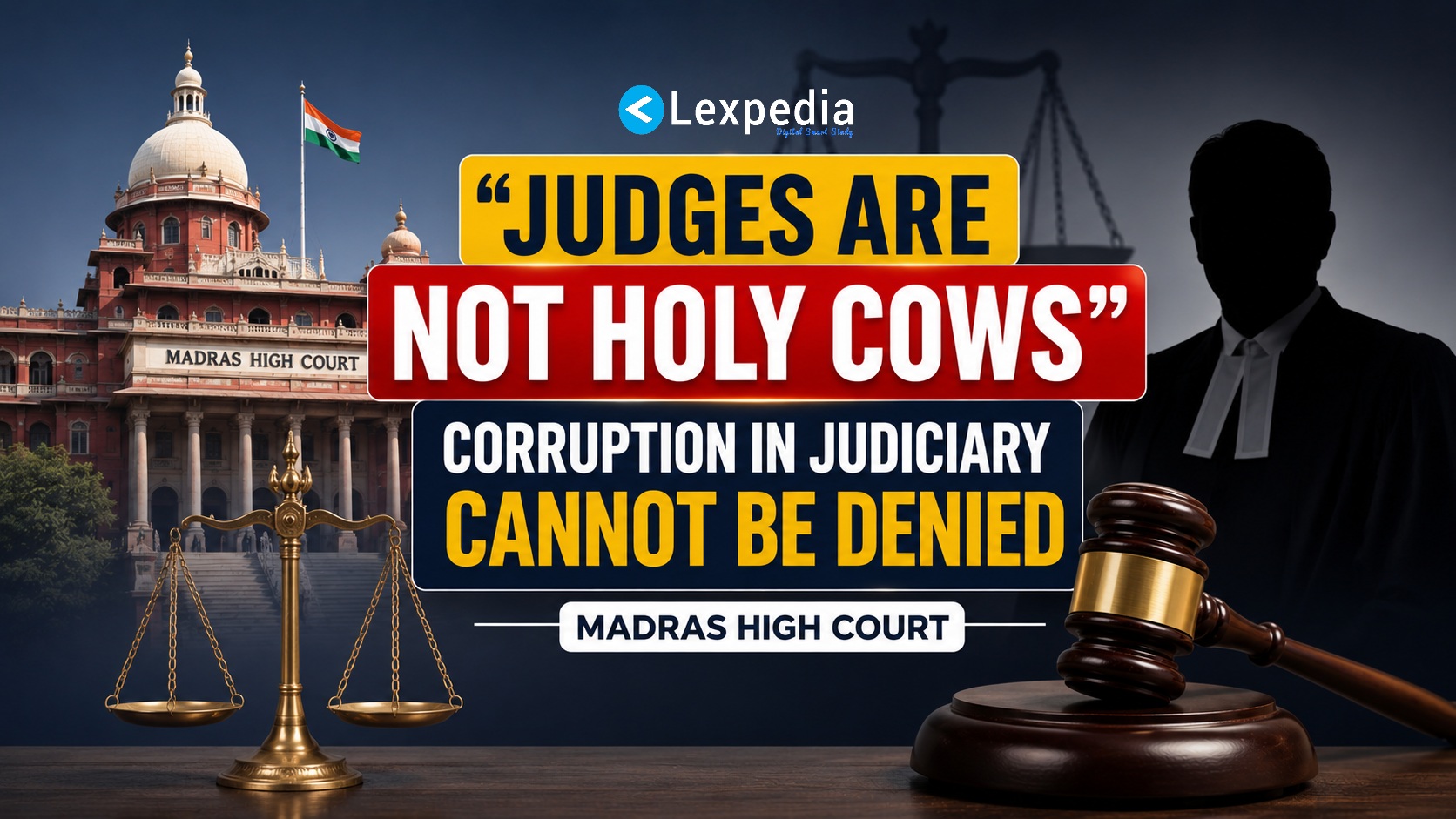
In a significant and strongly worded observation, the Madras High Court has reportedly stated that corruption within the judiciary cannot be denied and that judges are not “holy cows” immune from criticism or scrutiny.
The remarks were made while the Court was hearing a matter relating to allegations against members of the judicial system and questions surrounding accountability, transparency, and public confidence in the administration of justice.
According to legal reports, the Court observed that acknowledging the possibility of corruption within the judicial institution is essential for preserving the credibility of the justice delivery system rather than weakening it.
The Bench reportedly remarked:
“None can deny that there is corruption in judiciary. Judges are not holy cows.”
The Court is said to have emphasized that institutions maintain public trust not by suppressing criticism, but by addressing genuine concerns through transparency and corrective mechanisms.
As per reports, the observations came in the context of proceedings involving allegations concerning judicial conduct and criticism directed at the judiciary. The Court reportedly examined the balance between protecting the dignity of courts and permitting legitimate criticism in a constitutional democracy.
The Bench is understood to have observed that constructive criticism of the judiciary cannot automatically be treated as contemptuous if the criticism is made in public interest and without malicious intent.
Reports indicate that the Court stressed the importance of judicial accountability, observing that no constitutional institution can remain entirely insulated from scrutiny.
The judgment reportedly also touched upon broader constitutional principles involving:
- Freedom of speech and expression
- Judicial independence
- Public accountability
- Institutional transparency
- Public confidence in courts
Legal experts note that Indian courts, including the Supreme Court of India, have repeatedly recognized that while the judiciary must be protected from motivated attacks undermining the administration of justice, fair criticism made in good faith forms part of democratic discourse.
The observations of the Madras High Court are likely to generate extensive debate within legal and judicial circles because discussions concerning judicial accountability and corruption allegations remain highly sensitive issues in India’s constitutional framework.
The issue of judicial transparency has frequently surfaced in debates relating to:
- Appointment of judges
- Internal disciplinary mechanisms
- In-house inquiry procedures
- Asset disclosure
- Contempt jurisdiction
- Institutional reforms
The Court reportedly clarified that recognition of possible misconduct within the system should not be viewed as an attack on the judiciary as an institution, but rather as part of efforts to strengthen public faith in the rule of law.
Legal commentators observe that Indian constitutional courts have increasingly emphasized that institutional credibility depends upon openness, accountability, and willingness to address allegations through lawful mechanisms.
At present, publicly available reports indicate that the observations were made during judicial proceedings and form part of broader judicial reasoning concerning accountability and criticism of the institution.
The remarks are expected to remain part of wider national discussions on judicial reforms, transparency, ethical standards, and mechanisms for ensuring integrity within the justice delivery system.
“जज कोई पवित्र गाय नहीं हैं”: मद्रास हाई कोर्ट ने कहा — न्यायपालिका में भ्रष्टाचार से इनकार नहीं किया जा सकता
एक महत्वपूर्ण और तीखी टिप्पणी में मद्रास हाई कोर्ट ने कथित रूप से कहा है कि न्यायपालिका में भ्रष्टाचार की संभावना से इनकार नहीं किया जा सकता तथा जज “पवित्र गाय” नहीं हैं जिन्हें आलोचना या जांच से पूरी तरह बाहर माना जाए।
यह टिप्पणी अदालत द्वारा न्यायिक व्यवस्था से जुड़े आरोपों, जवाबदेही, पारदर्शिता तथा न्याय प्रणाली में जनता के विश्वास से संबंधित एक मामले की सुनवाई के दौरान की गई।
कानूनी रिपोर्टों के अनुसार, अदालत ने कहा कि न्यायपालिका में भ्रष्टाचार की संभावना को स्वीकार करना न्याय व्यवस्था की विश्वसनीयता को कमजोर नहीं करता, बल्कि उसे मजबूत बनाने के लिए आवश्यक है।
रिपोर्टों के अनुसार, पीठ ने टिप्पणी की:
“कोई भी इस बात से इनकार नहीं कर सकता कि न्यायपालिका में भ्रष्टाचार है। जज कोई पवित्र गाय नहीं हैं।”
अदालत ने कथित रूप से कहा कि संस्थाओं में जनता का विश्वास आलोचना को दबाने से नहीं बल्कि वास्तविक चिंताओं को पारदर्शिता और सुधारात्मक उपायों के माध्यम से संबोधित करने से मजबूत होता है।
रिपोर्टों के अनुसार, यह टिप्पणी न्यायिक आचरण से जुड़े आरोपों और न्यायपालिका की आलोचना से संबंधित कार्यवाही के संदर्भ में की गई। अदालत ने कथित रूप से यह भी जांचा कि संवैधानिक लोकतंत्र में न्यायालय की गरिमा बनाए रखने और वैध आलोचना की अनुमति देने के बीच संतुलन कैसे स्थापित किया जाए।
पीठ ने कथित रूप से कहा कि यदि न्यायपालिका की आलोचना सार्वजनिक हित में और बिना दुर्भावना के की जाती है, तो उसे स्वतः अदालत की अवमानना नहीं माना जा सकता।
रिपोर्टों के अनुसार, अदालत ने न्यायिक जवाबदेही (Judicial Accountability) के महत्व पर जोर देते हुए कहा कि कोई भी संवैधानिक संस्था पूरी तरह जांच और आलोचना से परे नहीं हो सकती।
फैसले में कथित रूप से निम्नलिखित व्यापक संवैधानिक सिद्धांतों पर भी चर्चा की गई:
- अभिव्यक्ति की स्वतंत्रता
- न्यायिक स्वतंत्रता
- सार्वजनिक जवाबदेही
- संस्थागत पारदर्शिता
- न्यायालयों में जनविश्वास
कानूनी विशेषज्ञों का कहना है कि भारतीय अदालतें, विशेषकर सुप्रीम कोर्ट ऑफ इंडिया, पहले भी यह स्पष्ट कर चुकी हैं कि न्यायपालिका को दुर्भावनापूर्ण हमलों से संरक्षित किया जाना आवश्यक है, लेकिन सद्भावना में की गई निष्पक्ष आलोचना लोकतांत्रिक विमर्श का हिस्सा है।
मद्रास हाई कोर्ट की यह टिप्पणी कानूनी और न्यायिक जगत में व्यापक बहस को जन्म दे सकती है क्योंकि न्यायिक जवाबदेही और भ्रष्टाचार संबंधी चर्चाएं भारत की संवैधानिक व्यवस्था में अत्यंत संवेदनशील विषय मानी जाती हैं।
न्यायिक पारदर्शिता का मुद्दा समय-समय पर निम्नलिखित विषयों से जुड़े विमर्श में उठता रहा है:
- जजों की नियुक्ति प्रक्रिया
- आंतरिक अनुशासनात्मक तंत्र
- इन-हाउस जांच प्रक्रिया
- संपत्ति का खुलासा
- अवमानना अधिकार क्षेत्र
- संस्थागत सुधार
अदालत ने कथित रूप से स्पष्ट किया कि न्यायिक व्यवस्था में संभावित दुराचार को स्वीकार करना न्यायपालिका पर हमला नहीं बल्कि जनता के विश्वास को मजबूत करने का प्रयास है।
कानूनी विश्लेषकों के अनुसार, भारतीय संवैधानिक अदालतें अब अधिक स्पष्ट रूप से यह रेखांकित कर रही हैं कि किसी भी संस्था की विश्वसनीयता पारदर्शिता, जवाबदेही और आरोपों से निपटने की वैधानिक क्षमता पर निर्भर करती है।
फिलहाल सार्वजनिक रूप से उपलब्ध रिपोर्टों के अनुसार, ये टिप्पणियां न्यायिक कार्यवाही के दौरान की गईं और न्यायिक जवाबदेही तथा आलोचना से जुड़े व्यापक न्यायिक तर्क का हिस्सा हैं।
यह टिप्पणी आने वाले समय में न्यायिक सुधार, पारदर्शिता, नैतिक मानकों और न्याय प्रणाली की निष्पक्षता सुनिश्चित करने वाले तंत्रों पर राष्ट्रीय स्तर की बहस में महत्वपूर्ण संदर्भ बन सकती है।