Delhi Court Sentences Sukesh Chandrashekhar to 8 Years for Impersonating Supreme Court Judge to Secure Bail
Lexpedia News · 1 September 2026 · 11 min read
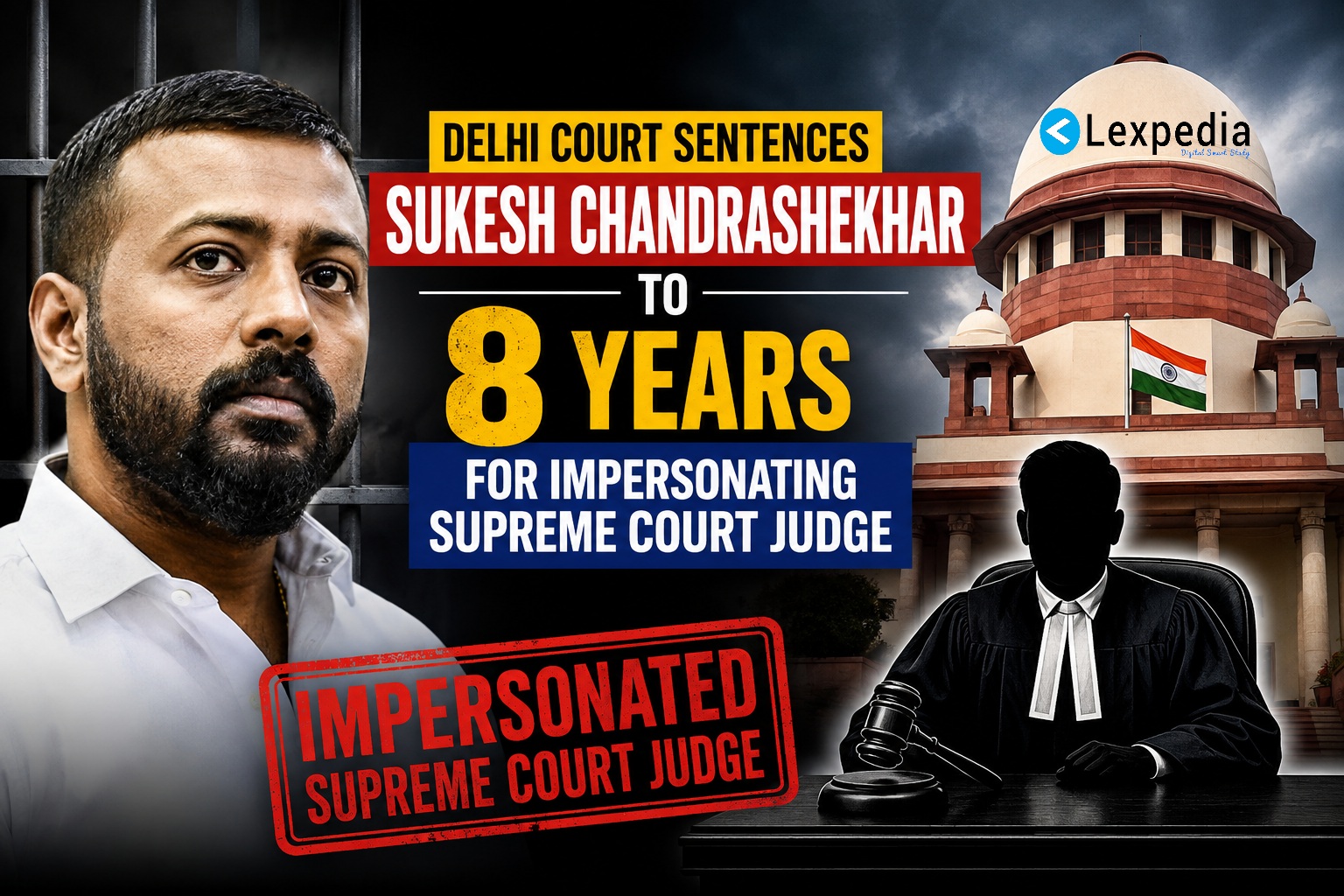
A Delhi court has sentenced Sukesh Chandrashekhar to eight years of rigorous imprisonment for impersonating a sitting Supreme Court judge and attempting to influence a judicial officer to grant bail in a corruption case.
Chief Judicial Magistrate Harshita Mishra of the Tis Hazari Courts, Delhi, imposed separate sentences under Sections 170, 189 and 507 of the Indian Penal Code (IPC). The court directed that all three substantive sentences would run consecutively, resulting in an aggregate sentence of eight years.
The sentencing order followed the court's earlier judgment dated August 20, 2026, by which Chandrashekhar was convicted of the offences.
The 2017 Incident
The case arose from events in April 2017, when Chandrashekhar was in police custody in connection with a corruption case.
According to the prosecution case accepted by the trial court, Chandrashekhar obtained access to the mobile phone of Constable Manjeet, who was responsible for his custody. He allegedly used the phone to contact the official landline and mobile number of Poonam Chaudhary, then a Special Judge dealing with Prevention of Corruption Act cases.
The court found that Chandrashekhar initially impersonated the private secretary of a then-sitting Supreme Court judge and subsequently impersonated the Supreme Court judge himself.
The purpose, according to the court, was to persuade the judicial officer to grant bail to Chandrashekhar at the earliest. The caller also allegedly threatened the judicial officer with adverse professional consequences if the desired relief was not granted.
The trial court held that the prosecution had established the relevant offences beyond reasonable doubt.
Conviction Under Three IPC Provisions
The court convicted Chandrashekhar under:
- Section 170 IPC — personating a public servant;
- Section 189 IPC — threat of injury to a public servant with the intention of inducing or deterring the exercise of public functions; and
- Section 507 IPC — criminal intimidation by anonymous communication or communication with concealment of the identity of the maker.
The court treated the three offences as involving distinct legal interests rather than as one indivisible act.
Accordingly, Chandrashekhar was sentenced to:
- 2 years' rigorous imprisonment + ₹5,000 fine under Section 170 IPC;
- 2 years' rigorous imprisonment + ₹5,000 fine under Section 189 IPC; and
- 4 years' rigorous imprisonment under Section 507 IPC.
The court directed that the sentences run consecutively, rather than concurrently, making the total substantive imprisonment eight years.
Court: Attempt Was an Attack on the Judicial Process
While determining the sentence, the court stressed that the case was not merely an ordinary instance of impersonation or an improper telephone call.
The court observed that the alleged conduct involved the deliberate use of a fabricated judicial identity to influence another judicial officer in a pending matter.
It held that the sentence should serve not only the purpose of reforming the offender but also of protecting public confidence in the justice system and deterring similar attempts to interfere with judicial functioning.
The court further said that where different criminal wrongs are deliberately committed as part of a calculated sequence intended to manipulate, intimidate or interfere with public institutions, each substantial wrong should be adequately reflected in the punishment.
The court therefore concluded that the sentences should not simply merge or operate concurrently.
No Mitigating Circumstances Found
The court also found no mitigating circumstances sufficient to reduce the sentence.
According to the sentencing order, Chandrashekhar had not demonstrated genuine remorse, contrition or acceptance of responsibility during the proceedings.
Instead, the court noted that he and his counsel had questioned the credibility and conduct of the complainant judicial officer and had suggested that she had acted in collusion with the Delhi Police.
The court considered this conduct relevant while assessing whether any mitigating consideration should be extended to him.
The court also noted that, as the trial approached its conclusion, Chandrashekhar had allegedly engaged in conduct directed against the trial court itself, which the court viewed as an attempt to delay or derail the proceedings.
Why the Court Considered the Conduct Particularly Serious
The court found that the gravity of the matter was aggravated by several factors, including:
the deliberate assumption of a false judicial identity; the calculated nature of the deception; the attempt to influence a judicial officer; the attempt to obtain bail through manufactured judicial authority; and the potential impact on public confidence in the administration of justice.
The court's reasoning was that the impersonation was not incidental to the alleged conduct. Rather, it was the instrument through which the attempt to influence the judicial process was carried out.
The judgment also emphasised that judicial decisions must be based on law and evidence, and not on telephone communications falsely purporting to come from persons occupying positions of judicial authority.
Court Orders Further Probe Into Police Constable's Role
The court has also directed the Jail Superintendent to submit a report regarding whether Chandrashekhar had ever furnished bail bonds or personal bonds before the Jail Superintendent. The matter concerning this aspect has been listed for September 2, 2026.
Separately, while convicting Chandrashekhar, the court directed the Delhi Police to re-examine the role of Constable Manjeet, particularly how Chandrashekhar obtained access to the constable's mobile phone, whether the phone was locked, who knew its password and why the alleged use of the phone was not promptly reported.
Legal Significance
The case is significant because the court treated the alleged impersonation not merely as an attempt to deceive an individual but as conduct aimed at interfering with the administration of justice itself.
The court's decision to impose consecutive sentences is particularly important. Rather than allowing the three substantive punishments to run simultaneously, the court held that the distinct offences and their cumulative impact justified separate punishment for each.
The case also demonstrates the seriousness with which courts view attempts to invoke or manufacture the authority of a Supreme Court judge to influence a subordinate judicial officer.
Case Details
Case: State v. Sukash Chander Shekhar @ Sukesh
Criminal Case No.: 5409/2018
Court: Court of the Chief Judicial Magistrate, Tis Hazari Courts, Delhi
Judge: Harshita Mishra
Conviction: August 20, 2026
Sentence: August 29, 2026
Aggregate substantive sentence: 8 years' rigorous imprisonment
Relevant provisions: Sections 170, 189 and 507 IPC
सुप्रीम कोर्ट के जज बनकर जमानत दिलाने की कोशिश: दिल्ली कोर्ट ने सुकेश चंद्रशेखर को 8 साल की कठोर कैद की सजा सुनाई
दिल्ली की एक अदालत ने सुकेश चंद्रशेखर को एक मौजूदा सुप्रीम कोर्ट जज का रूप धारण करके एक न्यायिक अधिकारी को प्रभावित करने और भ्रष्टाचार मामले में जमानत दिलाने की कोशिश करने के मामले में 8 वर्ष के कठोर कारावास की सजा सुनाई है।
तीस हजारी कोर्ट, दिल्ली की मुख्य न्यायिक मजिस्ट्रेट हर्षिता मिश्रा ने चंद्रशेखर को भारतीय दंड संहिता (IPC) की धारा 170, 189 और 507 के तहत अलग-अलग सजाएं सुनाईं। अदालत ने निर्देश दिया कि तीनों मुख्य सजाएं लगातार (consecutively) चलेंगी। इस प्रकार कुल प्रभावी कारावास 8 वर्ष होगा।
यह सजा अदालत द्वारा 20 अगस्त 2026 को सुनाए गए उस फैसले के बाद आई, जिसमें चंद्रशेखर को इन अपराधों का दोषी ठहराया गया था।
2017 की घटना क्या थी?
मामला अप्रैल 2017 की घटनाओं से जुड़ा है, जब चंद्रशेखर एक भ्रष्टाचार मामले में पुलिस हिरासत में था।
अभियोजन के अनुसार, चंद्रशेखर ने उस समय उसकी निगरानी कर रहे कांस्टेबल मनजीत के मोबाइल फोन तक पहुंच हासिल की। आरोप के अनुसार, उसने उस मोबाइल फोन से उस समय भ्रष्टाचार मामलों की सुनवाई कर रही विशेष न्यायाधीश पूनम चौधरी के आधिकारिक लैंडलाइन और मोबाइल नंबर पर संपर्क किया।
ट्रायल कोर्ट ने पाया कि चंद्रशेखर ने पहले तत्कालीन सुप्रीम कोर्ट के एक मौजूदा जज के निजी सचिव (Private Secretary) के रूप में अपनी पहचान बताई और बाद में स्वयं को सुप्रीम कोर्ट का जज बताया।
अदालत के अनुसार, इसका उद्देश्य न्यायिक अधिकारी को चंद्रशेखर को जल्द से जल्द जमानत देने के लिए प्रभावित करना था। जमानत न देने की स्थिति में न्यायिक अधिकारी को कथित तौर पर पेशेवर प्रतिकूल परिणामों की धमकी भी दी गई।
ट्रायल कोर्ट ने अभियोजन द्वारा प्रस्तुत मामले को उचित संदेह से परे (beyond reasonable doubt) सिद्ध माना।
तीन IPC धाराओं के तहत दोषसिद्धि
अदालत ने चंद्रशेखर को निम्नलिखित धाराओं के तहत दोषी ठहराया:
- धारा 170 IPC — लोक सेवक का रूप धारण करना;
- धारा 189 IPC — लोक सेवक को उसके सार्वजनिक कार्य के निर्वहन के लिए प्रभावित करने या रोकने के उद्देश्य से क्षति की धमकी देना;
- धारा 507 IPC — गुमनाम संचार अथवा अपनी पहचान छिपाकर आपराधिक धमकी देना।
अदालत ने माना कि तीनों अपराध अलग-अलग कानूनी हितों की रक्षा करते हैं।
इसलिए चंद्रशेखर को:
- धारा 170 IPC के तहत 2 वर्ष का कठोर कारावास और ₹5,000 जुर्माना;
- धारा 189 IPC के तहत 2 वर्ष का कठोर कारावास और ₹5,000 जुर्माना;
- धारा 507 IPC के तहत 4 वर्ष का कठोर कारावास;
की सजा दी गई।
अदालत ने इन सजाओं को consecutively चलाने का निर्देश दिया। परिणामस्वरूप कुल मुख्य कारावास 8 वर्ष है।
अदालत: यह न्यायिक प्रक्रिया पर हमला था
सजा तय करते समय अदालत ने स्पष्ट किया कि यह मामला केवल किसी व्यक्ति की पहचान की सामान्य धोखाधड़ी या अनुचित फोन कॉल का मामला नहीं था।
अदालत के अनुसार, इस मामले में जानबूझकर एक झूठी न्यायिक पहचान का इस्तेमाल करके एक अन्य न्यायिक अधिकारी को प्रभावित करने की कोशिश की गई।
अदालत ने कहा कि सजा का उद्देश्य केवल दोषी व्यक्ति में सुधार लाना नहीं होना चाहिए, बल्कि न्याय व्यवस्था में जनता के विश्वास की रक्षा करना और इसी तरह के प्रयासों को रोकने वाला प्रभाव पैदा करना भी होना चाहिए।
अदालत ने यह भी कहा कि जब अलग-अलग आपराधिक कृत्य जानबूझकर इस प्रकार किए जाते हैं जिनका उद्देश्य सरकारी संस्थाओं के वैध कामकाज को प्रभावित करना, डराना या उसमें हस्तक्षेप करना हो, तो प्रत्येक गंभीर अपराध को सजा में पर्याप्त रूप से प्रतिबिंबित किया जाना चाहिए।
इसी कारण अदालत ने सजाओं को एक साथ चलाने के बजाय लगातार चलाने का निर्देश दिया।
अदालत को कोई mitigating circumstance नहीं मिला
अदालत ने सजा कम करने के लिए कोई पर्याप्त mitigating circumstance भी नहीं पाया।
सजा संबंधी आदेश में अदालत ने कहा कि चंद्रशेखर ने कार्यवाही के दौरान वास्तविक पश्चाताप, अपराध स्वीकार करने की भावना या जिम्मेदारी स्वीकार करने का प्रदर्शन नहीं किया।
इसके बजाय अदालत ने कहा कि चंद्रशेखर और उसके वकील ने शिकायतकर्ता न्यायिक अधिकारी के आचरण और विश्वसनीयता पर सवाल उठाए तथा यह संकेत दिया कि वह दिल्ली पुलिस के साथ मिली हुई थीं।
अदालत ने सजा तय करते समय इस आचरण को भी ध्यान में रखा।
अदालत ने यह भी कहा कि मुकदमे के अंतिम चरण में चंद्रशेखर ने स्वयं ट्रायल कोर्ट के खिलाफ भी ऐसा आचरण किया जिसे अदालत ने कार्यवाही को देरी कराने या प्रभावित करने के प्रयास के रूप में देखा।
अदालत ने आचरण को इतना गंभीर क्यों माना?
अदालत के अनुसार मामले की गंभीरता बढ़ाने वाले प्रमुख तत्वों में शामिल थे:
झूठी न्यायिक पहचान को जानबूझकर अपनाना, सुनियोजित तरीके से धोखा देना, न्यायिक अधिकारी को प्रभावित करने का प्रयास, कृत्रिम न्यायिक अधिकार का इस्तेमाल करके जमानत हासिल करने की कोशिश और न्याय प्रशासन में जनता के विश्वास को प्रभावित करने की संभावित क्षमता।
अदालत ने माना कि सुप्रीम कोर्ट के जज के रूप में पहचान बताना केवल एक आकस्मिक हिस्सा नहीं था। बल्कि यही वह माध्यम था जिसके जरिए न्यायिक प्रक्रिया को प्रभावित करने का प्रयास किया गया।
अदालत ने यह भी रेखांकित किया कि न्यायिक निर्णय कानून और साक्ष्यों के आधार पर होने चाहिए, न कि ऐसे फोन कॉल के आधार पर जो झूठे तौर पर किसी न्यायिक पदाधिकारी की ओर से किए गए हों।
पुलिस कांस्टेबल की भूमिका की भी दोबारा जांच
अदालत ने जेल अधीक्षक से यह रिपोर्ट भी मांगी है कि क्या किसी समय चंद्रशेखर ने जेल अधीक्षक के समक्ष कोई bail bond या personal bond प्रस्तुत किया था। इस पहलू पर मामला 2 सितंबर 2026 को सूचीबद्ध किया गया है।
इसके अतिरिक्त, दोषसिद्धि के समय अदालत ने दिल्ली पुलिस को कांस्टेबल मनजीत की भूमिका की दोबारा जांच करने का निर्देश दिया था—विशेष रूप से यह कि चंद्रशेखर को उसका मोबाइल फोन कैसे मिला, क्या फोन लॉक था, उसका पासवर्ड किसे पता था और कथित रूप से फोन के इस्तेमाल की जानकारी तुरंत क्यों नहीं दी गई।
कानूनी महत्व
यह मामला इसलिए महत्वपूर्ण है क्योंकि अदालत ने इसे केवल impersonation का मामला न मानकर न्याय प्रशासन में हस्तक्षेप के प्रयास के रूप में देखा।
विशेष रूप से, अदालत द्वारा तीनों सजाओं को consecutive चलाने का निर्णय महत्वपूर्ण है। अदालत ने माना कि तीनों अपराध अलग-अलग प्रकृति के हैं और उनके सामूहिक प्रभाव को देखते हुए प्रत्येक अपराध के लिए अलग सजा का प्रभाव बना रहना चाहिए।
यह मामला यह भी दर्शाता है कि किसी सुप्रीम कोर्ट जज की न्यायिक हैसियत या अधिकार का झूठा इस्तेमाल करके किसी अधीनस्थ न्यायिक अधिकारी को प्रभावित करने का प्रयास अदालतों द्वारा कितनी गंभीरता से देखा जाता है।
केस विवरण
केस: State v. Sukash Chander Shekhar @ Sukesh
Criminal Case No.: 5409/2018
अदालत: मुख्य न्यायिक मजिस्ट्रेट, तीस हजारी कोर्ट, दिल्ली
न्यायाधीश: हर्षिता मिश्रा
दोषसिद्धि: 20 अगस्त 2026
सजा: 29 अगस्त 2026
कुल मुख्य कारावास: 8 वर्ष का कठोर कारावास
प्रमुख धाराएं: IPC की धारा 170, 189 और 507