“Individual Liberty Is Not A Trivial Matter”: Supreme Court Awards ₹11 Lakh Compensation For 24-Day Illegal Detention
Lexpedia News · 29 May 2026 · 7 min read
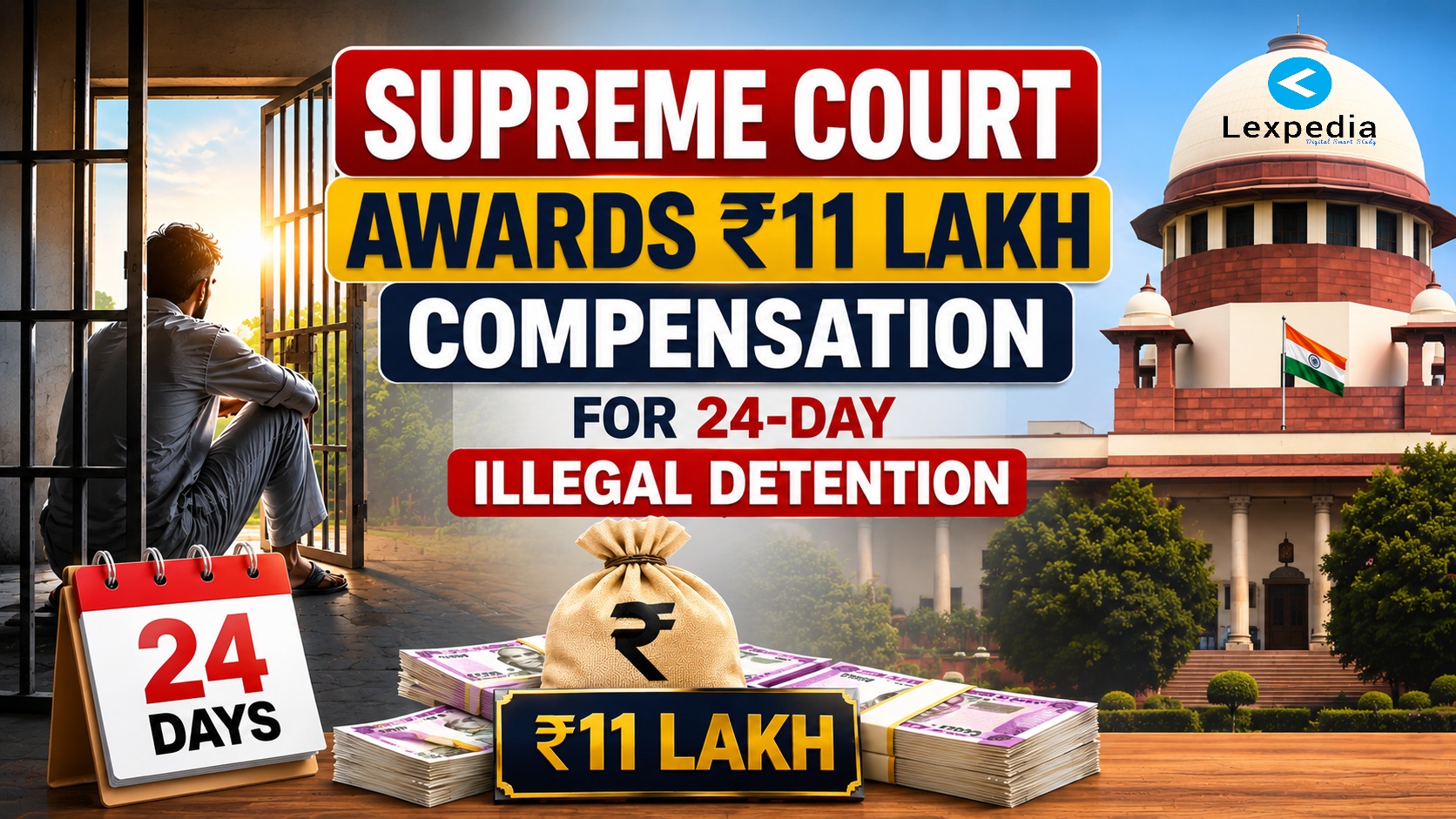
In a significant ruling reinforcing the constitutional importance of personal liberty, the Supreme Court of India has awarded ₹11 lakh compensation to a prisoner who remained in custody for 24 days beyond the period legally permissible, holding that unlawful deprivation of liberty constitutes a serious violation of fundamental rights.
The judgment underscores the Court’s continuing commitment to protecting the rights guaranteed under Article 21 of the Constitution, which safeguards the right to life and personal liberty.
According to reports, the case concerned a prisoner who continued to remain incarcerated even after he was legally entitled to be released. The prolonged detention occurred despite the expiry of the lawful period of custody, resulting in the individual spending an additional 24 days in prison without legal authority.
The Supreme Court observed that such incidents strike at the very foundation of the rule of law and constitutional governance.
“Individual Liberty Is Not A Trivial Matter”
In strongly worded observations, the Court emphasized that personal liberty occupies a central position within the constitutional framework.
The Bench reportedly observed:
“Individual liberty is not a trivial matter.”
The Court noted that even a single day of unlawful detention represents a serious infringement of constitutional rights, and therefore State authorities must remain vigilant in ensuring that no person is deprived of liberty except in accordance with law.
Compensation For Violation Of Fundamental Rights
Recognizing the violation suffered by the prisoner, the Supreme Court directed payment of ₹11 lakh as compensation.
The Court reportedly held that monetary compensation can serve as a public law remedy where fundamental rights are violated by unlawful State action or administrative negligence.
The judgment reiterates the constitutional principle that courts are empowered to grant compensation where a citizen's rights under Article 21 are infringed due to illegal detention, wrongful imprisonment, or custodial misconduct.
Court Expresses Concern Over Administrative Failure
According to reports, the Court expressed concern regarding the administrative lapses that led to the prisoner remaining behind bars after he was legally entitled to freedom.
The Bench reportedly observed that prison authorities and other concerned officials have a duty to ensure prompt implementation of judicial orders and timely release of prisoners.
Failure to perform such responsibilities can result in grave consequences for individuals whose liberty depends upon accurate and efficient execution of court orders.
Importance Of Article 21
The judgment places renewed emphasis on Article 21 of the Constitution, which has been interpreted expansively by Indian courts over the decades.
The Supreme Court has consistently held that personal liberty, human dignity, and protection against arbitrary detention form the core of constitutional governance.
The Court has repeatedly ruled that the State bears a heightened obligation when dealing with individuals in custody because prisoners do not cease to be holders of fundamental rights merely because they are incarcerated.
Public Law Compensation Jurisprudence
The decision also strengthens the jurisprudence relating to constitutional compensation for violations of fundamental rights.
Over the years, the Supreme Court has awarded compensation in cases involving:
- Illegal detention
- Wrongful incarceration
- Custodial violence
- Police excesses
- Violation of human rights by State authorities
The Court has consistently maintained that monetary compensation may be awarded as a constitutional remedy independent of private civil claims.
Broader Significance Of The Judgment
Legal experts view the ruling as an important reminder that procedural errors within the criminal justice system can have devastating consequences for individual freedom.
The judgment reinforces the principle that administrative inefficiency cannot justify continued detention of a person after the lawful period of imprisonment has ended.
The ruling is expected to prompt prison administrations and government authorities across the country to strengthen mechanisms for monitoring release orders and ensuring compliance with judicial directions.
The decision also serves as a warning that constitutional courts will not hesitate to intervene where unlawful detention results from negligence, oversight, or systemic failures.
A Strong Message On Liberty
By awarding compensation for just 24 days of illegal detention, the Supreme Court has sent a strong message that every day of personal liberty carries constitutional value.
The judgment reaffirms that the right to freedom is not a procedural formality but one of the most cherished guarantees under the Constitution, and that violations of such rights must attract meaningful remedies.
“व्यक्तिगत स्वतंत्रता कोई मामूली विषय नहीं”: सुप्रीम कोर्ट ने 24 दिन की अवैध हिरासत पर ₹11 लाख मुआवजा दिया
व्यक्तिगत स्वतंत्रता के संवैधानिक महत्व को पुनः रेखांकित करते हुए सुप्रीम कोर्ट ऑफ इंडिया ने एक कैदी को ₹11 लाख का मुआवजा देने का निर्देश दिया है, जिसे कानूनी रूप से रिहा किए जाने की पात्रता प्राप्त होने के बावजूद 24 दिन अतिरिक्त जेल में रखा गया था।
यह फैसला संविधान के अनुच्छेद 21 के तहत संरक्षित जीवन और व्यक्तिगत स्वतंत्रता के अधिकार की रक्षा के प्रति सुप्रीम कोर्ट की प्रतिबद्धता को दर्शाता है।
रिपोर्टों के अनुसार, मामला एक ऐसे कैदी से संबंधित था जो कानूनी रूप से रिहा होने का अधिकार प्राप्त कर चुका था, लेकिन प्रशासनिक विफलताओं के कारण उसे अतिरिक्त 24 दिनों तक जेल में रखा गया। इस अवधि के दौरान उसकी हिरासत के लिए कोई वैध कानूनी आधार नहीं था।
सुप्रीम कोर्ट ने कहा कि ऐसी घटनाएं कानून के शासन (Rule of Law) और संवैधानिक व्यवस्था की मूल भावना पर प्रतिकूल प्रभाव डालती हैं।
“व्यक्तिगत स्वतंत्रता कोई मामूली विषय नहीं”
अदालत ने अपने महत्वपूर्ण अवलोकनों में कहा कि व्यक्तिगत स्वतंत्रता भारतीय संविधान की सबसे महत्वपूर्ण गारंटियों में से एक है।
पीठ ने कथित रूप से कहा:
“व्यक्तिगत स्वतंत्रता कोई मामूली विषय नहीं है।”
अदालत ने कहा कि अवैध हिरासत का एक भी दिन व्यक्ति के मौलिक अधिकारों का गंभीर उल्लंघन है और राज्य के सभी अधिकारियों का दायित्व है कि किसी भी व्यक्ति को केवल कानून द्वारा अधिकृत परिस्थितियों में ही स्वतंत्रता से वंचित किया जाए।
मौलिक अधिकारों के उल्लंघन पर मुआवजा
कैदी के साथ हुए अधिकारों के उल्लंघन को देखते हुए सुप्रीम कोर्ट ने ₹11 लाख मुआवजा देने का निर्देश दिया।
अदालत ने कथित रूप से कहा कि जहाँ राज्य की कार्रवाई या प्रशासनिक लापरवाही के कारण किसी व्यक्ति के मौलिक अधिकारों का उल्लंघन होता है, वहाँ मौद्रिक मुआवजा (Monetary Compensation) एक प्रभावी सार्वजनिक विधि उपचार (Public Law Remedy) हो सकता है।
यह फैसला पुनः स्पष्ट करता है कि अनुच्छेद 21 के उल्लंघन के मामलों में संवैधानिक अदालतें मुआवजा प्रदान कर सकती हैं।
प्रशासनिक विफलता पर चिंता व्यक्त
रिपोर्टों के अनुसार, सुप्रीम कोर्ट ने उन प्रशासनिक कमियों पर गंभीर चिंता व्यक्त की जिनके कारण कैदी को उसकी वैध रिहाई के बाद भी जेल में रहना पड़ा।
अदालत ने कहा कि जेल प्रशासन और संबंधित अधिकारियों की जिम्मेदारी है कि वे न्यायालय के आदेशों का समय पर पालन सुनिश्चित करें तथा कैदियों की रिहाई में किसी प्रकार की देरी न होने दें।
ऐसी लापरवाही उन व्यक्तियों के लिए गंभीर परिणाम उत्पन्न कर सकती है जिनकी स्वतंत्रता पूरी तरह प्रशासनिक प्रक्रियाओं पर निर्भर होती है।
अनुच्छेद 21 का महत्व
फैसले में अनुच्छेद 21 के महत्व पर विशेष जोर दिया गया है। भारतीय न्यायालयों ने समय-समय पर इसकी व्यापक व्याख्या करते हुए इसे केवल जीवन के अधिकार तक सीमित नहीं रखा, बल्कि मानवीय गरिमा, स्वतंत्रता, और मनमानी हिरासत से सुरक्षा को भी इसमें शामिल माना है।
सुप्रीम कोर्ट ने अनेक अवसरों पर कहा है कि जेल में बंद व्यक्ति भी अपने मौलिक अधिकारों से वंचित नहीं हो जाता और राज्य पर उनकी सुरक्षा की विशेष जिम्मेदारी होती है।
संवैधानिक मुआवजा सिद्धांत को मजबूती
यह फैसला संवैधानिक मुआवजा न्यायशास्त्र (Constitutional Compensation Jurisprudence) को और मजबूत करता है।
पिछले वर्षों में सुप्रीम कोर्ट ने निम्नलिखित मामलों में भी मुआवजा प्रदान किया है:
- अवैध हिरासत
- गलत कारावास
- हिरासत में हिंसा
- पुलिस ज्यादती
- राज्य अधिकारियों द्वारा मानवाधिकार उल्लंघन
अदालत ने लगातार यह माना है कि संवैधानिक अधिकारों के उल्लंघन की स्थिति में मुआवजा एक स्वतंत्र सार्वजनिक विधि उपचार हो सकता है।
फैसले का व्यापक महत्व
कानूनी विशेषज्ञ इस निर्णय को एक महत्वपूर्ण संदेश के रूप में देख रहे हैं कि आपराधिक न्याय प्रणाली में छोटी दिखाई देने वाली प्रशासनिक त्रुटियाँ भी किसी व्यक्ति की स्वतंत्रता पर गंभीर प्रभाव डाल सकती हैं।
फैसला स्पष्ट करता है कि प्रशासनिक अक्षमता या लापरवाही किसी व्यक्ति को उसकी वैध सजा अवधि समाप्त होने के बाद जेल में रखने का औचित्य नहीं बन सकती।
यह निर्णय देशभर के जेल प्रशासन और सरकारी एजेंसियों को रिहाई आदेशों की निगरानी तथा न्यायिक निर्देशों के अनुपालन के लिए अधिक प्रभावी व्यवस्था विकसित करने हेतु प्रेरित कर सकता है।
स्वतंत्रता पर सुप्रीम कोर्ट का सशक्त संदेश
केवल 24 दिनों की अवैध हिरासत के लिए ₹11 लाख मुआवजा प्रदान करके सुप्रीम कोर्ट ने स्पष्ट संकेत दिया है कि व्यक्तिगत स्वतंत्रता का प्रत्येक दिन संवैधानिक महत्व रखता है।
यह फैसला पुनः स्थापित करता है कि स्वतंत्रता का अधिकार संविधान द्वारा प्रदत्त सबसे मूल्यवान अधिकारों में से एक है और इसके उल्लंघन पर प्रभावी तथा सार्थक उपचार उपलब्ध कराया जाना आवश्यक है।
Case Title: DAUDAYAL Versus THE STATE OF RAJASTHAN & ORS., 2026