Delhi Police tells High Court FIR is confidential; detained students allege torture
Lexpedia News · 15 March 2026 · 4 min read
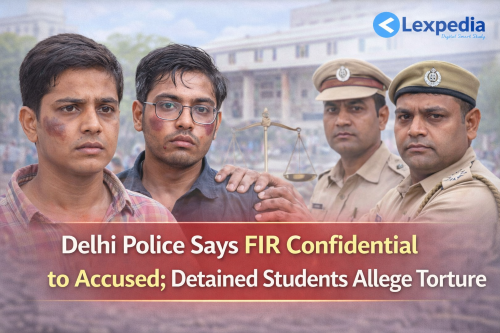
The Delhi High Court today heard habeas corpus petitions filed by families of several student and labour activists who were allegedly detained by the Delhi Police. During the hearing, the police told the Court that the First Information Report (FIR) in the case is confidential and cannot be provided to the accused persons at this stage.
The matter came before a Division Bench of Justice Navin Chawla and Justice Ravinder Dudeja, which directed the police to explain the circumstances and legal authority under which the activists were detained.
Allegations of illegal detention and torture
The petitions were filed by relatives of three activists who claimed that the students had been picked up by police officers in plain clothes and taken to undisclosed locations. According to the petitioners, the detainees were not produced before a court and were subjected to abuse, violence and torture during detention.
Senior Advocate Colin Gonsalves, appearing for one of the petitioners, informed the Court that although some students had later been released, one student named Rudra was still missing at the time of the hearing.
Another counsel, Advocate Shahrukh Alam, alleged that the students were threatened and pressured to withdraw the petitions.
Police response before the Court
Appearing for the Delhi Police, Additional Standing Counsel Sanjeev Bhandari informed the Court that:
- The detained persons were taken into custody after registration of an FIR.
- All the accused persons had since been released.
- The copy of the FIR cannot be supplied to the accused because it is confidential, though it would be produced before the Court.
The police also contested the petitioners’ demand that the FIR be immediately shared with them.
Directions issued by the Delhi High Court
After hearing the submissions, the High Court issued several directions to ensure transparency and accountability in the matter:
- The Court directed the Delhi Police to file an affidavit within one week explaining the legal basis and circumstances of the detention.
- The police were ordered to preserve CCTV footage from the locations where the students were allegedly picked up.
- The Court instructed the authorities to ascertain the whereabouts of the missing student Rudra.
The Bench also observed that if the students are required for investigation, they must cooperate with the authorities during the inquiry.
Next hearing
The Court issued notice to the Delhi Police and scheduled the matter for further hearing on March 27, while the issue regarding the allegedly missing student was fixed for an earlier hearing on March 16.
Significance of the case
The case raises important questions regarding:
- Transparency in criminal investigations
- Rights of detainees during police custody
- The obligation of authorities to produce detained persons before a court
It also highlights the judiciary’s role in safeguarding fundamental rights under Articles 21 and 22 of the Constitution, which protect individuals from illegal detention and custodial abuse.
दिल्ली हाईकोर्ट में पुलिस का बयान: FIR गोपनीय, आरोपियों को नहीं दी जा सकती; हिरासत में लिए गए छात्रों ने लगाया यातना का आरोप
Delhi High Court में उन छात्र और श्रमिक कार्यकर्ताओं के परिवारों द्वारा दायर हैबियस कॉर्पस याचिकाओं पर सुनवाई हुई, जिन्हें कथित रूप से Delhi Police ने हिरासत में लिया था। सुनवाई के दौरान पुलिस ने अदालत को बताया कि इस मामले में दर्ज FIR गोपनीय है और इसे आरोपियों को नहीं दिया जा सकता।
यह मामला Justice Navin Chawla और Justice Ravinder Dudeja की खंडपीठ के समक्ष आया। अदालत ने पुलिस से यह स्पष्ट करने को कहा कि किन परिस्थितियों और किस कानूनी अधिकार के तहत इन लोगों को हिरासत में लिया गया।
छात्रों द्वारा यातना और अवैध हिरासत का आरोप
याचिकाकर्ताओं ने आरोप लगाया कि कुछ छात्रों और कार्यकर्ताओं को सादे कपड़ों में आए पुलिसकर्मियों ने उठा लिया और अज्ञात स्थानों पर ले जाया गया।
याचिकाओं में कहा गया कि उन्हें अदालत के सामने पेश नहीं किया गया और हिरासत के दौरान उनके साथ मारपीट, दुर्व्यवहार और यातना की गई।
याचिकाकर्ताओं की ओर से पेश Senior Advocate Colin Gonsalves ने अदालत को बताया कि कुछ छात्रों को बाद में छोड़ दिया गया, लेकिन “रुद्र” नाम का एक छात्र अभी भी लापता है।
वकील Shahrukh Alam ने यह भी आरोप लगाया कि छात्रों को याचिकाएं वापस लेने के लिए धमकाया जा रहा है।
दिल्ली पुलिस का पक्ष
Delhi Police की ओर से पेश Additional Standing Counsel Sanjeev Bhandari ने अदालत को बताया कि:
- छात्रों को FIR दर्ज होने के बाद हिरासत में लिया गया था।
- सभी आरोपियों को बाद में रिहा कर दिया गया है।
- FIR की प्रति गोपनीय है और आरोपियों को नहीं दी जा सकती, हालांकि इसे अदालत के समक्ष प्रस्तुत किया जाएगा।
हाईकोर्ट के निर्देश
सुनवाई के बाद दिल्ली हाईकोर्ट ने पुलिस को कई निर्देश दिए:
- पुलिस एक सप्ताह के भीतर हलफनामा दाखिल कर बताए कि हिरासत किस कानूनी अधिकार के तहत की गई।
- जिन स्थानों से छात्रों को उठाया गया, वहां के CCTV फुटेज सुरक्षित रखने का आदेश दिया गया।
- पुलिस को लापता छात्र रुद्र का पता लगाने का निर्देश दिया गया।
अदालत ने यह भी कहा कि यदि छात्रों को जांच में शामिल होने की आवश्यकता हो तो उन्हें जांच में सहयोग करना होगा।
अगली सुनवाई
अदालत ने मामले की अगली सुनवाई 27 मार्च को तय की है, जबकि लापता छात्र से संबंधित मुद्दे पर 16 मार्च को सुनवाई होगी।