‘Bar Is Waiting For You’: CJI Surya Kant Recalls Why He Didn’t Join Judicial Service At Career Start
Lexpedia News · 8 May 2026 · 8 min read
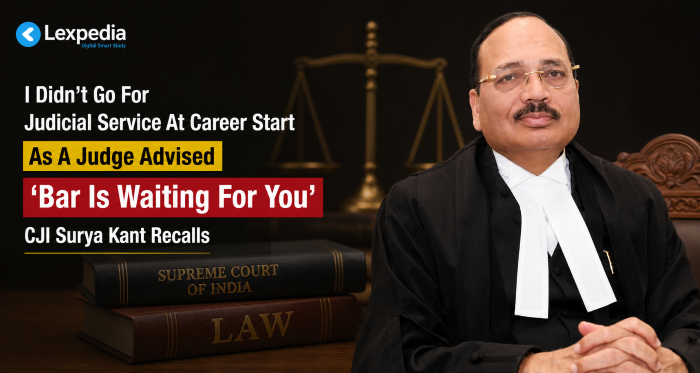
Chief Justice of India-designate Justice Surya Kant recently shared a personal anecdote from the early days of his legal career, recalling how a judge’s advice influenced his decision not to join the judicial service at the beginning of his profession.
Justice Surya Kant revealed that he had initially considered joining the judicial service after completing his legal education. However, a senior judge advised him against it, telling him that “the Bar is waiting for you.”
The remarks were made during an interaction with law students and young lawyers, where Justice Surya Kant reflected on his professional journey from a small-town advocate to becoming the future Chief Justice of India.
“Bar Is Waiting For You”: Advice That Changed His Career Path
Justice Surya Kant said that during the initial stage of his career, he was inclined toward joining the judicial service, which is often considered a stable and prestigious career path for young law graduates.
However, while discussing the possibility with a sitting judge, he received advice that eventually changed his professional trajectory.
According to Justice Surya Kant, the judge told him:
“Don’t go for judicial service. The Bar is waiting for you.”
Justice Surya Kant said he followed that advice and continued practicing law instead of entering the judicial service directly.
Journey From Lawyer To Chief Justice Of India
Justice Surya Kant’s career is regarded as one of the most remarkable journeys in the Indian judiciary.
Born in Haryana, he began his legal practice in the 1980s and primarily practiced in constitutional, civil, and service matters before the Punjab and Haryana High Court.
His career progression includes:
- Designation as Senior Advocate,
- Appointment as Judge of the Punjab & Haryana High Court,
- Elevation as Chief Justice of the Himachal Pradesh High Court,
- and later elevation to the Supreme Court of India in 2019.
- And then Chief Justice of India.
Importance Of Bar Experience In Judicial Functioning
During the interaction, Justice Surya Kant reportedly emphasized the importance of advocacy experience in shaping judicial temperament and courtroom understanding.
Legal experts often observe that extensive practice at the Bar:
- enhances courtroom management skills,
- deepens understanding of litigation realities,
- and helps judges appreciate practical challenges faced by lawyers and litigants.
Justice Surya Kant’s remarks have sparked discussions within legal circles about the value of trial and appellate advocacy experience before elevation to the Bench.
Judicial Service vs Practice At The Bar
The comments also revived the long-standing debate within the legal profession regarding:
- whether talented graduates should join judicial service early,
- or first gain substantial experience at the Bar before entering the judiciary.
In India:
- judicial officers are generally recruited through competitive examinations,
- while higher judiciary appointments often come from experienced advocates and judges of subordinate courts.
Many senior members of the legal fraternity believe that courtroom exposure as a practicing advocate helps develop:
- advocacy skills,
- legal strategy,
- client interaction,
- and practical understanding of litigation.
At the same time, judicial service is viewed as an important institutional pathway for strengthening the subordinate judiciary.
Justice Surya Kant’s Rise Often Seen As Inspirational
Justice Surya Kant’s professional rise from a practicing lawyer to the top judicial office is often viewed as inspirational for young advocates, especially those coming from smaller towns and non-metropolitan backgrounds.
Over the years, he has authored and participated in several important judgments involving:
- constitutional law,
- criminal justice,
- civil liberties,
- arbitration,
- and administrative law.
He is also known for emphasizing judicial efficiency and access to justice.
Recent Public Interactions With Law Students
In recent months, several Supreme Court judges have engaged more actively with:
- law universities,
- judicial academies,
- and young members of the legal profession.
These interactions frequently include discussions on:
- ethics in legal practice,
- judicial reforms,
- career choices,
- mental resilience,
- and the future of the legal profession in India.
Justice Surya Kant’s remarks have resonated strongly with young lawyers preparing either for judicial service examinations or litigation practice.
Bar & Bench Relationship In Indian Judiciary
The anecdote also highlighted the deep institutional relationship between:
- the Bench,
- and the Bar.
Indian courts have repeatedly observed that:
- an independent Bar is essential for judicial independence,
- and strong advocacy strengthens constitutional democracy.
Justice Surya Kant’s recollection reflects how mentorship within the legal profession can sometimes significantly shape judicial careers.
Legal Community Reacts
Following publication of the remarks, many lawyers and law students shared reactions online, describing the anecdote as:
- motivational,
- relatable,
- and reflective of traditional mentorship culture within Indian courts.
Several lawyers noted that the statement also recognized the importance and dignity of litigation practice at the Bar.
Why The Remarks Matter
The remarks have attracted attention because:
- judicial service examinations remain one of the most competitive career options for law graduates,
- while litigation practice is often viewed as financially uncertain during initial years.
Justice Surya Kant’s career story is therefore being seen as an example of how sustained litigation practice can eventually lead to the highest judicial office in the country.
‘बार आपका इंतजार कर रही है’: CJI Surya Kant ने बताया क्यों करियर की शुरुआत में Judicial Service नहीं जॉइन की
भारत के भावी Chief Justice of India Justice Surya Kant ने हाल ही में अपने करियर के शुरुआती दिनों का एक दिलचस्प अनुभव साझा किया। उन्होंने बताया कि एक न्यायाधीश की सलाह के कारण उन्होंने करियर की शुरुआत में judicial service जॉइन नहीं की।
Justice Surya Kant ने कहा कि कानून की पढ़ाई पूरी करने के बाद वे प्रारंभिक रूप से judicial service में जाने के इच्छुक थे। लेकिन एक वरिष्ठ न्यायाधीश ने उन्हें सलाह दी कि “बार आपका इंतजार कर रही है।”
उन्होंने यह टिप्पणी law students और युवा वकीलों के साथ एक संवाद कार्यक्रम में की, जहां उन्होंने छोटे शहर के वकील से भारत के Chief Justice बनने तक की अपनी यात्रा पर चर्चा की।
“Bar Is Waiting For You”: जिसने बदल दिया करियर का रास्ता
Justice Surya Kant ने बताया कि अपने करियर के शुरुआती दौर में वे judicial service में जाने के बारे में गंभीरता से सोच रहे थे।
लेकिन जब उन्होंने इस विषय पर एक sitting judge से चर्चा की, तो उन्हें ऐसी सलाह मिली जिसने उनका पेशेवर जीवन बदल दिया।
Justice Surya Kant के अनुसार, उस न्यायाधीश ने उनसे कहा:
“Don’t go for judicial service. The Bar is waiting for you.”
उन्होंने बताया कि उन्होंने उस सलाह का पालन किया और judicial service में जाने के बजाय वकालत जारी रखी।
वकील से Chief Justice of India तक का सफर
Justice Surya Kant का करियर भारतीय न्यायपालिका की सबसे प्रेरणादायक यात्राओं में गिना जाता है।
हरियाणा में जन्मे Justice Surya Kant ने 1980 के दशक में वकालत शुरू की और Punjab & Haryana High Court में constitutional, civil और service matters में प्रैक्टिस की।
उनके करियर के प्रमुख पड़ाव:
- Senior Advocate के रूप में designation,
- Punjab & Haryana High Court के Judge,
- Himachal Pradesh High Court के Chief Justice,
- तथा 2019 में Supreme Court Judge के रूप में elevation।
न्यायिक कार्य में Bar Experience का महत्व
Justice Surya Kant ने बातचीत के दौरान advocacy experience के महत्व पर भी जोर दिया।
कानूनी विशेषज्ञों का मानना है कि लंबे समय तक बार में प्रैक्टिस करने से:
- courtroom management skills विकसित होती हैं,
- मुकदमों की वास्तविक चुनौतियों की समझ बढ़ती है,
- तथा न्यायाधीशों को litigants और lawyers की समस्याओं को बेहतर ढंग से समझने में मदद मिलती है।
उनकी टिप्पणियों ने फिर से यह बहस छेड़ दी है कि उच्च न्यायपालिका में जाने से पहले बार में अनुभव कितना महत्वपूर्ण है।
Judicial Service बनाम Litigation Practice
Justice Surya Kant की टिप्पणियों ने एक पुराने प्रश्न को भी फिर चर्चा में ला दिया:
- क्या प्रतिभाशाली law graduates को सीधे judicial service में जाना चाहिए,
- या पहले bar में पर्याप्त अनुभव लेना चाहिए?
भारत में:
- subordinate judiciary में भर्ती competitive exams के माध्यम से होती है,
- जबकि higher judiciary में नियुक्तियां अनुभवी advocates और judicial officers से होती हैं।
कई वरिष्ठ वकीलों का मानना है कि litigation practice:
- advocacy skills,
- legal strategy,
- client handling,
- तथा practical courtroom understanding विकसित करती है।
युवा वकीलों के लिए प्रेरणादायक यात्रा
Justice Surya Kant की यात्रा छोटे शहरों से आने वाले युवा वकीलों के लिए विशेष रूप से प्रेरणादायक मानी जाती है।
उन्होंने constitutional law, criminal justice, civil liberties, arbitration और administrative law जैसे क्षेत्रों में कई महत्वपूर्ण निर्णय दिए हैं।
वे judicial efficiency और access to justice पर जोर देने के लिए भी जाने जाते हैं।
Law Students के साथ बढ़ती न्यायिक बातचीत
हाल के वर्षों में Supreme Court judges:
- law universities,
- judicial academies,
- और युवा lawyers
के साथ अधिक संवाद कर रहे हैं।
इन कार्यक्रमों में अक्सर:
- legal ethics,
- judicial reforms,
- career choices,
- mental resilience,
- तथा legal profession के भविष्य
पर चर्चा होती है।
Justice Surya Kant की टिप्पणियों को युवा lawyers और judicial aspirants ने काफी प्रेरणादायक बताया है।
Bench और Bar का संबंध
Justice Surya Kant का यह अनुभव Bench और Bar के गहरे संस्थागत संबंध को भी दर्शाता है।
भारतीय अदालतें कई बार कह चुकी हैं कि:
- independent Bar न्यायिक स्वतंत्रता के लिए आवश्यक है,
- और मजबूत advocacy संवैधानिक लोकतंत्र को मजबूत बनाती है।
उनकी यह टिप्पणी इस बात को भी दर्शाती है कि mentorship किस प्रकार किसी वकील के पूरे करियर को प्रभावित कर सकती है।
कानूनी समुदाय की प्रतिक्रिया
Justice Surya Kant की टिप्पणी सामने आने के बाद:
- lawyers,
- law students,
- तथा judicial aspirants
ने सोशल मीडिया पर इसे प्रेरणादायक बताया।
कई लोगों ने कहा कि यह बयान litigation practice की गरिमा और महत्व को भी दर्शाता है।
क्यों महत्वपूर्ण हैं ये टिप्पणियां
इन टिप्पणियों को इसलिए महत्वपूर्ण माना जा रहा है क्योंकि:
- judicial service exams आज सबसे प्रतिस्पर्धी करियर विकल्पों में हैं,
- जबकि शुरुआती वर्षों में litigation practice आर्थिक रूप से चुनौतीपूर्ण मानी जाती है।
Justice Surya Kant की कहानी को इसलिए इस रूप में देखा जा रहा है कि निरंतर litigation practice भी अंततः देश के सर्वोच्च न्यायिक पद तक पहुंचा सकती है।