
Laura Frances Iyengar v. Tamil Nadu HR & CE Department, 2026
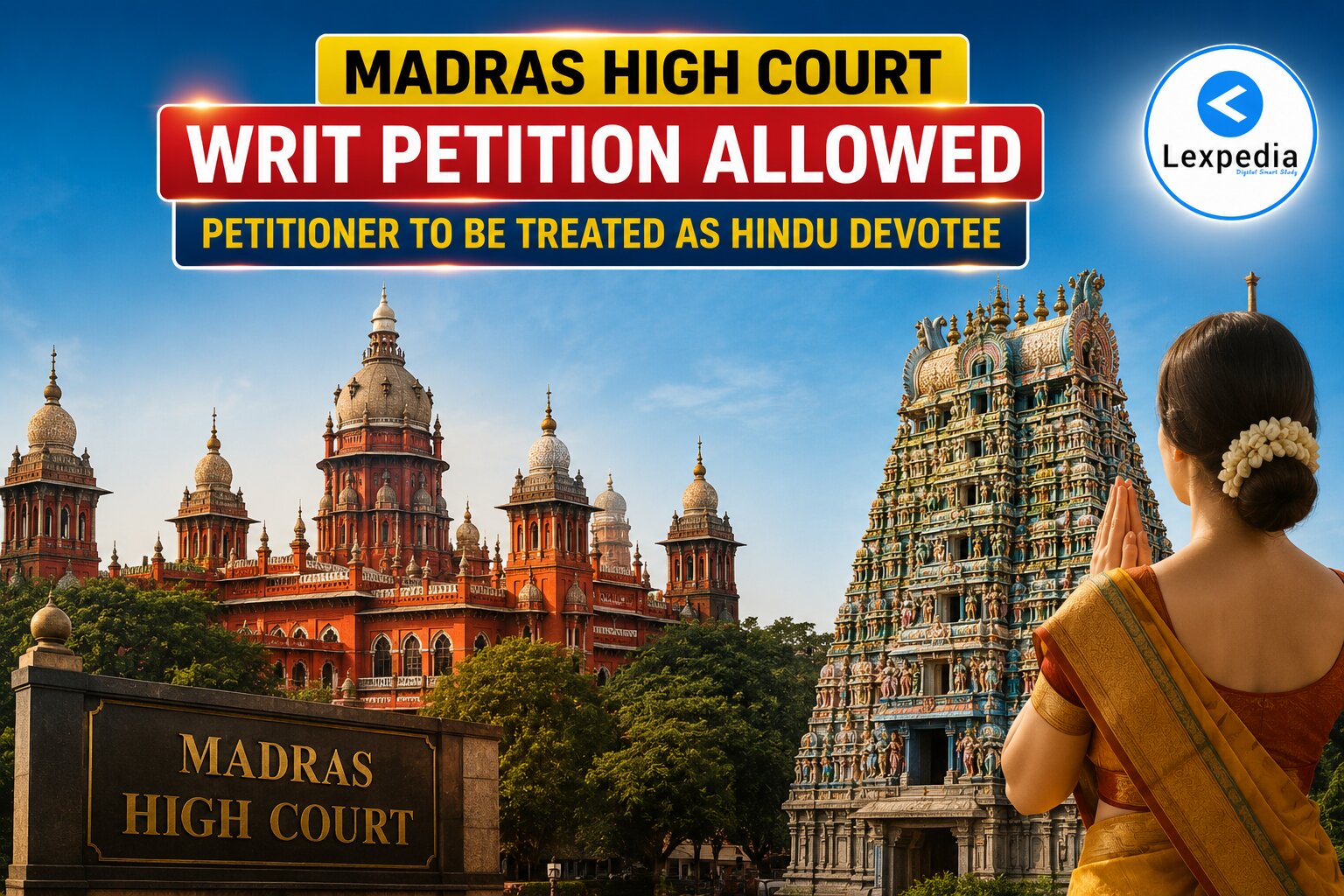
Nationality or a Christian-sounding name cannot be the sole basis for determining a person's religion.
Judgement Details
Court
Madras High Court
Date of Decision
2 July 2026
Judges
Hon'ble Justice Bharatha Chakravarthy
Citation
Acts / Provisions
Facts of the Case
-
The petitioner, Laura Frances Iyengar, is an American citizen who asserted that she had genuinely embraced Hinduism.
-
Laura consistently identified herself as a Hindu in official documents, including her visa application.
-
She undertook pilgrimages to numerous Hindu temples across India and regularly participated in Vaishnavite religious practices and rituals.
-
Laura subsequently married a Hindu man and continued professing and practising the Hindu faith.
-
During a visit to Sri Arulmighu Abishta Varatharajaperumal Temple in Thanjavur District, temple authorities refused to allow her entry into the sanctum sanctorum, believing that she was not a Hindu.
-
Following representations made by Laura's husband, the HR & CE Department permitted her only to remain in the outer precincts of the temple.
-
The departmental order described Laura as an "American Christian woman", despite there being no material supporting such a conclusion.
-
Aggrieved by the restriction and the erroneous characterization of her religion, Laura approached the Madras High Court seeking recognition as a Hindu devotee and unrestricted temple entry in accordance with applicable temple rules.
Issues
-
Whether an American citizen who has genuinely embraced and practised Hinduism can be denied recognition as a Hindu merely because of her nationality or Christian name?
-
Whether the authorities were justified in describing the petitioner as an "American Christian woman" without any supporting evidence?
-
Whether formal conversion ceremonies or conversion certificates are mandatory for a person to be recognised as a Hindu?
-
Whether the petitioner's conduct and consistent profession of Hinduism constituted sufficient evidence of her conversion to the Hindu faith?
-
Whether restricting the petitioner's entry only to the outer precincts of the temple violated her rights as a Hindu devotee?
-
Whether the petitioner was entitled to all rights and obligations available to other Hindu women devotees, subject to the customs, usages, Agamas, and regulations governing the temple?
Judgement
-
The Madras High Court allowed the writ petition.
-
The Court held that the authorities had wrongly described the petitioner as an "American Christian woman", and such a finding was factually incorrect and legally unsustainable.
-
The Court observed that merely bearing the name "Laura Frances" or possessing American citizenship does not determine a person's religious identity.
-
It held that the petitioner's conduct, beliefs, religious practices, and official declarations consistently established that she had embraced Hinduism.
-
The Court reiterated that Hinduism is an inclusive religion that does not prescribe any mandatory formal ceremony or conversion certificate as a prerequisite for acceptance into the faith.
-
The Court clarified that although a mere declaration of faith is insufficient, a bona fide intention to embrace Hinduism coupled with conduct reflecting such belief constitutes adequate proof of conversion.
-
The Bench directed that the petitioner be treated as a Hindu devotee for all purposes relating to temple worship.
-
The Court further directed the HR & CE Department and the temple authorities not to deny her any rights available to Hindu women devotees, subject to the customs, usages, Agamas, and regulations governing the temple.
Held
-
The petitioner had successfully established that she professed and practised Hinduism.
-
Nationality or a Christian-sounding name cannot be the sole basis for determining a person's religion.
-
Formal conversion ceremonies are not mandatory for acceptance into the Hindu faith.
-
Genuine belief coupled with consistent conduct is sufficient to establish conversion to Hinduism.
-
The petitioner is entitled to be treated as a Hindu devotee and enjoy all corresponding rights, subject to lawful temple customs and Agamas.
-
The impugned order restricting her temple entry was declared illegal.
Analysis
-
The judgment significantly affirms the constitutional protection of freedom of conscience under Article 25, recognising that religious identity is determined primarily by sincere belief and consistent practice rather than formal labels or nationality.
-
The Court adopted an inclusive interpretation of Hinduism, recognising its historical openness and the absence of any universally prescribed conversion ceremony.
-
By rejecting the presumption that an American citizen must necessarily be a Christian, the Court reinforced the constitutional principles of equality and non-discrimination embodied in Articles 14 and 15.
-
The decision clarifies that administrative authorities cannot make assumptions regarding an individual's religion solely on the basis of their name, citizenship, or ethnic background.
-
The Court carefully balanced individual religious rights with temple autonomy by directing that the petitioner would remain subject to applicable customs, usages, Agamas, and temple regulations, just like every other Hindu devotee.
-
The judgment provides important guidance on the legal recognition of religious conversion to Hinduism, emphasizing bona fide intention and consistent religious conduct over formal documentation.
-
The ruling is likely to serve as a significant precedent in future disputes concerning religious identity, temple entry, and the rights of foreign nationals who genuinely embrace Hinduism.
-
The decision also underscores that public authorities must base administrative decisions on objective evidence rather than stereotypes or presumptions.