Supreme Court To Examine Whether Muslim Woman Can Invoke Khula Without Husband’s Consent
Lexpedia News · 10 February 2026 · 2 min read
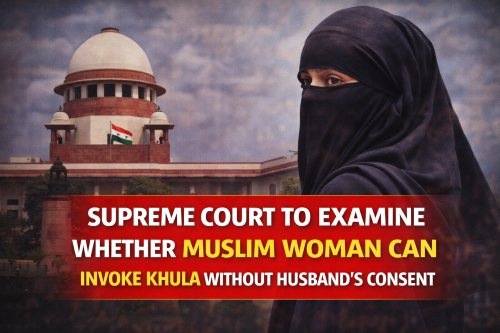
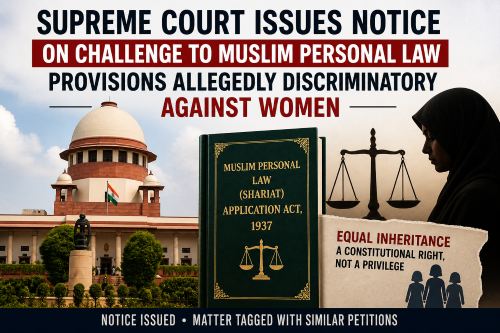
In an important development concerning Muslim Personal Law and women’s marital rights, the Supreme Court of India is set to examine whether a Muslim woman can unilaterally terminate marriage through ‘khula’ without the husband’s consent. The issue arises from an appeal challenging a Kerala High Court judgment that recognised such a right.
The apex court has appointed Senior Advocate Shoeb Alam as amicus curiae to assist the bench in analysing the legal, constitutional, and religious aspects of the matter. The case has been listed for detailed hearing on April 22, 2026, signalling the Court’s intent to examine the question comprehensively.
The dispute originates from a Kerala High Court ruling which held that Islamic law allows a Muslim woman to pronounce khula — a form of divorce initiated by the wife — even without the husband’s approval, treating it as an independent marital right rooted in Muslim personal law principles.
The upcoming Supreme Court hearing is expected to address broader issues such as:
-
Interpretation of Muslim personal law on divorce
-
Gender equality and constitutional rights
-
Role of courts in recognising extra-judicial divorces
-
Balance between religious autonomy and constitutional guarantees
Legal scholars note that khula traditionally refers to a divorce initiated by a Muslim woman, often involving an offer to return the dower (mehr) or other settlement. Interpretations differ across legal schools regarding whether the husband’s consent is essential or whether courts can validate such divorce independently.
Experts believe the Court’s eventual ruling could have far-reaching implications for Muslim family law jurisprudence, gender justice debates, and the harmonisation of personal law with constitutional principles in India.
सुप्रीम कोर्ट करेगा विचार — क्या मुस्लिम महिला पति की सहमति के बिना ‘खुला’ से विवाह समाप्त कर सकती है?
मुस्लिम पर्सनल लॉ और महिलाओं के वैवाहिक अधिकारों से जुड़े एक महत्वपूर्ण प्रश्न पर भारत का सुप्रीम कोर्ट यह विचार करेगा कि क्या मुस्लिम महिला पति की सहमति के बिना ‘खुला’ के माध्यम से विवाह समाप्त कर सकती है। यह मामला केरल हाई कोर्ट के उस फैसले के खिलाफ अपील से जुड़ा है जिसमें महिला को ऐसा अधिकार मान्यता दी गई थी।
शीर्ष अदालत ने मामले की सुनवाई में सहायता के लिए सीनियर एडवोकेट शोएब आलम को एमिकस क्यूरी नियुक्त किया है और मामले को 22 अप्रैल 2026 को विस्तृत सुनवाई के लिए सूचीबद्ध किया है।
यह विवाद केरल हाई कोर्ट के फैसले से उत्पन्न हुआ, जिसमें कहा गया था कि इस्लामी कानून के अनुसार मुस्लिम महिला को खुला के माध्यम से विवाह समाप्त करने का स्वतंत्र अधिकार प्राप्त है और यह पति की सहमति पर निर्भर नहीं हो सकता।
इस मामले में सुप्रीम कोर्ट निम्न प्रमुख मुद्दों पर विचार कर सकता है:
-
मुस्लिम पर्सनल लॉ में तलाक की व्याख्या
-
महिला अधिकार और संवैधानिक समानता
-
अदालतों की भूमिका और अतिरिक्त-न्यायिक तलाक
-
धार्मिक स्वतंत्रता और संवैधानिक मूल्यों का संतुलन
कानूनी विशेषज्ञों के अनुसार सुप्रीम कोर्ट का अंतिम निर्णय मुस्लिम पारिवारिक कानून, लैंगिक न्याय और व्यक्तिगत कानूनों की संवैधानिक व्याख्या पर व्यापक प्रभाव डाल सकता है।