Delhi Court Rejects Bail Pleas of Umar Khalid and Sharjeel Imam in 2020 Delhi Riots Larger Conspiracy Case Under UAPA
Lexpedia News · 4 July 2026 · 8 min read
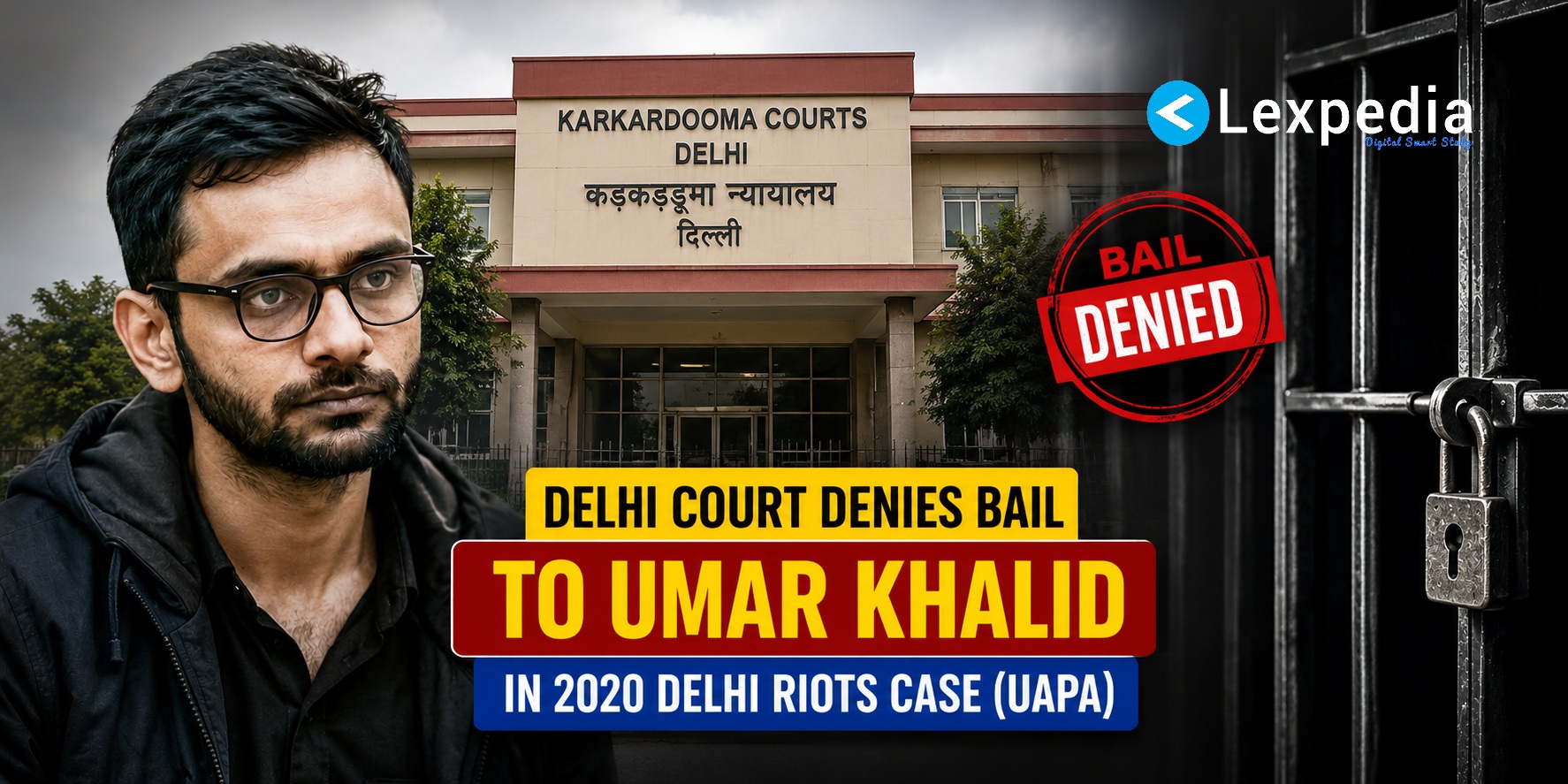
A Delhi court on 4 July 2026 rejected the fresh bail applications of Umar Khalid and Sharjeel Imam in the alleged 2020 North-East Delhi riots larger conspiracy case, holding that it was bound by the earlier judgment of the Supreme Court refusing them bail and that no legal basis existed for taking a different view at this stage.
The order was passed by Additional Sessions Judge (ASJ) Sameer Bajpai of the Karkardooma Courts, who dismissed the regular bail applications filed by both accused under the provisions of the Unlawful Activities (Prevention) Act, 1967 (UAPA).
Background of the Case
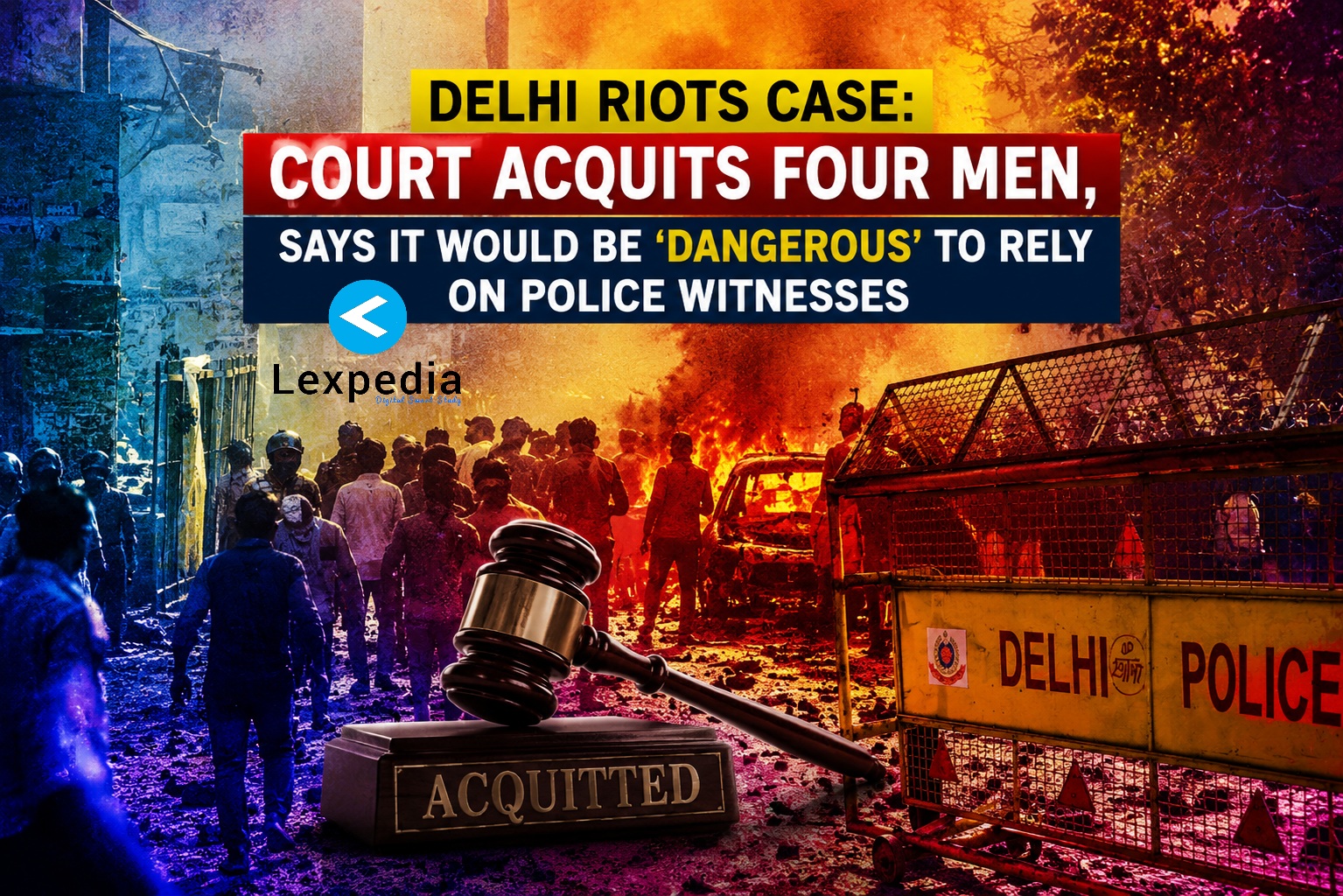
The case arises from FIR No. 59/2020, registered by the Delhi Police Special Cell, alleging a larger conspiracy behind the communal violence that broke out in North-East Delhi in February 2020, resulting in over 50 deaths, hundreds of injuries and extensive destruction of public and private property.
The prosecution alleges that the violence was not spontaneous but was part of a pre-planned conspiracy involving several activists and student leaders. Umar Khalid and Sharjeel Imam are alleged to have played significant roles in planning, mobilising and coordinating the conspiracy. Both have consistently denied all allegations, maintaining that they are being prosecuted for their anti-CAA activism rather than any involvement in violence.
Fresh Bail Applications
The fresh bail pleas were filed in June 2026 after both accused had spent nearly six years in judicial custody.
Their principal arguments included:
- the extraordinary delay in commencement and completion of trial;
- prolonged incarceration violating their fundamental right to personal liberty under Article 21;
- developments in Supreme Court jurisprudence concerning prolonged detention under UAPA;
- and subsequent observations by another Bench of the Supreme Court emphasizing that "bail is the rule and jail is the exception", even while dealing with UAPA cases.
The defence also relied upon the Supreme Court's May 2026 proceedings where questions regarding the interpretation of bail under Section 43D(5) UAPA were referred to a larger Bench because of an apparent conflict in previous judgments.
Delhi Police's Opposition
The Delhi Police opposed the applications, arguing that:
- the allegations against Umar Khalid and Sharjeel Imam were substantially different from those against several co-accused who had earlier been granted bail;
- the Supreme Court had already examined the evidence and held that a prima facie case existed against both applicants;
- there had been no material change in circumstances warranting reconsideration.
According to the prosecution, the accused occupied a qualitatively different position in the alleged conspiracy and therefore could not claim parity with other accused persons.
Court's Reasoning
While dismissing the applications, ASJ Sameer Bajpai observed that the trial court remained bound by the Supreme Court's 5 January 2026 judgment refusing bail to Umar Khalid and Sharjeel Imam.
The court held that:
- the Supreme Court had already distinguished the role of the present applicants from that of other co-accused;
- the judgment continued to remain binding;
- therefore, the Sessions Court had "no option" except to follow the Supreme Court's decision.
The judge further noted that the legal questions concerning interpretation of UAPA bail standards have indeed been referred to a larger Bench of the Supreme Court. However, until those questions are finally decided or the Supreme Court modifies its earlier order, the trial court cannot disregard the existing binding precedent.
Earlier Supreme Court Judgment
On 5 January 2026, the Supreme Court had delivered a significant judgment on bail in the Delhi riots conspiracy case.
The Bench granted bail to five co-accused, including:
- Gulfisha Fatima
- Meeran Haider
- Shifa Ur Rehman
- Mohd. Saleem Khan
- Shadab Ahmed
However, it refused bail to Umar Khalid and Sharjeel Imam.
The Court held that although several accused faced allegations under UAPA, Umar Khalid and Sharjeel Imam stood on a "qualitatively different footing" because of allegations relating to:
- planning;
- mobilisation;
- strategic direction; and
- their alleged central role in the conspiracy.
The Supreme Court held that the prosecution material, if accepted at the bail stage, disclosed a prima facie case attracting the statutory restrictions contained in Section 43D(5) of the UAPA.
Status of the Larger Bench Issue
A separate Bench of the Supreme Court, while hearing another UAPA matter in May 2026, observed that there appeared to be a conflict between different Supreme Court decisions regarding grant of bail in cases involving prolonged incarceration.
Accordingly, those legal questions have been referred to a larger Bench for authoritative determination.
It is important to distinguish the current legal position:
- Officially assigned: The legal questions regarding UAPA bail have been referred to a larger Bench of the Supreme Court.
- Officially decided: No larger Bench judgment has yet overruled or modified the 5 January 2026 judgment concerning Umar Khalid and Sharjeel Imam.
- Therefore: The Sessions Court treated the January 2026 judgment as binding and declined to grant bail.
Present Status
Following the latest order:
- Umar Khalid and Sharjeel Imam continue to remain in judicial custody.
- Proceedings in the Delhi riots larger conspiracy trial continue before the trial court.
- Any substantive reconsideration of the legal principles governing UAPA bail now depends upon the outcome of proceedings before the Supreme Court's larger Bench or any future challenge against the present order.
दिल्ली दंगा बड़ी साज़िश मामले में उमर खालिद और शरजील इमाम की जमानत याचिकाएँ खारिज, UAPA के तहत राहत देने से अदालत का इनकार
दिल्ली की एक अदालत ने 4 जुलाई 2026 को उमर खालिद और शरजील इमाम की ताज़ा जमानत याचिकाओं को खारिज कर दिया। अदालत ने कहा कि वह इस मामले में सुप्रीम कोर्ट के पहले से दिए गए निर्णय से बंधी हुई है और वर्तमान परिस्थितियों में उससे अलग कोई निष्कर्ष निकालने का आधार उपलब्ध नहीं है।
यह आदेश कड़कड़डूमा न्यायालय के अतिरिक्त सत्र न्यायाधीश (ASJ) समीर बाजपेयी ने पारित किया। दोनों आरोपियों ने गैरकानूनी गतिविधियाँ (रोकथाम) अधिनियम, 1967 (UAPA) के तहत दर्ज मामले में नियमित जमानत की मांग की थी।
मामले की पृष्ठभूमि
यह मामला एफआईआर संख्या 59/2020 से संबंधित है, जिसे दिल्ली पुलिस स्पेशल सेल ने दर्ज किया था। अभियोजन का आरोप है कि फरवरी 2020 के उत्तर-पूर्वी दिल्ली दंगे स्वतःस्फूर्त नहीं थे, बल्कि एक सुनियोजित बड़ी साज़िश का परिणाम थे। इन दंगों में 50 से अधिक लोगों की मृत्यु हुई, सैकड़ों लोग घायल हुए तथा व्यापक स्तर पर सार्वजनिक और निजी संपत्ति को नुकसान पहुँचा।
अभियोजन के अनुसार उमर खालिद और शरजील इमाम ने कथित साज़िश की योजना बनाने, लोगों को संगठित करने तथा उसका रणनीतिक संचालन करने में महत्वपूर्ण भूमिका निभाई। दोनों आरोपियों ने सभी आरोपों से लगातार इनकार करते हुए कहा है कि उन्हें उनके CAA विरोधी आंदोलन में भाग लेने के कारण निशाना बनाया गया है।
नई जमानत याचिकाओं में क्या दलील दी गई
दोनों आरोपियों ने जून 2026 में नई जमानत याचिकाएँ दाखिल कीं। उनका कहना था कि:
- वे लगभग छह वर्षों से न्यायिक हिरासत में हैं;
- मुकदमे की सुनवाई अत्यधिक विलंबित है;
- इतनी लंबी अवधि तक मुकदमा शुरू न होना अनुच्छेद 21 के तहत व्यक्तिगत स्वतंत्रता के अधिकार का उल्लंघन है;
- UAPA के तहत जमानत संबंधी कानून पर सुप्रीम कोर्ट की हालिया टिप्पणियाँ उनके पक्ष में हैं।
उन्होंने यह भी तर्क दिया कि मई 2026 में सुप्रीम कोर्ट ने UAPA में जमानत संबंधी महत्वपूर्ण कानूनी प्रश्नों को एक बड़ी पीठ (Larger Bench) को भेजा है।
दिल्ली पुलिस का पक्ष
दिल्ली पुलिस ने जमानत का विरोध करते हुए कहा कि:
- उमर खालिद और शरजील इमाम की भूमिका अन्य सह-आरोपियों से अलग और अधिक गंभीर बताई गई है;
- सुप्रीम कोर्ट पहले ही उपलब्ध सामग्री का परीक्षण कर प्रथमदृष्टया (prima facie) मामला मान चुका है;
- परिस्थितियों में ऐसा कोई महत्वपूर्ण परिवर्तन नहीं हुआ है जिससे दोबारा जमानत दी जा सके।
अदालत ने क्या कहा
ASJ समीर बाजपेयी ने कहा कि 5 जनवरी 2026 को सुप्रीम कोर्ट द्वारा पारित निर्णय अभी भी प्रभावी और बाध्यकारी है।
अदालत ने कहा कि:
- सुप्रीम कोर्ट पहले ही दोनों आरोपियों की भूमिका को अन्य सह-आरोपियों से अलग मान चुका है;
- जब तक सुप्रीम कोर्ट स्वयं अपने आदेश में परिवर्तन नहीं करता या बड़ी पीठ कोई अलग कानून घोषित नहीं करती, तब तक निचली अदालत उस निर्णय से अलग नहीं जा सकती;
- इसलिए अदालत के पास जमानत देने का "कोई विकल्प नहीं" है।
5 जनवरी 2026 का सुप्रीम कोर्ट निर्णय
5 जनवरी 2026 को सुप्रीम कोर्ट ने इसी मामले में महत्वपूर्ण फैसला सुनाया था।
सुप्रीम कोर्ट ने पाँच सह-आरोपियों—
- गुलफिशा फातिमा,
- मीरान हैदर,
- शिफा उर रहमान,
- मोहम्मद सलीम खान तथा
- शादाब अहमद
—को जमानत प्रदान की थी।
लेकिन उमर खालिद और शरजील इमाम की जमानत याचिकाएँ यह कहते हुए खारिज कर दी थीं कि दोनों की कथित भूमिका "गुणात्मक रूप से अलग (qualitatively different footing)" है और उनके विरुद्ध साज़िश की योजना, लोगों को संगठित करने तथा रणनीतिक नेतृत्व से जुड़े आरोप हैं। अदालत ने माना था कि उपलब्ध सामग्री UAPA की धारा 43D(5) के तहत प्रथमदृष्टया मामला स्थापित करती है।
बड़ी पीठ (Larger Bench) की स्थिति
मई 2026 में सुप्रीम कोर्ट की एक अन्य पीठ ने UAPA के तहत जमानत के मानकों को लेकर विभिन्न निर्णयों में दिखाई देने वाले मतभेद पर ध्यान देते हुए महत्वपूर्ण कानूनी प्रश्नों को बड़ी पीठ के समक्ष भेज दिया।
वर्तमान स्थिति स्पष्ट रूप से इस प्रकार है:
- आधिकारिक रूप से तय: केवल यह कि कानूनी प्रश्न बड़ी पीठ को भेजे गए हैं।
- अब तक तय नहीं हुआ: बड़ी पीठ ने अभी तक कोई अंतिम निर्णय नहीं दिया है।
- इसलिए: 5 जनवरी 2026 का सुप्रीम कोर्ट का निर्णय अभी भी प्रभावी है और उसी के आधार पर ट्रायल कोर्ट ने जमानत देने से इनकार किया।
वर्तमान स्थिति
ताज़ा आदेश के बाद:
- उमर खालिद और शरजील इमाम न्यायिक हिरासत में बने रहेंगे।
- दिल्ली दंगा बड़ी साज़िश मामले का ट्रायल जारी रहेगा।
- UAPA के तहत जमानत से संबंधित व्यापक कानूनी प्रश्नों पर अंतिम स्पष्टता अब सुप्रीम कोर्ट की बड़ी पीठ के निर्णय या भविष्य में किसी उच्चतर न्यायिक आदेश के बाद ही आएगी।