Delhi Riots Case: Court Acquits Four Men, Says It Would Be “Dangerous” To Convict Solely On Police Witnesses
Lexpedia News · 20 May 2026 · 6 min read
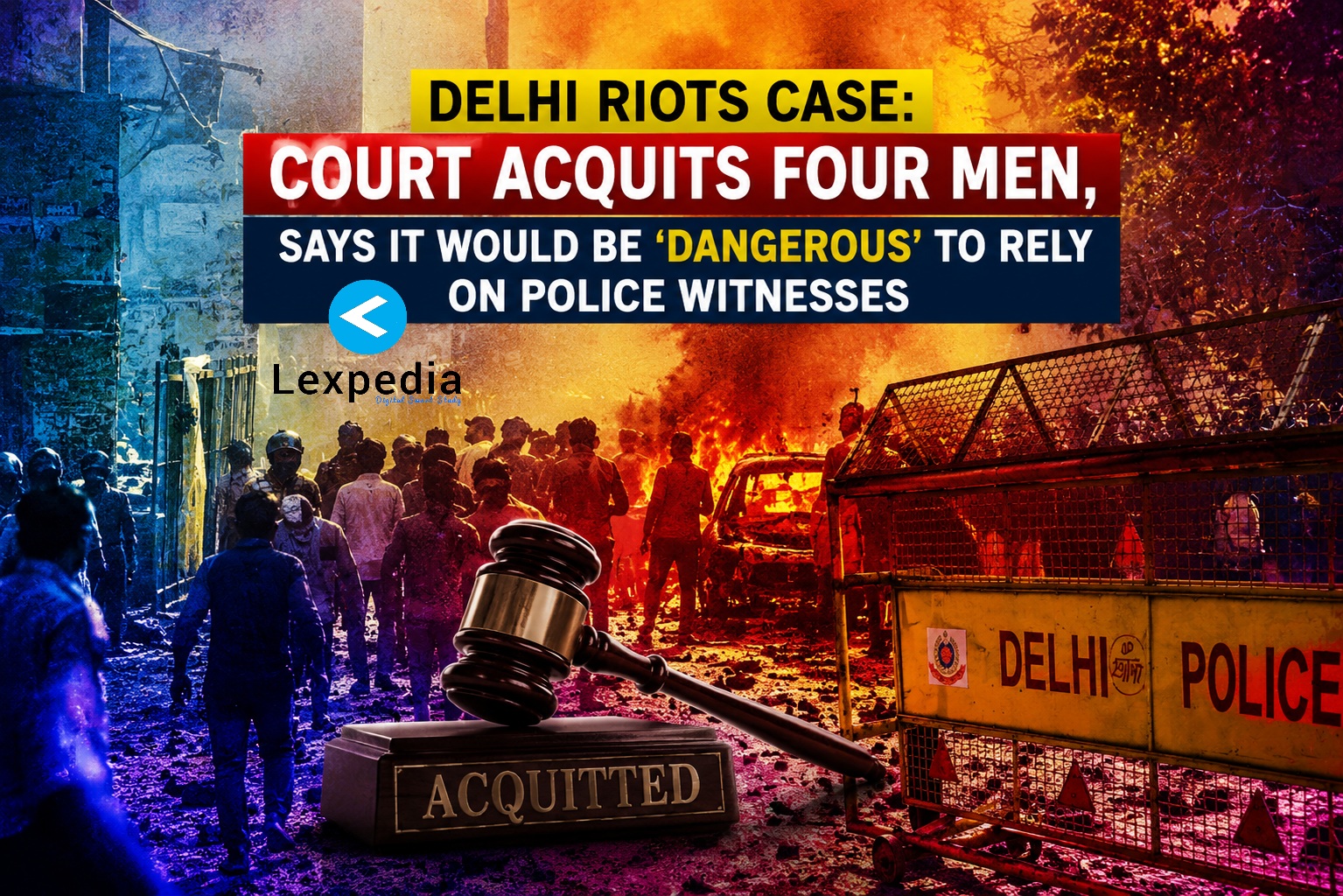
A Delhi Court has acquitted four men accused in a case arising out of the 2020 North-East Delhi riots, observing that it would be “dangerous” to convict the accused solely on the basis of testimonies of police witnesses when independent public witnesses were not examined and material inconsistencies existed in the prosecution case.
According to reports, the case pertained to allegations of rioting, unlawful assembly, and violence during the communal riots that erupted in North-East Delhi in February 2020. The prosecution had alleged that the accused persons were part of an unlawful mob involved in rioting and related offences during the period of large-scale violence that affected several areas of the national capital.
The Court, however, found serious deficiencies in the prosecution evidence and ultimately granted the benefit of doubt to all four accused persons.
As per reports, the judgment was delivered by a Delhi Court while hearing the criminal case registered in connection with the riots. The Court reportedly observed that the prosecution failed to produce reliable independent witnesses despite the alleged incident occurring in a populated locality where public witnesses could have been available.
The Court emphasized that while police witnesses are not inherently unreliable merely because they belong to the police force, conviction cannot automatically be based only on official testimonies when corroborative evidence is weak or absent.
The Court reportedly remarked that in the facts of the present case, it would be “dangerous to rely solely upon police witnesses” to convict the accused persons. The Court also noted inconsistencies, contradictions, and deficiencies in witness statements and prosecution records.
According to legal reports, the prosecution alleged that the accused persons were apprehended at the spot during the riots. However, the Court reportedly found that the prosecution failed to establish the allegations beyond reasonable doubt.
The judgment further observed that criminal jurisprudence requires the prosecution to prove its case through cogent, reliable, and trustworthy evidence. Mere suspicion, regardless of its strength, cannot substitute legal proof required for conviction in criminal trials.
The Court also took note of the absence of sufficient documentary evidence and electronic evidence directly linking the accused to the alleged acts of violence. Reports indicate that no convincing material was placed on record to conclusively establish participation of the accused in rioting activities.
The acquittal once again highlights judicial scrutiny of riot-related prosecutions arising from the Delhi riots cases, many of which have involved debates over the quality of investigation, reliance on police testimony, CCTV footage, electronic evidence, and identification procedures.
Several courts in recent years have repeatedly stressed the importance of fair investigation standards and the necessity of independent corroboration in criminal trials connected with riot cases and mob violence allegations.
The North-East Delhi riots of February 2020 had resulted in large-scale communal violence, causing deaths, injuries, and destruction of public and private property. Multiple FIRs and criminal prosecutions were initiated following the riots, with investigations conducted by the Delhi Police.
At present, there is no indication from publicly available reports whether the prosecution intends to challenge the acquittal before a higher court.
The judgment is being viewed as another significant ruling emphasizing the fundamental principle of criminal law that guilt must be proved beyond reasonable doubt, especially in cases involving mass violence and serious penal consequences.
दिल्ली दंगा मामला: अदालत ने चार आरोपियों को बरी किया, कहा — केवल पुलिस गवाहों के आधार पर दोषसिद्धि “खतरनाक”
दिल्ली की एक अदालत ने 2020 उत्तर-पूर्वी दिल्ली दंगों से जुड़े एक मामले में चार आरोपियों को बरी करते हुए कहा है कि केवल पुलिस गवाहों के बयानों के आधार पर दोषसिद्धि करना “खतरनाक” होगा, विशेषकर तब जब स्वतंत्र सार्वजनिक गवाहों को पेश नहीं किया गया हो और अभियोजन पक्ष के मामले में महत्वपूर्ण विरोधाभास मौजूद हों।
रिपोर्टों के अनुसार, यह मामला फरवरी 2020 में उत्तर-पूर्वी दिल्ली में भड़के सांप्रदायिक दंगों के दौरान कथित दंगा, अवैध जमावड़ा, और हिंसा से संबंधित था। अभियोजन पक्ष का आरोप था कि आरोपी एक अवैध भीड़ का हिस्सा थे और उन्होंने दंगों के दौरान विभिन्न आपराधिक गतिविधियों में भाग लिया था।
हालांकि, अदालत ने अभियोजन साक्ष्यों में गंभीर कमियाँ पाईं और अंततः सभी चार आरोपियों को संदेह का लाभ देते हुए बरी कर दिया।
रिपोर्टों के अनुसार, यह फैसला दिल्ली की एक अदालत द्वारा दंगों से संबंधित आपराधिक मामले की सुनवाई के दौरान सुनाया गया। अदालत ने कथित रूप से कहा कि अभियोजन पक्ष विश्वसनीय स्वतंत्र गवाह प्रस्तुत करने में विफल रहा, जबकि कथित घटना घनी आबादी वाले क्षेत्र में हुई थी जहाँ सार्वजनिक गवाह उपलब्ध हो सकते थे।
अदालत ने स्पष्ट किया कि केवल इस आधार पर कि कोई गवाह पुलिसकर्मी है, उसे अविश्वसनीय नहीं माना जा सकता। लेकिन जब पुष्टिकारी साक्ष्य कमजोर या अनुपस्थित हों, तब केवल आधिकारिक गवाहियों के आधार पर दोषसिद्धि नहीं की जा सकती।
अदालत ने कथित रूप से टिप्पणी की कि वर्तमान मामले के तथ्यों में आरोपियों को दोषी ठहराने के लिए “सिर्फ पुलिस गवाहों पर निर्भर रहना खतरनाक होगा”। अदालत ने गवाहों के बयानों और अभियोजन रिकॉर्ड में कई विरोधाभासों, असंगतियों, और कमियों का भी उल्लेख किया।
कानूनी रिपोर्टों के अनुसार, अभियोजन पक्ष का दावा था that आरोपियों को दंगों के दौरान मौके से गिरफ्तार किया गया था। हालांकि अदालत ने पाया कि अभियोजन पक्ष आरोपों को “संदेह से परे” सिद्ध करने में विफल रहा।
फैसले में यह भी कहा गया कि आपराधिक न्यायशास्त्र के अनुसार अभियोजन पक्ष को अपना मामला ठोस, विश्वसनीय, और भरोसेमंद साक्ष्यों के माध्यम से सिद्ध करना होता है। मात्र संदेह, चाहे वह कितना भी प्रबल क्यों न हो, आपराधिक मुकदमों में दोषसिद्धि के लिए आवश्यक कानूनी प्रमाण का स्थान नहीं ले सकता।
अदालत ने यह भी नोट किया कि आरोपियों को कथित हिंसक घटनाओं से सीधे जोड़ने वाला पर्याप्त दस्तावेजी साक्ष्य और इलेक्ट्रॉनिक साक्ष्य उपलब्ध नहीं कराया गया। रिपोर्टों के अनुसार, रिकॉर्ड पर ऐसा कोई ठोस सामग्री नहीं रखी गई जिससे आरोपियों की दंगा गतिविधियों में भागीदारी निर्णायक रूप से सिद्ध हो सके।
यह बरी किया जाना एक बार फिर दिल्ली दंगा मामलों में न्यायिक जांच की गंभीरता को दर्शाता है। इन मामलों में जांच की गुणवत्ता, पुलिस गवाहियों पर निर्भरता, सीसीटीवी फुटेज, इलेक्ट्रॉनिक साक्ष्य और पहचान प्रक्रिया जैसे मुद्दों पर लगातार बहस होती रही है।
पिछले कुछ वर्षों में विभिन्न अदालतों ने दंगा मामलों और भीड़ हिंसा से जुड़े मुकदमों में निष्पक्ष जांच मानकों और स्वतंत्र पुष्टिकरण के महत्व पर बार-बार जोर दिया है।
फरवरी 2020 के उत्तर-पूर्वी दिल्ली दंगों में व्यापक सांप्रदायिक हिंसा हुई थी, जिसमें कई लोगों की मृत्यु हुई, अनेक लोग घायल हुए तथा सार्वजनिक और निजी संपत्ति को भारी नुकसान पहुँचा था। दंगों के बाद अनेक एफआईआर दर्ज की गईं और दिल्ली पुलिस द्वारा जांच शुरू की गई।
फिलहाल सार्वजनिक रूप से उपलब्ध रिपोर्टों से यह स्पष्ट नहीं है कि अभियोजन पक्ष इस बरी किए जाने के आदेश को उच्च अदालत में चुनौती देगा या नहीं।
इस फैसले को एक महत्वपूर्ण निर्णय के रूप में देखा जा रहा है, जो आपराधिक कानून के उस मूल सिद्धांत को पुनः रेखांकित करता है कि विशेषकर सामूहिक हिंसा और गंभीर दंड वाले मामलों में अपराध को “संदेह से परे” सिद्ध किया जाना आवश्यक है।