Delhi Court Issues Non-Bailable Warrant Against YouTuber Dhruv Rathee in 2018 Criminal Defamation Case; Saket Court Lists Matter for December 3
Lexpedia News · 23 November 2026 · 18 min read
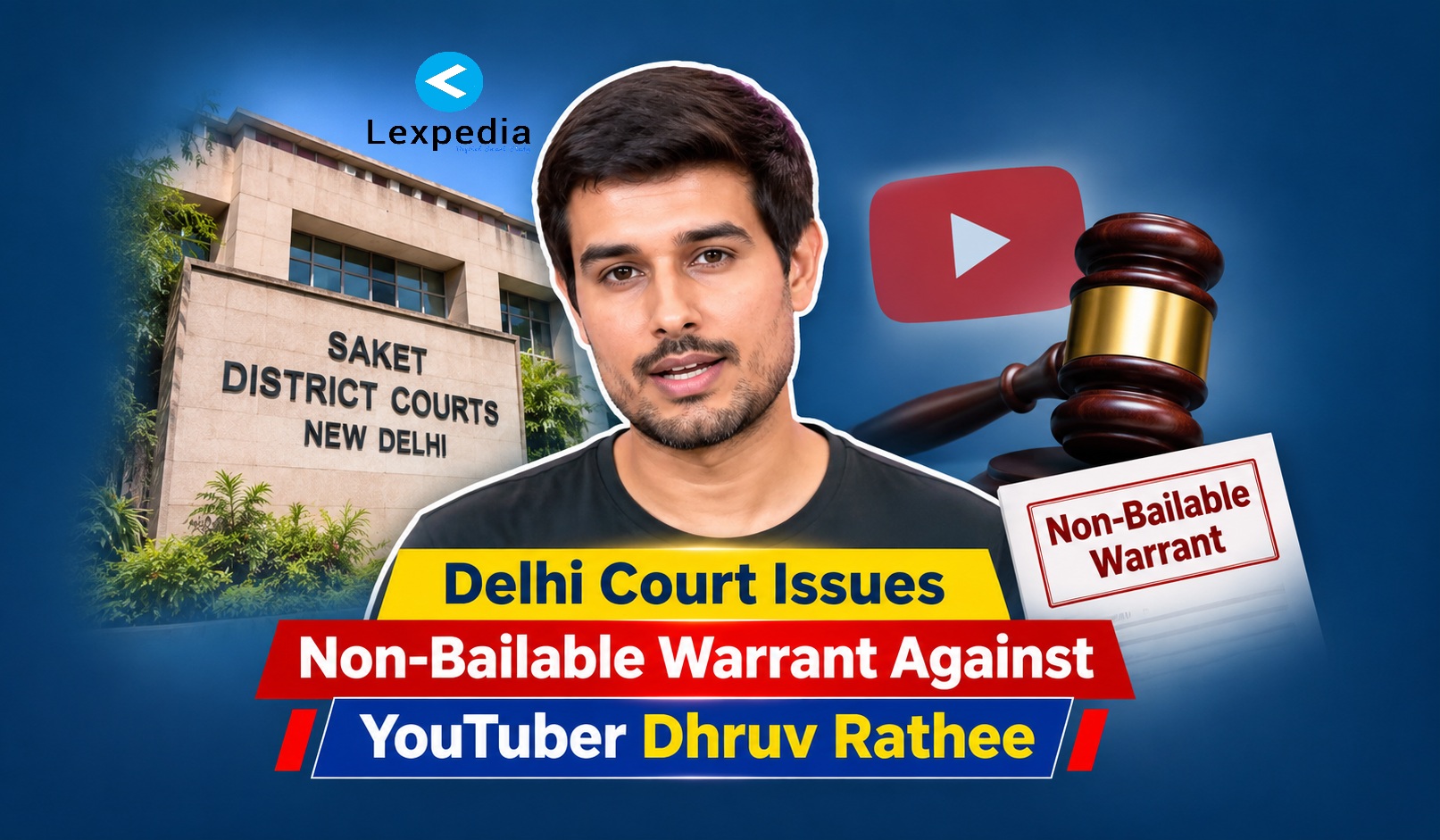
New Delhi: In a significant development in an eight-year-old criminal defamation case, a Delhi court has issued a Non-Bailable Warrant (NBW) against YouTuber Dhruv Rathee in connection with a complaint filed by Vikas Sanskrityayan, also known as Vikas Pandey, over Rathee's alleged defamatory statements in a YouTube video titled “BJP IT Cell Part II”.
The warrant was issued on Monday, November 23, 2026, by Judicial Magistrate First Class (JMFC) Anam Rais Khan, who was functioning as the duty magistrate at the Saket Courts, New Delhi. The court has listed the matter for further proceedings on December 3, 2026.
The development follows earlier attempts to secure Rathee's appearance through court summons and bailable warrants. The complainant had argued that the proceedings had remained delayed for several years because Rathee ordinarily resides outside India, making service of court processes difficult.
1. Background of the 2018 defamation case
The criminal defamation proceedings originate from a video uploaded by Dhruv Rathee in May 2018, titled “BJP IT Cell Part II”.
In the video, Rathee allegedly made statements concerning the functioning of the Bharatiya Janata Party's (BJP) Information Technology Cell and claimed that individuals associated with the BJP IT Cell had attempted to bribe Vikas Sanskrityayan, also known as Vikas Pandey.
Pandey, who is associated with the Facebook page “I Support Narendra Modi”, alleged that the statements made in the video were false, misleading and defamatory, and that they had adversely affected his reputation.
Taking exception to the publication and circulation of the video, Pandey initiated criminal defamation proceedings against Dhruv Rathee and also against Arvind Kejriwal, who was the Chief Minister of Delhi at the relevant time and had shared the video on social media.
The complainant's case is that the allegations made in the video were not merely criticism of a political organisation but also contained specific allegations against him, which allegedly damaged his personal and professional reputation.
Importantly, these are allegations made by the complainant. They have not been established as judicial findings against Rathee.
2. How the proceedings reached the stage of a non-bailable warrant
The issuance of the NBW follows a series of procedural developments in the case.
According to the reports, the court had initially issued summons to Rathee in July 2019. However, the proceedings faced difficulties because the court processes could not be effectively served upon him.
The subsequent developments in 2026 are particularly relevant:
-
October 12, 2026: Judicial Magistrate First Class Rahul Jain of the Saket Courts allowed the complainant's application seeking advancement of the hearing and directed the issuance of fresh summons to Rathee. The complainant argued that attempts to serve him had continued for several years and that Rathee was then in India in connection with the Cockroach Janata Party (CJP) protests.
-
October 17, 2026: The court proceedings reportedly involved the issuance of bailable warrants after the process server reported difficulties in serving the court notice, including that the premises were found locked.
-
October 31, 2026: The court issued fresh bailable warrants after the earlier process had not secured Rathee's appearance. Reports also indicated that questions had arisen regarding the address at which earlier warrants were sent, with the complainant's side seeking service at his Gurugram address.
-
November 23, 2026: The duty magistrate issued a non-bailable warrant against Rathee after the earlier attempts to secure his appearance had remained unsuccessful.
The complainant's counsel, Advocate Samaksh Sharma, had reportedly argued that Rathee ordinarily resides abroad and that the delay in serving court processes had substantially prolonged the proceedings. The complainant also provided information concerning a residential address in Gurugram, Haryana, where Rathee was believed to be available for service.
The court was accordingly requested to take effective steps to ensure his appearance before it.
3. Why did the court issue a non-bailable warrant?
A Non-Bailable Warrant is a judicial process used to secure the presence of an accused person before the court. It is generally a more coercive measure than a summons or a bailable warrant.
In criminal proceedings, courts ordinarily attempt to secure an accused person's presence through summons. Where the accused does not appear despite the issuance and service of appropriate process, the court may consider issuing a warrant, depending on the circumstances and applicable legal requirements.
A bailable warrant allows the person concerned to obtain release upon furnishing the required bail or security in accordance with the warrant. A non-bailable warrant, on the other hand, does not provide the same automatic entitlement to release upon furnishing bail at the place of execution. The question of release is subject to the competent court's decision.
In the present case, the reported sequence of summons, bailable warrants and finally an NBW indicates an escalation in the court's efforts to secure Rathee's appearance.
However, the issuance of an NBW does not mean that Rathee has been convicted, that the allegations have been proved, or that the court has finally determined the question of defamation. The purpose of the warrant is to secure his presence in the pending proceedings.
4. Judicial officer who issued the latest warrant: Duty magistrate at Saket Courts
Another important procedural aspect concerns the judicial officer who passed the latest order.
According to LiveLaw, the non-bailable warrant was issued by Judicial Magistrate First Class Anam Rais Khan, who was sitting as the duty magistrate at the Saket Courts on November 23.
The regular judicial officer dealing with the matter was reportedly on leave on that date. Consequently, the matter was taken up by the duty magistrate.
This distinction is important: the available reporting indicates that the order was passed in the capacity of a duty magistrate, rather than as a result of a confirmed permanent reassignment of the case to a different judicial officer.
No independently verified official roster or administrative notification establishing a permanent reassignment has been identified in the available reports. Therefore, it would be inappropriate to describe the development as an officially confirmed change in the regular judicial assignment.
The latest order should be understood in the context of the duty arrangement reported for that particular hearing.
5. Where does Dhruv Rathee ordinarily reside?
The question of Rathee's residence has also featured prominently in the proceedings because it has affected the service of summons and warrants.
Different news reports have described his ordinary residence differently. Some reports have referred to Germany, while others, including reports concerning submissions made by his counsel, have referred to Austria.
The complainant's side also reportedly informed the court that Rathee had travelled to India in connection with the CJP protests and sought to use information about his Gurugram residence to facilitate service of the court process.
It is therefore important to distinguish between:
-
Reported ordinary residence: Various reports have described Rathee as ordinarily residing abroad, with Germany and Austria both mentioned.
-
Gurugram address: A residential address in Gurugram was reportedly provided for the purpose of serving court processes.
-
Presence in India: His reported visit to India in connection with the CJP protests formed part of the complainant's submissions seeking expedited proceedings.
The available reports do not justify treating any one of these details as a definitive judicial finding about his permanent residence.
6. What happens next? December 3, 2026 hearing
Following the issuance of the non-bailable warrant, the matter has been listed for December 3, 2026.
The next proceedings are expected to concern the execution of the warrant and the steps taken to secure Rathee's appearance before the court.
The precise directions regarding execution, the period for which the warrant will remain operative, and any further conditions will have to be ascertained from the actual judicial order.
7. Legal significance: Warrant is not a determination of guilt
The latest development is significant from the standpoint of criminal procedure, particularly in cases where an accused person is ordinarily residing outside India and repeated attempts to secure their appearance before the court have reportedly been unsuccessful.
A non-bailable warrant is a mechanism for ensuring the presence of an accused before the court. Its issuance must not be confused with a finding of guilt.
The following legal distinctions are important:
-
Presumption of innocence: Rathee continues to enjoy the presumption of innocence. The allegations in the complaint remain to be adjudicated.
-
No final finding on defamation: The issuance of the warrant does not establish that the statements in the video were defamatory.
-
Right to seek appropriate relief: Rathee may approach the competent court for appropriate relief, including seeking cancellation or recall of the warrant and other legally permissible remedies, subject to the applicable procedure.
-
Further judicial proceedings: The complainant will still have to establish the allegations in accordance with law.
The case therefore remains at the stage of securing the accused's appearance and proceeding with the pending criminal complaint, rather than at the stage of a final determination of criminal liability.
8. Conclusion
The issuance of a non-bailable warrant against Dhruv Rathee marks a significant procedural development in the criminal defamation complaint that originated in 2018 over his YouTube video “BJP IT Cell Part II”.
After several years of difficulties in securing his appearance, and following the reported issuance of summons and bailable warrants, the Saket Court has now taken a more stringent procedural step.
The matter is scheduled to be heard next on December 3, 2026. The subsequent proceedings will clarify whether the warrant is successfully executed, whether Rathee appears before the court or obtains appropriate judicial relief, and how the underlying criminal complaint progresses.
It is important to reiterate that the non-bailable warrant is an order to secure appearance and not a conviction or a judicial declaration that the allegations of defamation are true.
दिल्ली की अदालत ने यूट्यूबर ध्रुव राठी के खिलाफ जारी किया गैर-जमानती वारंट; 2018 के मानहानि मामले में 3 दिसंबर को अगली सुनवाई
नई दिल्ली: वर्ष 2018 से लंबित एक आपराधिक मानहानि मामले में महत्वपूर्ण घटनाक्रम सामने आया है। दिल्ली की एक अदालत ने यूट्यूबर ध्रुव राठी के खिलाफ गैर-जमानती वारंट (Non-Bailable Warrant – NBW) जारी किया है। यह मामला ध्रुव राठी द्वारा अपने यूट्यूब चैनल पर प्रकाशित “BJP IT Cell Part II” शीर्षक वाले वीडियो में कथित रूप से मानहानिकारक बयान देने के आरोपों से संबंधित है।
यह वारंट सोमवार, 23 नवंबर 2026 को साकेत जिला न्यायालय, नई दिल्ली की न्यायिक मजिस्ट्रेट प्रथम श्रेणी (JMFC) अनम रईस खान द्वारा जारी किया गया। उस दिन वह ड्यूटी मजिस्ट्रेट के रूप में कार्य कर रही थीं। अदालत ने मामले को आगे की सुनवाई के लिए 3 दिसंबर 2026 को सूचीबद्ध किया है।
यह घटनाक्रम ध्रुव राठी की अदालत में उपस्थिति सुनिश्चित करने के लिए पहले जारी किए गए समन और जमानती वारंट के बाद सामने आया है। शिकायतकर्ता की ओर से दलील दी गई थी कि ध्रुव राठी के सामान्यतः भारत से बाहर रहने के कारण कई वर्षों से अदालती समन की तामील में कठिनाइयां आ रही थीं।
1. वर्ष 2018 के मानहानि मामले की पृष्ठभूमि
यह आपराधिक मानहानि मामला मई 2018 में ध्रुव राठी द्वारा अपलोड किए गए “BJP IT Cell Part II” शीर्षक वाले वीडियो से संबंधित है।
इस वीडियो में ध्रुव राठी ने भारतीय जनता पार्टी (BJP) के आईटी सेल की कार्यप्रणाली के संबंध में कथित रूप से कुछ बयान दिए थे। वीडियो में आरोप लगाया गया था कि भाजपा के आईटी सेल से जुड़े कुछ व्यक्तियों ने विकास संस्कृत्यायन, जिन्हें विकास पांडे के नाम से भी जाना जाता है, को रिश्वत देने का प्रयास किया था।
विकास पांडे, जो “I Support Narendra Modi” नामक फेसबुक पेज से जुड़े हैं, ने आरोप लगाया कि वीडियो में लगाए गए बयान झूठे, भ्रामक और मानहानिकारक थे तथा उनसे उनकी प्रतिष्ठा को नुकसान पहुंचा।
वीडियो के प्रकाशन और प्रसार पर आपत्ति जताते हुए विकास पांडे ने ध्रुव राठी के खिलाफ आपराधिक मानहानि की कार्यवाही शुरू की थी। उन्होंने तत्कालीन दिल्ली के मुख्यमंत्री अरविंद केजरीवाल के खिलाफ भी कार्यवाही शुरू की थी, क्योंकि उन्होंने उस समय सोशल मीडिया पर उक्त वीडियो साझा किया था।
शिकायतकर्ता का मुख्य आरोप है कि वीडियो में केवल किसी राजनीतिक संगठन की आलोचना नहीं की गई थी, बल्कि उनके संबंध में भी विशिष्ट आरोप लगाए गए थे, जिससे उनकी व्यक्तिगत और पेशेवर प्रतिष्ठा को कथित रूप से नुकसान पहुंचा।
महत्वपूर्ण बात यह है कि ये शिकायतकर्ता द्वारा लगाए गए आरोप हैं। अभी तक इन्हें ध्रुव राठी के खिलाफ अदालत द्वारा स्थापित न्यायिक तथ्य नहीं माना गया है।
2. मामला गैर-जमानती वारंट तक कैसे पहुंचा?
गैर-जमानती वारंट जारी होने से पहले इस मामले में कई प्रक्रियात्मक घटनाक्रम सामने आए।
रिपोर्टों के अनुसार, अदालत ने सबसे पहले जुलाई 2019 में ध्रुव राठी के खिलाफ समन जारी किए थे। हालांकि, उनके खिलाफ अदालती प्रक्रिया की तामील कराने में कठिनाइयां आती रहीं।
वर्ष 2026 में घटनाक्रम इस प्रकार सामने आए:
-
12 अक्टूबर 2026: साकेत कोर्ट के न्यायिक मजिस्ट्रेट प्रथम श्रेणी राहुल जैन ने शिकायतकर्ता की ओर से सुनवाई की तारीख पहले करने की मांग वाली अर्जी स्वीकार की और ध्रुव राठी के खिलाफ नए समन जारी करने का निर्देश दिया। शिकायतकर्ता ने दलील दी कि कई वर्षों से समन की तामील के प्रयास किए जा रहे हैं और ध्रुव राठी उस समय कॉकroach जनता पार्टी (CJP) के विरोध-प्रदर्शनों के सिलसिले में भारत में मौजूद थे।
-
17 अक्टूबर 2026: अदालती कार्यवाही के दौरान कथित रूप से जमानती वारंट जारी किए गए। प्रक्रिया तामील करने वाले अधिकारी ने बताया था कि समन की तामील में कठिनाई आई और संबंधित परिसर बंद मिला।
-
31 अक्टूबर 2026: ध्रुव राठी की उपस्थिति सुनिश्चित नहीं होने के बाद अदालत ने नए जमानती वारंट जारी किए। रिपोर्टों के अनुसार, पहले जारी वारंट गलत पते पर भेजे जाने का मुद्दा भी सामने आया था। शिकायतकर्ता की ओर से गुरुग्राम स्थित पते पर तामील कराने की मांग की गई।
-
23 नवंबर 2026: समन और जमानती वारंट के माध्यम से उपस्थिति सुनिश्चित करने के पहले के प्रयास सफल नहीं होने के बाद ड्यूटी मजिस्ट्रेट ने ध्रुव राठी के खिलाफ गैर-जमानती वारंट जारी कर दिया।
शिकायतकर्ता के अधिवक्ता समक्ष शर्मा ने कथित रूप से अदालत के समक्ष दलील दी थी कि ध्रुव राठी सामान्यतः विदेश में रहते हैं और इस कारण कई वर्षों से अदालती प्रक्रिया की तामील में देरी हो रही है। शिकायतकर्ता ने गुरुग्राम, हरियाणा स्थित एक आवासीय पते की जानकारी भी दी थी, जहां ध्रुव राठी के उपलब्ध होने की संभावना जताई गई थी।
इसी आधार पर अदालत से उनकी उपस्थिति सुनिश्चित करने के लिए प्रभावी कदम उठाने का अनुरोध किया गया था।
3. अदालत ने गैर-जमानती वारंट क्यों जारी किया?
गैर-जमानती वारंट एक न्यायिक प्रक्रिया है, जिसका उद्देश्य आरोपी व्यक्ति की अदालत में उपस्थिति सुनिश्चित करना होता है। यह समन और जमानती वारंट की तुलना में अधिक कठोर प्रक्रिया है।
आपराधिक मामलों में सामान्यतः अदालत सबसे पहले समन जारी करके आरोपी की उपस्थिति सुनिश्चित करने का प्रयास करती है। यदि उचित प्रक्रिया के बावजूद आरोपी अदालत में उपस्थित नहीं होता है, तो मामले की परिस्थितियों और लागू कानूनी प्रावधानों के अनुसार अदालत वारंट जारी करने पर विचार कर सकती है।
जमानती वारंट के मामले में संबंधित व्यक्ति वारंट में निर्धारित शर्तों के अनुसार जमानत या सुरक्षा देकर रिहाई प्राप्त कर सकता है। इसके विपरीत, गैर-जमानती वारंट में वारंट के निष्पादन के स्थान पर जमानत देकर स्वतः रिहाई का समान अधिकार उपलब्ध नहीं होता। रिहाई का प्रश्न सक्षम अदालत के निर्णय पर निर्भर करता है।
इस मामले में समन, जमानती वारंट और अंततः गैर-जमानती वारंट जारी होने का क्रम यह दर्शाता है कि अदालत ने ध्रुव राठी की उपस्थिति सुनिश्चित करने के लिए क्रमशः अधिक कठोर प्रक्रियात्मक कदम उठाए हैं।
हालांकि, गैर-जमानती वारंट जारी होने का अर्थ यह नहीं है कि ध्रुव राठी को दोषी ठहरा दिया गया है, उनके खिलाफ लगाए गए आरोप साबित हो गए हैं या अदालत ने मानहानि के प्रश्न पर अंतिम निर्णय दे दिया है। वारंट का उद्देश्य लंबित कार्यवाही में उनकी उपस्थिति सुनिश्चित करना है।
4. गैर-जमानती वारंट जारी करने वाले न्यायिक अधिकारी: साकेत कोर्ट की ड्यूटी मजिस्ट्रेट
इस मामले में नवीनतम आदेश पारित करने वाले न्यायिक अधिकारी की भूमिका भी महत्वपूर्ण है।
LiveLaw की रिपोर्ट के अनुसार, 23 नवंबर को गैर-जमानती वारंट न्यायिक मजिस्ट्रेट प्रथम श्रेणी अनम रईस खान ने जारी किया, जो उस दिन साकेत कोर्ट में ड्यूटी मजिस्ट्रेट के रूप में कार्य कर रही थीं।
इस मामले की नियमित सुनवाई करने वाले न्यायिक अधिकारी के उस दिन अवकाश पर होने की सूचना दी गई है। इसी कारण मामला ड्यूटी मजिस्ट्रेट के समक्ष रखा गया।
यहां एक महत्वपूर्ण प्रक्रियात्मक अंतर समझना आवश्यक है। उपलब्ध समाचार रिपोर्टों के अनुसार, आदेश ड्यूटी मजिस्ट्रेट के रूप में पारित किया गया था। इसे मामले के नियमित न्यायिक अधिकारी के स्थायी रूप से बदल दिए जाने या केस की आधिकारिक पुनः-आवंटन प्रक्रिया के रूप में प्रस्तुत नहीं किया जा सकता।
उपलब्ध रिपोर्टों में ऐसा कोई स्वतंत्र रूप से सत्यापित आधिकारिक रोस्टर या प्रशासनिक अधिसूचना सामने नहीं आई है, जिससे यह स्थापित हो कि मामले का नियमित आवंटन स्थायी रूप से किसी अन्य न्यायिक अधिकारी को कर दिया गया है।
इसलिए 23 नवंबर की सुनवाई के लिए लागू ड्यूटी व्यवस्था और मामले के नियमित न्यायिक आवंटन को अलग-अलग समझना आवश्यक है।
5. ध्रुव राठी सामान्यतः कहां रहते हैं?
ध्रुव राठी के निवास स्थान का प्रश्न भी इस मामले की कार्यवाही में महत्वपूर्ण रहा है, क्योंकि इससे समन और वारंट की तामील प्रभावित हुई है।
अलग-अलग समाचार रिपोर्टों में उनके सामान्य निवास स्थान के संबंध में अलग-अलग जानकारियां दी गई हैं। कुछ रिपोर्टों में जर्मनी का उल्लेख किया गया है, जबकि अन्य रिपोर्टों में उनके अधिवक्ता की ओर से दी गई जानकारी के आधार पर ऑस्ट्रिया का उल्लेख किया गया है।
शिकायतकर्ता की ओर से अदालत को यह भी बताया गया कि ध्रुव राठी CJP के विरोध-प्रदर्शनों के सिलसिले में भारत आए थे। उनकी गुरुग्राम स्थित आवासीय जानकारी के आधार पर अदालती प्रक्रिया की तामील कराने का अनुरोध किया गया था।
इस संबंध में तीन अलग-अलग पहलुओं को समझना आवश्यक है:
-
सामान्य निवास: विभिन्न रिपोर्टों में ध्रुव राठी के सामान्य निवास स्थान के रूप में विदेश का उल्लेख किया गया है। जर्मनी और ऑस्ट्रिया दोनों का नाम सामने आया है।
-
गुरुग्राम का पता: अदालत की प्रक्रिया की तामील के उद्देश्य से गुरुग्राम स्थित एक आवासीय पते की जानकारी दिए जाने की रिपोर्ट है।
-
भारत में उपस्थिति: CJP के विरोध-प्रदर्शनों के सिलसिले में उनकी भारत यात्रा का उल्लेख शिकायतकर्ता की ओर से जल्द सुनवाई और समन की तामील के लिए किया गया था।
उपलब्ध समाचार रिपोर्टों के आधार पर इनमें से किसी भी जानकारी को उनके स्थायी निवास के संबंध में अदालत का अंतिम न्यायिक निष्कर्ष नहीं माना जा सकता।
6. अब आगे क्या होगा? 3 दिसंबर 2026 को अगली सुनवाई
गैर-जमानती वारंट जारी किए जाने के बाद अदालत ने इस मामले को आगे की सुनवाई के लिए 3 दिसंबर 2026 को सूचीबद्ध किया है।
अगली सुनवाई में वारंट की तामील और ध्रुव राठी की अदालत में उपस्थिति सुनिश्चित करने के लिए उठाए गए कदमों से संबंधित स्थिति महत्वपूर्ण होगी।
वारंट के निष्पादन के संबंध में अदालत ने क्या सटीक निर्देश दिए हैं, वारंट कितने समय तक प्रभावी रहेगा और आगे क्या शर्तें लागू होंगी, इसकी पुष्टि वास्तविक न्यायिक आदेश से ही की जा सकेगी।
7. कानूनी महत्व: गैर-जमानती वारंट दोषसिद्धि नहीं है
ध्रुव राठी के खिलाफ जारी गैर-जमानती वारंट आपराधिक प्रक्रिया के दृष्टिकोण से महत्वपूर्ण है। विशेष रूप से उन मामलों में, जहां आरोपी सामान्यतः भारत से बाहर रहता है और अदालत में उसकी उपस्थिति सुनिश्चित करने के लिए बार-बार प्रयास करने पड़ते हैं।
गैर-जमानती वारंट आरोपी की उपस्थिति सुनिश्चित करने का एक न्यायिक माध्यम है। इसे दोषसिद्धि के साथ जोड़कर नहीं देखा जाना चाहिए।
इस मामले में निम्नलिखित कानूनी पहलू महत्वपूर्ण हैं:
-
निर्दोषता की धारणा: ध्रुव राठी को तब तक निर्दोष माना जाएगा, जब तक कानून के अनुसार उनके खिलाफ आरोप साबित नहीं हो जाते।
-
मानहानि पर अंतिम निष्कर्ष नहीं: वारंट जारी होने से यह साबित नहीं होता कि वीडियो में दिए गए बयान वास्तव में मानहानिकारक थे।
-
उचित कानूनी राहत का अधिकार: ध्रुव राठी लागू कानूनी प्रक्रिया के अधीन सक्षम अदालत में वारंट को रद्द या वापस लेने सहित अन्य उचित राहत के लिए आवेदन कर सकते हैं।
-
आगे की न्यायिक कार्यवाही: शिकायतकर्ता को अपने आरोपों को कानून के अनुसार साबित करना होगा।
इसलिए फिलहाल मामला आरोपी की उपस्थिति सुनिश्चित करने और लंबित आपराधिक शिकायत को आगे बढ़ाने के चरण में है। अभी आपराधिक दायित्व के संबंध में कोई अंतिम निर्णय नहीं हुआ है।
8. निष्कर्ष
ध्रुव राठी के खिलाफ गैर-जमानती वारंट जारी होना वर्ष 2018 में शुरू हुई आपराधिक मानहानि शिकायत में एक महत्वपूर्ण प्रक्रियात्मक घटनाक्रम है। यह मामला उनके “BJP IT Cell Part II” वीडियो से संबंधित है।
कई वर्षों से उनकी उपस्थिति सुनिश्चित करने में आ रही कठिनाइयों और समन तथा जमानती वारंट जारी किए जाने के बाद अब साकेत कोर्ट ने अधिक कठोर प्रक्रियात्मक कदम उठाया है।
मामले की अगली सुनवाई 3 दिसंबर 2026 को निर्धारित की गई है। आगामी कार्यवाही से यह स्पष्ट होगा कि वारंट की तामील होती है या नहीं, ध्रुव राठी अदालत में उपस्थित होते हैं अथवा कोई उचित न्यायिक राहत प्राप्त करते हैं और मूल आपराधिक शिकायत किस दिशा में आगे बढ़ती है।
यह दोहराना आवश्यक है कि गैर-जमानती वारंट केवल अदालत में उपस्थिति सुनिश्चित करने के लिए जारी किया गया है। यह न तो दोषसिद्धि है और न ही इस बात की न्यायिक घोषणा कि शिकायतकर्ता द्वारा लगाए गए मानहानि के आरोप सही हैं।
Editorial verification note: The latest development is reported by multiple outlets. However, the complete order dated November 23 and an independently verified official court-roster notification establishing any permanent reassignment were not available in the sources reviewed. Accordingly, the report identifies Anam Rais Khan as the duty magistrate and does not claim that the regular judicial assignment has officially changed. The differences in reports concerning Germany and Austria have also been expressly qualified.
Disclaimer: This report is based on publicly available news reports and is intended for legal news and informational purposes. The allegations remain subject to judicial determination.