
Gour Acharjee Versus The State of Tripura & Ors., 2026
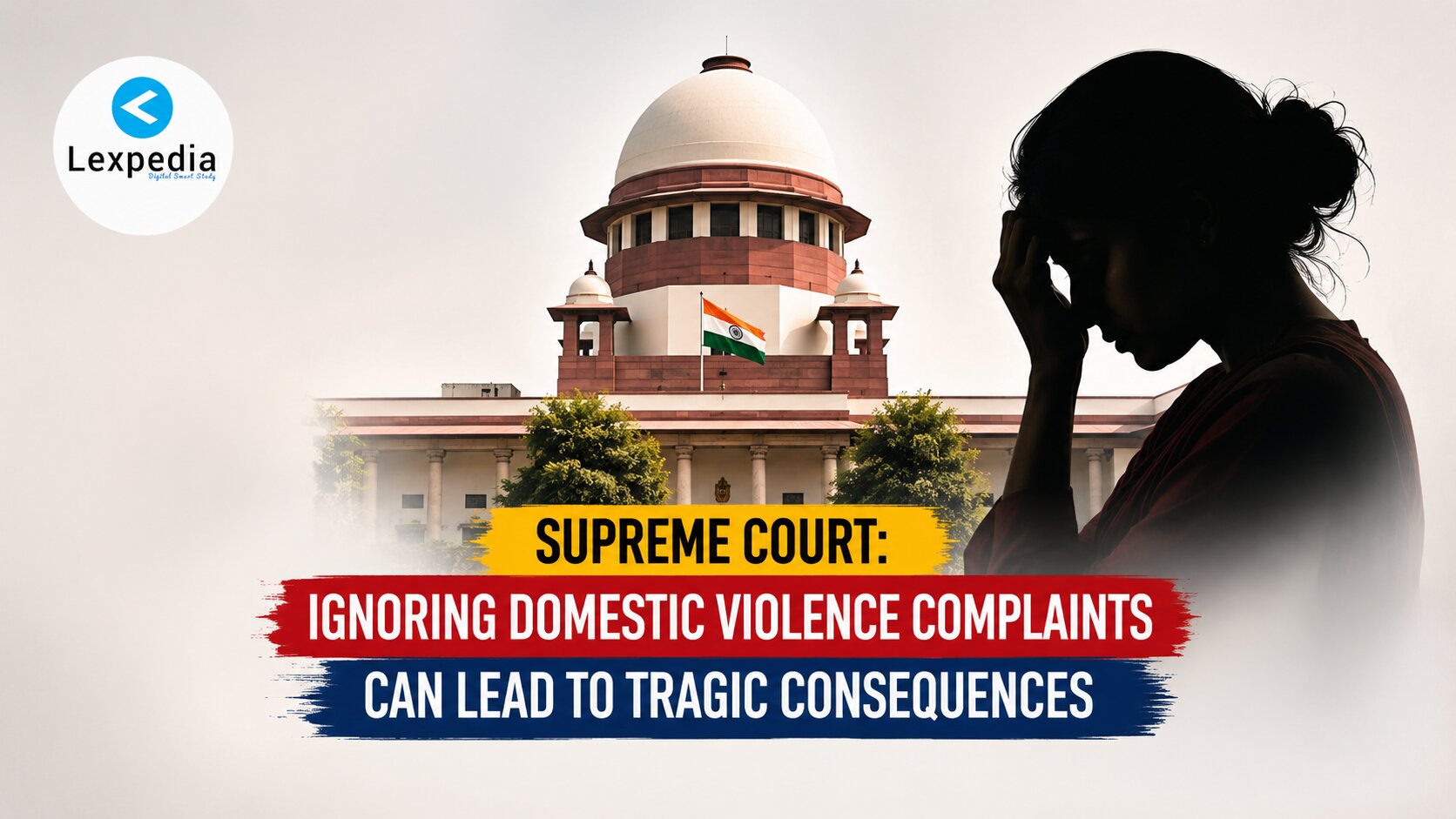
Ignoring Domestic Violence Complaints Can Lead To Tragic Consequences.
Judgement Details
Court
Supreme Court of India
Date of Decision
25 May 2026
Judges
Justice Prashant Kumar Mishra & Justice K.V. Viswanathan
Citation
Acts / Provisions
Facts of the Case
-
deceased victim was married to the appellant approximately fifteen months prior to her death.
-
Within two months of marriage, the victim allegedly informed her family about harassment and cruelty over demands for a motorcycle and cash.
-
Despite the victim’s family providing a television set and later a motorcycle, the alleged harassment continued.
-
Multiple panchayat interventions and compromise attempts were made to reconcile the matrimonial dispute.
-
A written resolution was reportedly passed warning the accused against continuing harassment.
-
The victim repeatedly complained of domestic violence and ill-treatment, but her family and village elders continued persuading her to return to her matrimonial home.
-
Two days before the incident, a neighbour alleged that the victim complained that her mother-in-law had denied her food.
-
On the night before her death, the neighbour reportedly saw the victim sitting alone outside the house while an altercation was occurring inside.
-
The following morning, the victim was found hanging from the ceiling inside the matrimonial home, while the husband was present inside the room.
-
The appellant attempted to portray the death as a case of suicide.
-
The Trial Court and High Court convicted the appellant under Sections 302 IPC and 498-A IPC.
-
The appellant approached the Supreme Court challenging the conviction.
Issues
-
Whether the death of the deceased was homicidal or suicidal?
-
Whether the prosecution successfully proved cruelty and harassment under Section 498-A IPC?
-
Whether the appellant discharged the burden cast upon him under Section 106 of the Indian Evidence Act?
-
Whether the medical evidence disproved the theory of suicide advanced by the appellant?
-
Whether the concurrent findings of the Trial Court and High Court required interference?
Judgement
-
The Supreme Court upheld the conviction of the appellant for offences under Sections 302 IPC and 498-A IPC.
-
The Court found the testimony of the neighbour witness credible and trustworthy.
-
The Bench observed that the autopsy report disclosed multiple ante-mortem injuries on the deceased’s body, including injuries on the chest, jaw, and occipital region.
-
The Court noted absence of classical signs usually associated with suicidal hanging.
-
It was observed that the medical evidence clearly indicated that the deceased had been subjected to violence before death.
-
The Court held that the prosecution successfully disproved the theory of suicide put forward by the appellant.
-
The Bench further observed that the appellant failed to explain the injuries sustained by the deceased despite being present inside the matrimonial home.
-
Applying Section 106 of the Indian Evidence Act, the Court held that once homicidal death inside the matrimonial home was established, the burden shifted to the husband to explain the circumstances leading to death.
-
The Court found that the appellant merely made a bald assertion of suicide without satisfactorily explaining the incriminating circumstances.
-
The judgment strongly criticised the repeated tendency of family members and village elders to merely encourage compromise despite repeated complaints of domestic violence.
-
The Court observed that the victim’s repeated cries for help were ignored due to a false hope that the matrimonial situation would improve.
-
Accordingly, the Supreme Court dismissed the appeal and affirmed the conviction.
Held
-
The death of the deceased was homicidal and not suicidal.
-
The prosecution successfully established cruelty and harassment under Section 498-A IPC.
-
The appellant failed to discharge the burden under Section 106 of the Indian Evidence Act.
-
The convictions under Sections 302 IPC and 498-A IPC were upheld.
-
The appeal was dismissed.
Analysis
-
The judgment strongly highlights societal failure in addressing complaints of domestic violence and dowry-related cruelty.
-
The Court emphasized that repeated compromise attempts should not override genuine allegations of abuse faced by married women.
-
By applying Section 106 of the Evidence Act, the Supreme Court reaffirmed that the husband bears a crucial explanatory burden where a homicidal death occurs inside the matrimonial home.
-
The ruling demonstrates the importance of medical evidence in distinguishing homicidal hanging from suicidal hanging.
-
The Court’s observations serve as a broader social warning against trivialising complaints made by women facing matrimonial cruelty.
-
The judgment reinforces judicial sensitivity toward victims of domestic abuse and dowry harassment.
-
The decision also highlights that silence, inaction, and social pressure to “adjust” may indirectly contribute to tragic outcomes.
-
The ruling strengthens criminal jurisprudence relating to dowry harassment, domestic cruelty, and homicidal deaths within matrimonial homes.