
X v. Y, 2026
The decision strengthens the admissibility framework for digital evidence in matrimonial and civil disputes.
Judgement Details
Court
Andhra Pradesh High Court
Date of Decision
13 May 2026
Judges
Justice Ravi Cheemalapati
Citation
Acts / Provisions
Facts of the Case
-
The case arose from divorce proceedings under the Hindu Marriage Act.
-
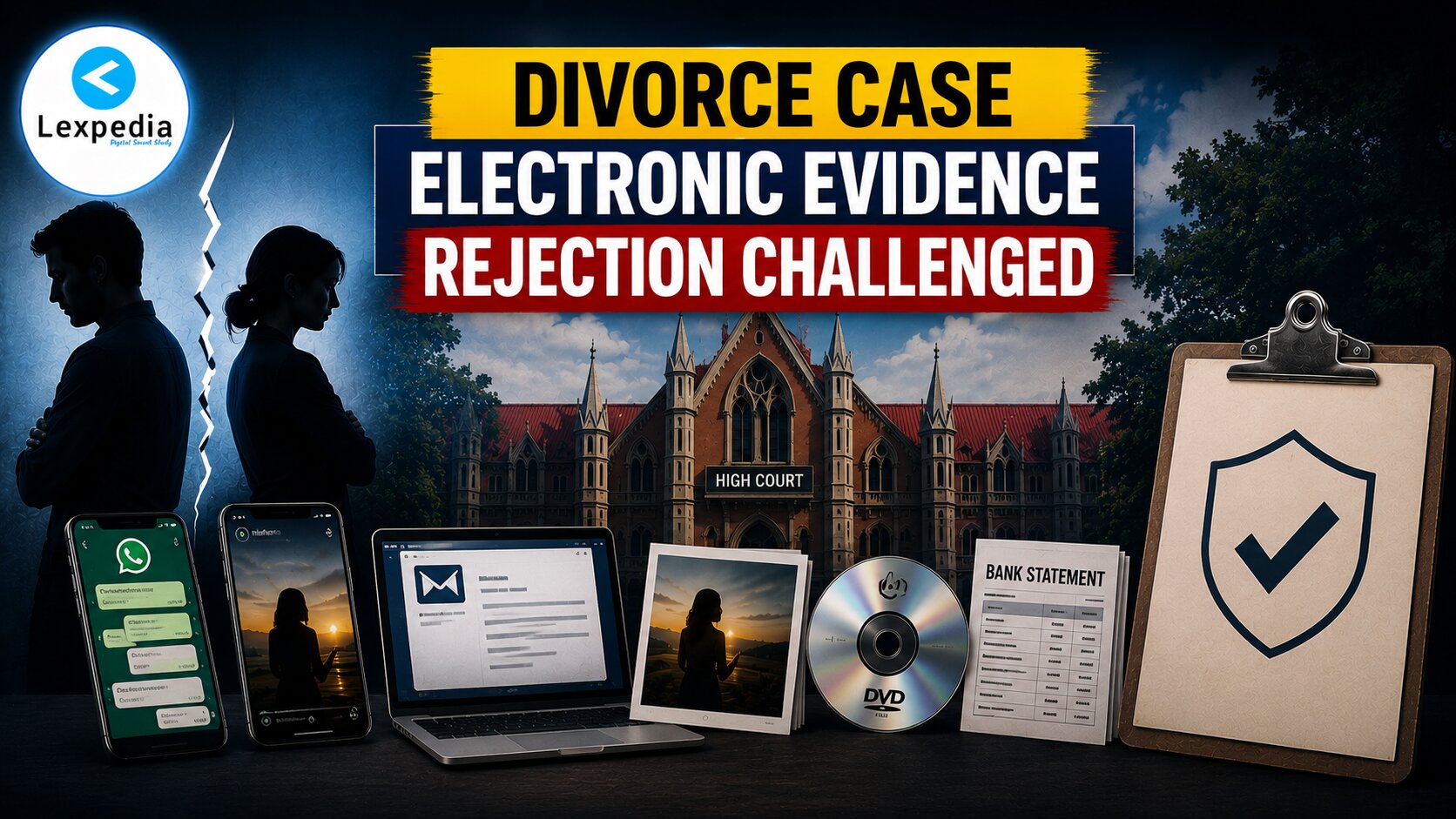
The petitioner sought to produce electronic evidence including:
-
WhatsApp messages and status
-
WhatsApp screenshots
-
Email prints
-
Digital photographs
-
HP DVD and bank statements
-
-
The petitioner submitted a self-certificate under Section 65B to support admissibility of electronic records.
-
The trial court had already allowed the filing of additional documents but refused to mark electronic evidence.
-
The trial court rejected the evidence on the ground that a certificate from a “proper authority” was required, not a self-certificate.
-
The petitioner challenged this rejection before the High Court
Issues
-
Whether a self-certificate under Section 65B of the Indian Evidence Act is legally admissible for electronic records?
-
Whether a certificate under Section 65B must necessarily be issued only by a “proper authority” and not by a person in possession of the device?
-
Whether WhatsApp messages, screenshots, and call recordings from a party’s own phone can be admitted with a self-certificate?
Judgement
-
The High Court held that a self-certificate under Section 65B is legally valid and admissible if it satisfies statutory requirements.
-
The Court clarified that the certificate can be issued by a person in lawful possession or control of the device.
-
The trial court’s view that only a “proper authority” could issue the certificate was incorrect in law.
-
The Court held that the certificate must:
-
Identify the electronic record
-
Explain the manner of production
-
Provide device details
-
Certify proper functioning of the device
-
-
The Court relied on the Supreme Court ruling in Arjun Panditrao Khotkar case to reaffirm the legal position.
-
The Court stated that Section 65B ensures authenticity and integrity of electronic evidence, not procedural rigidity.
-
The trial court’s order refusing to mark electronic records was set aside.
-
The matter was remitted back for consideration of the self-certificate and marking of evidence.
Held
-
A self-certificate under Section 65B is valid and sufficient for electronic evidence if statutory conditions are met.
-
Electronic records from WhatsApp, emails, and devices in possession of a party can be admitted with such certification.
-
The requirement is compliance with Section 65B(4), not issuance by a formal authority.
-
The trial court’s refusal to admit evidence was legally unsustainable.
-
The petitioner was allowed to re-submit electronic records for marking.
-
Self-certificate under Section 65B is legally valid.
-
WhatsApp chats and digital records are admissible if properly certified.
-
Certificate can be issued by the person in control of the device.
-
Courts must ensure authenticity, not reject evidence on technical grounds alone.
-
Digital evidence law is evolving toward greater flexibility and practicality.
Analysis
-
The judgment clarifies the scope of Section 65B certification for digital evidence.
-
It reinforces that lawful control of a device is sufficient for issuing a certificate.
-
The ruling reduces procedural hurdles in admitting electronic communications like WhatsApp and emails.
-
It aligns with the Supreme Court’s interpretation in Arjun Panditrao Khotkar case.
-
The decision strengthens the admissibility framework for digital evidence in matrimonial and civil disputes.
-
It ensures that courts focus on substance over technical formality in electronic evidence.