
R v. H, 2026
Delhi High Court Declines Contempt Action Over Filing Wife's Intimate Photos, Cites Absence of Wilful Disobedience Despite Grave Lapse
Judgement Details
Court
Delhi High Court
Date of Decision
6 July 2026
Judges
Justice Sachin Datta
Citation
Acts / Provisions
Facts of the Case
-
The petitioner-wife filed a contempt petition alleging violation of the Delhi High Court's 2015 directions regulating the filing of sensitive and private documents in matrimonial disputes.
-
The petitioner alleged that the respondents, including her husband and his lawyers, annexed unredacted intimate photographs of her to a divorce petition filed before the Family Court.
-
According to the petitioner, the photographs ought to have been filed only after obtaining the Court's permission and in a sealed cover, as required by the 2015 judgment.
-
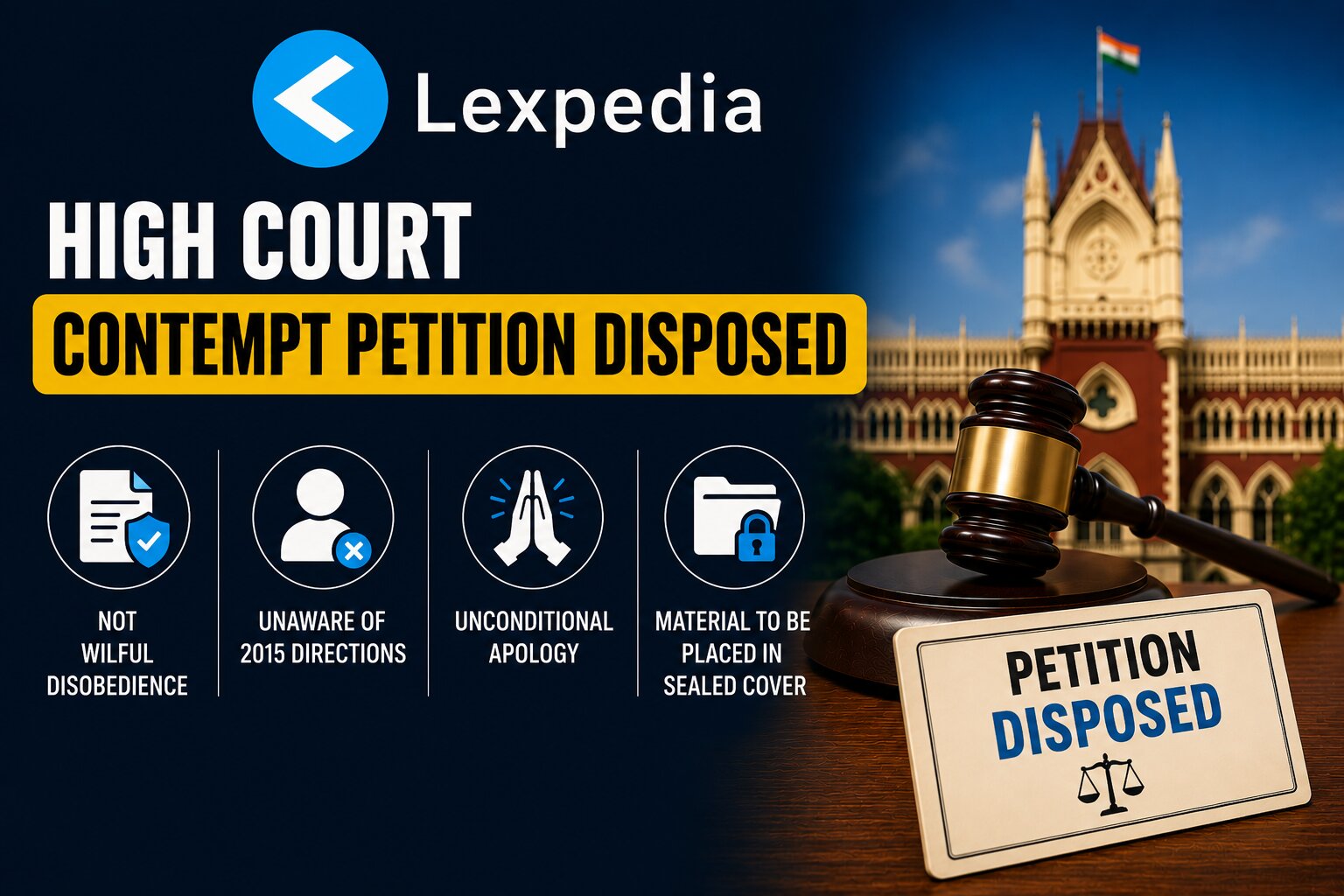
The respondents contended that they were unaware of the 2015 directions and had no intention of violating the Court's orders.
-
Upon being confronted, the respondents did not attempt to justify their conduct.
-
They tendered an unconditional apology before the High Court and also moved an application before the Family Court requesting that the photographs be placed in a sealed cover.
-
The petitioner nevertheless sought initiation of contempt proceedings against the husband and his counsel for allegedly violating the Court's earlier directions.
Issues
-
Whether filing unredacted intimate photographs along with a divorce petition amounted to wilful disobedience of the Delhi High Court's 2015 directions?
-
Whether the conduct of the husband and his lawyers warranted initiation of proceedings under the Contempt of Courts Act, 1971?
-
Whether the respondents' unconditional apology and remedial measures were sufficient to decline contempt action?
-
Whether the petitioner's privacy and dignity required further protection through masking, anonymisation, and sealed cover proceedings?
Judgement
-
The High Court held that although the respondents' conduct constituted a grave lapse, the material on record did not establish wilful disobedience necessary for initiating proceedings under the Contempt of Courts Act, 1971.
-
The Court noted that the respondents claimed to be unaware of the 2015 directions governing the filing of sensitive material in matrimonial proceedings.
-
It observed that, once confronted, the respondents neither defended nor justified their conduct.
-
The respondents tendered an unconditional apology and voluntarily initiated remedial measures by moving the Family Court to place the photographs in a sealed cover.
-
Considering these circumstances, the Court declined to initiate contempt proceedings.
-
However, the Court expressed its strong disapproval of the conduct of the husband and his lawyers.
-
It observed that zealous representation of a client's case can never justify compromising the dignity, privacy, and reputation of the opposite party, particularly where intimate photographs of a woman are involved.
-
The Court granted liberty to the petitioner to approach the Family Court for masking, anonymisation, and appropriate protection of the offending material.
-
It also requested the Family Court to remove the photographs from the open court record and place them in a sealed cover.
-
Accordingly, the contempt petition was disposed of without initiating contempt proceedings.
Held
-
Filing intimate photographs without following the prescribed procedure amounted to a serious lapse but did not establish wilful contempt.
-
The respondents' unconditional apology and corrective measures weighed against initiation of contempt proceedings.
-
The petitioner was granted liberty to seek masking, anonymisation, and further protection before the Family Court.
-
The Family Court was requested to place the photographs in a sealed cover.
-
The contempt petition was disposed of.
Analysis
-
The judgment reiterates that wilful disobedience is an essential ingredient for establishing civil contempt, and mere procedural lapse without deliberate defiance does not ordinarily attract contempt jurisdiction.
-
The Court correctly distinguished between professional misconduct and civil contempt, recognizing that every improper act does not necessarily constitute contempt of court.
-
By declining contempt while strongly censuring the respondents' conduct, the Court balanced judicial restraint with protection of the petitioner's privacy and dignity.
-
The decision reinforces the importance of the 2015 Delhi High Court guidelines, which require sensitive and intimate material to be produced only after obtaining judicial permission and in a sealed cover.
-
The Court appropriately emphasized that advocates owe a duty not only to their clients but also to the administration of justice, requiring sensitivity while handling intimate personal material.
-
The observations regarding the dignity of women strengthen constitutional values relating to privacy, reputation, and human dignity in matrimonial litigation.
-
By directing masking, anonymisation, and removal of photographs from the open court record, the Court adopted a victim-centric approach aimed at minimizing further harm.
-
The judgment is likely to guide litigants and lawyers in exercising greater caution while producing private digital evidence in family disputes.
-
The ruling also reinforces the principle that remedial conduct, such as prompt apology and corrective action, may be relevant while exercising discretionary contempt jurisdiction.
-
A notable strength of the judgment is its balanced approach of refusing to invoke the punitive contempt jurisdiction while simultaneously reaffirming the importance of privacy, professional responsibility, and ethical litigation practices.