
Jiten Engti & Ors. v. State of Assam & Anr., 2026
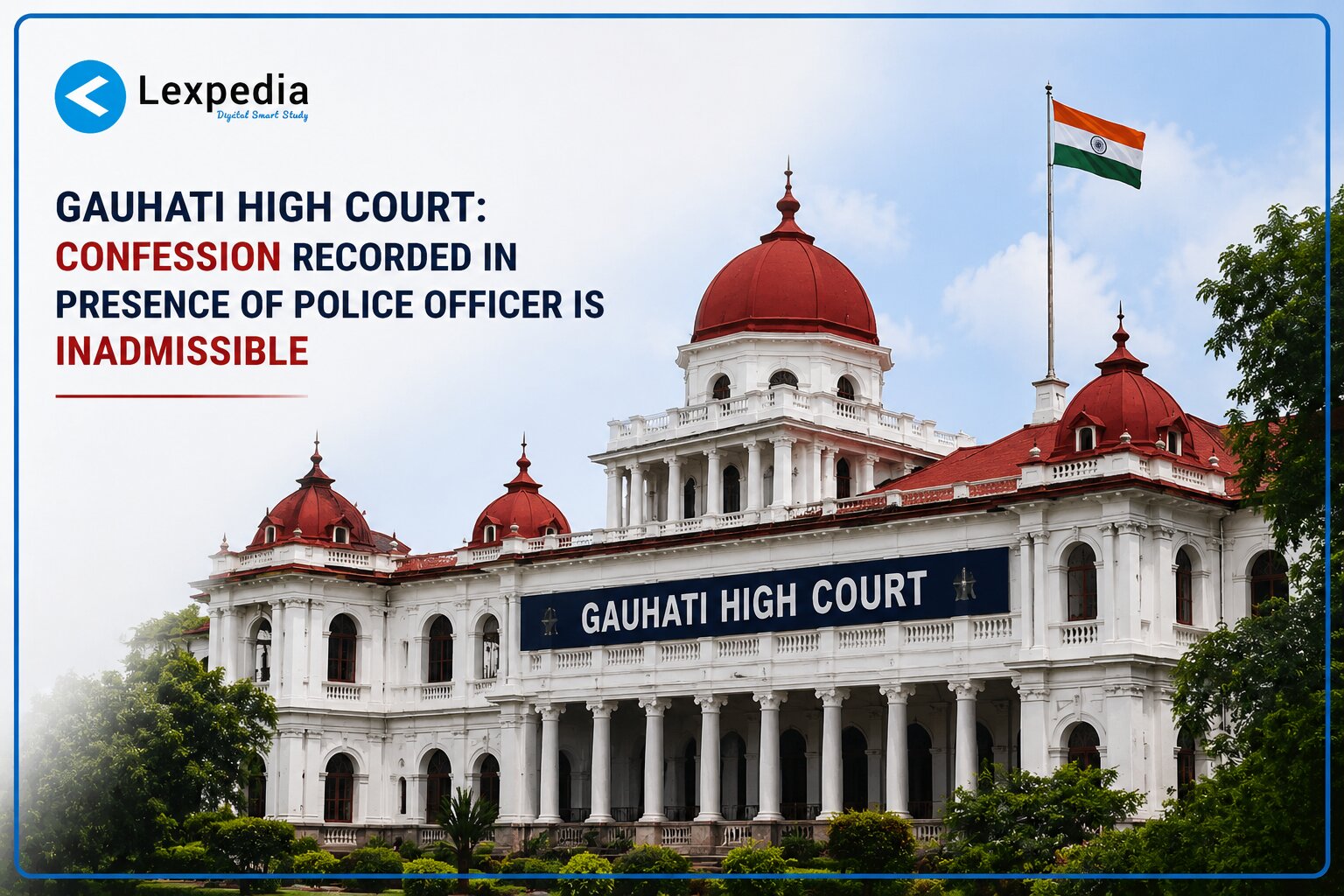
Confession Recorded In Presence Of Police Officer Is Inadmissible.
Judgement Details
Court
Gauhati High Court
Date of Decision
27 May 2026
Judges
Justice Michael Zothankhuma & Justice Sanjeev Kumar Sharma
Citation
Acts / Provisions
Facts of the Case
-
The appellants were convicted by the Trial Court under Sections 302/34 IPC for the alleged murder of one person.
-
The conviction was primarily based upon confessional statements recorded under Section 164 CrPC.
-
During pendency of the appeal, one of the appellants, Jiten Engti, was declared a juvenile and was referred to the Juvenile Justice Board.
-
Before the High Court, the appellants contended that the confessions were improperly recorded because a police officer remained present in the room while the statements were being recorded.
-
It was further argued that one appellant had not made any confessional statement and had been convicted solely on the basis of confessions made by co-accused persons.
-
The State contended that all substantial procedural safeguards had been followed except for the presence of police personnel in the courtroom.
-
The prosecution further argued that the appellants had also made extra-judicial confessions before prosecution witnesses.
-
The High Court examined the records of the Magistrate and found that:
-
the accused were brought by a Sub-Inspector of Police,
-
the police officer remained present during recording of confessions, and
-
certain accused persons were kept under custody of an armed police constable during the reflection period.
-
Issues
-
Whether confessional statements recorded under Section 164 CrPC in the presence of a police officer can be treated as voluntary and admissible evidence?
-
Whether violation of procedural safeguards laid down in Rabindra Kumar Pal alias Dara Singh v. Republic of India renders confessional statements inadmissible?
-
Whether conviction can be sustained solely on the basis of defective confessional statements?
-
Whether extra-judicial confessions without corroboration are sufficient to sustain conviction?
-
Whether the Trial Court erred in convicting the appellants under Sections 302/34 IPC?
Judgement
-
The Gauhati High Court held that confessions recorded in the presence of a police officer cannot be regarded as voluntary confessions.
-
The Court observed that the case was directly hit by principle no. (ix) laid down by the Supreme Court in
Rabindra Kumar Pal alias Dara Singh v. Republic of India. -
The Bench emphasized that no police officer should remain present in open court at the time of recording confessional statements under Section 164 CrPC.
-
The Court found that the recording Magistrate himself had noted the presence of police personnel during recording of confessions.
-
The Bench held that such confessions were improperly recorded and therefore inadmissible in evidence.
-
The Court further observed that the alleged confessional statements could not be relied upon as substantive admissible evidence for recording conviction.
-
The High Court also found that apart from the confessions and alleged extra-judicial confessions, there was no independent evidence against the accused.
-
The Court declined to rely upon the alleged extra-judicial confessions as there was no corroboration to the testimonies of prosecution witnesses.
-
The Bench concluded that the conviction based on defective confessional statements was unsustainable in law.
-
Accordingly, the High Court set aside the conviction of the appellants under Sections 302/34 IPC.
-
The Court directed immediate release of the appellants from judicial custody, provided they were not required in any other case.
Held
-
Confessional statements recorded in the presence of police officers are not voluntary and are inadmissible in evidence.
-
Violation of safeguards under Section 164 CrPC vitiates the evidentiary value of confessions.
-
Conviction cannot be sustained solely on the basis of defective confessional statements.
-
Extra-judicial confessions without corroboration are insufficient to sustain conviction.
-
The convictions of the appellants under Sections 302/34 IPC were set aside.
Analysis
-
The judgment strongly reinforces procedural safeguards governing recording of confessions under Section 164 CrPC.
-
The High Court emphasized the constitutional importance of ensuring voluntariness and absence of police influence during confession recording.
-
By relying on Rabindra Kumar Pal alias Dara Singh, the Court reaffirmed settled principles safeguarding accused persons against coerced confessions.
-
The ruling highlights that even technical procedural violations can substantially affect admissibility of evidence in criminal trials.
-
The judgment protects the integrity of criminal justice by ensuring that convictions are not based upon unreliable or tainted confessions.
-
The Court also reiterated the limited evidentiary value of extra-judicial confessions, particularly when lacking corroboration.
-
The decision reflects judicial caution against overreliance upon confession-based prosecutions without independent supporting evidence.
-
The ruling contributes significantly to jurisprudence concerning:
-
fair trial rights,
-
confessional evidence,
-
procedural safeguards, and
-
criminal evidentiary standards.
-