Supreme Court Orders Halt on Forest Land Reduction Without Compensatory Afforestation: Legal Implications of the 2023 Forest Amendment Act
Maheshpriya · 5 February 2025 · 2 min read
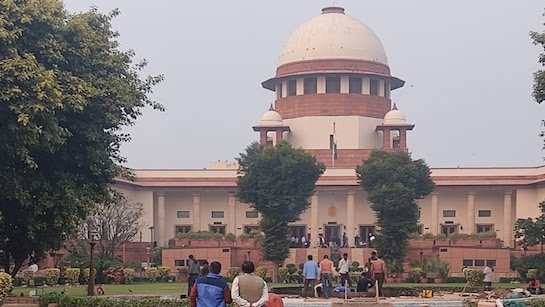
On February 3, 2025, the Supreme Court issued an important order that prevents any reduction in forest land unless compensatory land for afforestation is provided by either the Central or State governments. This decision arose from petitions challenging the Forest (Conservation) Amendment Act, 2023. The petitioners argue that the Amendment weakens the definition of "forest" as set in the 1996 TN Godavarman case.
The Amendment allows the diversion of forest land for projects like infrastructure and security, while also exempting large areas from legal protection. Another concern is the Van Rules 2023, which grant state-level Forest Departments the power to decide on land diversions, raising fears of political influence. The case is set to be heard again on March 4, 2025.
Legal Implications and Analysis
The case centers on the constitutionality of the Forest (Conservation) Amendment Act, 2023, which is seen by the petitioners as a dilution of the legal definition of "forest." The main legal issues raised include:
- Limiting the definition of forest from the broad interpretation in the TN Godavarman case.
- Allowing forest land diversion for linear projects, public utilities, and security infrastructure without adequate compensatory afforestation.
- The legalization of unclassified forests for afforestation, which the petitioners argue contradicts the National Forest Policy of 1988.
- Concerns over the Van Rules 2023, which give state-level Forest Departments the power to make decisions about land diversions, potentially opening the door to political influence.
The Supreme Court’s interim order halts any reduction of forest land without compensatory land, reinforcing the principle of environmental protection and sustainable development.
Relevant Legal Provisions and Considerations
- Article 21 (Right to Life and Personal Liberty): This includes the right to a healthy environment, which could be impacted by changes to forest conservation laws.
- Forest (Conservation) Act, 1980: The key statute for forest protection, which the Amendment seeks to modify.
- TN Godavarman Case (1996): A Supreme Court decision that broadened the definition of forest, influencing the application of forest conservation laws.
- National Forest Policy, 1988: This policy emphasizes the need to preserve forests and ensure their sustainable management, which the petitioners argue the Amendment undermines.
- Environmental Impact Assessment (EIA) Rules: Rules that assess the impact of projects on the environment, potentially weakened by the Amendment.
- Compensatory Afforestation: The legal obligation to ensure that any deforestation is offset through reforestation, a point of contention in the case.
Potential Consequences of Legal Provisions
- The Court’s ruling could reinforce or challenge current forest conservation practices in India, aiming to balance environmental protection and development goals.
- The Court’s interim order prioritizes the right to a healthy environment, ensuring that forest reduction is justified by adequate compensatory afforestation.
- Concerns regarding political influence over the decision-making process could have long-term implications for how forest conservation laws are applied across the country.