Supreme Court Bars High Courts From Hearing Tribunal Cases Pending Before It
Lexpedia News · 9 February 2026 · 2 min read
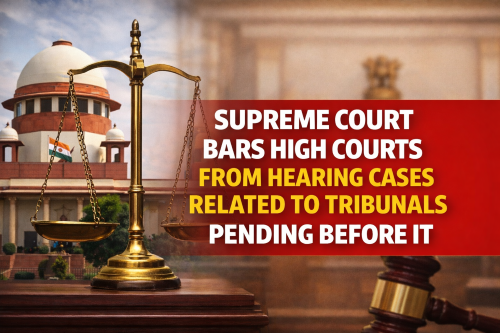
In a significant development concerning judicial hierarchy and tribunal administration, the Supreme Court of India has directed that High Courts should not entertain cases relating to tribunals on issues that are already pending before the apex court. The order aims to avoid parallel proceedings and ensure uniform adjudication on critical questions relating to tribunal functioning.
The Court specifically clarified that matters concerning appointments, tenure, and service conditions of tribunal members, whether under Central or State laws, must remain within the Supreme Court’s purview when such issues are already under consideration before it. This step is seen as an effort to prevent conflicting judicial outcomes.
At the request of the Attorney General for India, the Court also decided to transfer petitions pending in certain High Courts, including those related to tribunal appointments, to the Supreme Court for consolidated consideration.
Legal observers believe this move reinforces the principle of judicial consistency and institutional discipline, particularly in matters affecting tribunal independence and administrative functioning. It also reflects ongoing judicial scrutiny over tribunal reforms and governance structures in India.
The ruling is expected to have a nationwide impact, as tribunal-related disputes often involve complex constitutional and administrative questions. By centralising adjudication, the Supreme Court appears to be ensuring clarity, uniformity, and stability in tribunal jurisprudence across the country.
सुप्रीम कोर्ट का निर्देश — ट्रिब्यूनल मामलों में लंबित मुद्दों पर हाई कोर्ट सुनवाई न करें
न्यायिक संरचना और ट्रिब्यूनल प्रशासन से जुड़े एक महत्वपूर्ण घटनाक्रम में भारत के सुप्रीम कोर्ट ने निर्देश दिया है कि हाई कोर्ट ट्रिब्यूनल से जुड़े उन मामलों की सुनवाई न करें जिनसे संबंधित मुद्दे पहले से ही सुप्रीम कोर्ट में लंबित हैं। इस निर्णय का उद्देश्य समानांतर सुनवाई को रोकना और न्यायिक फैसलों में एकरूपता सुनिश्चित करना है।
अदालत ने स्पष्ट किया कि ट्रिब्यूनल सदस्यों की नियुक्ति, कार्यकाल और सेवा शर्तों से जुड़े मामलों—चाहे वे केंद्रीय या राज्य कानूनों के अंतर्गत हों—यदि पहले से सुप्रीम कोर्ट में विचाराधीन हैं, तो उनकी सुनवाई हाई कोर्ट में नहीं होनी चाहिए। इससे परस्पर विरोधी निर्णयों की संभावना कम होगी।
भारत के अटॉर्नी जनरल के अनुरोध पर अदालत ने कुछ हाई कोर्ट में लंबित याचिकाओं को सुप्रीम कोर्ट में स्थानांतरित करने का भी निर्णय लिया, ताकि इन मामलों पर एकसाथ विचार किया जा सके।
कानूनी विशेषज्ञों के अनुसार यह कदम न्यायिक एकरूपता और संस्थागत अनुशासन को मजबूत करता है, खासकर ट्रिब्यूनल की स्वतंत्रता और प्रशासनिक ढांचे से जुड़े मुद्दों में।
यह फैसला देशभर में प्रभाव डाल सकता है, क्योंकि ट्रिब्यूनल संबंधी विवाद अक्सर जटिल संवैधानिक और प्रशासनिक प्रश्न उठाते हैं। सुप्रीम कोर्ट द्वारा मामलों को केंद्रीकृत करना स्पष्टता, स्थिरता और न्यायिक सुसंगतता सुनिश्चित करने की दिशा में महत्वपूर्ण कदम माना जा रहा है।