Savarkar Filed 10 Mercy Petitions Before British, Revolutionaries Like Bhagat Singh Refused To Compromise: Grandnephew Tells Pune Court In Rahul Gandhi Defamation Case
Lexpedia News · 16 June 2026 · 7 min read
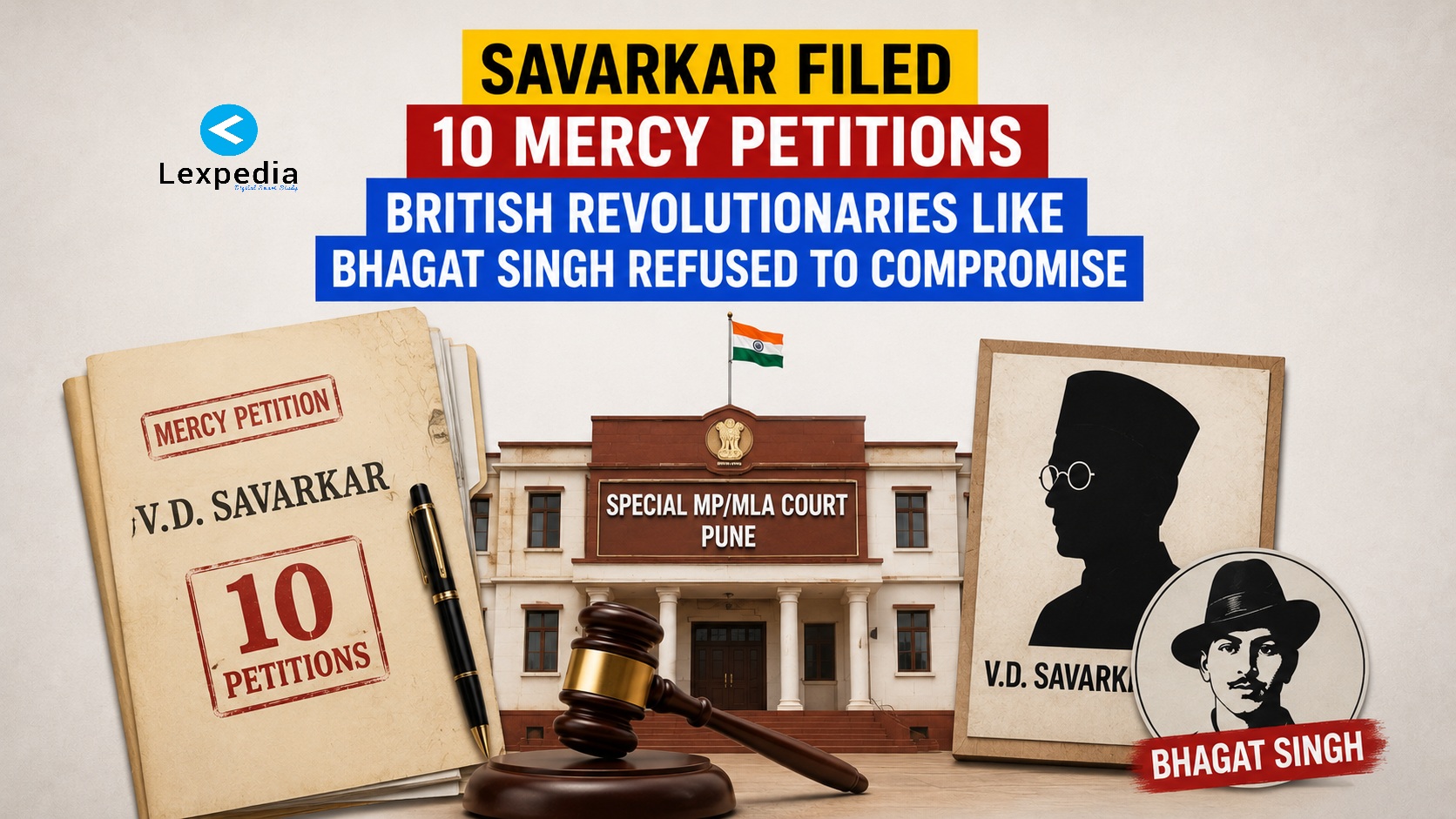
In a significant development in the criminal defamation proceedings initiated against Congress leader Rahul Gandhi, the grandnephew of Hindutva ideologue Vinayak Damodar (V.D.) Savarkar, Satyaki Savarkar, informed a Special MP/MLA Court in Pune that Savarkar had indeed filed 10 mercy (clemency) petitions before the British Government seeking reduction of his sentence.
The statement was made during Satyaki Savarkar's cross-examination before Special Judge Amol Shinde in the defamation complaint filed against Rahul Gandhi over remarks made by him concerning Savarkar during an event in the United Kingdom in March 2023.
Background: Rahul Gandhi Defamation Case
The proceedings arise out of a criminal defamation complaint filed by Satyaki Savarkar in April 2023 against Rahul Gandhi.
The complaint alleges that Gandhi made false, defamatory and historically inaccurate remarks regarding V.D. Savarkar while addressing an event in London. According to the complainant, Gandhi's statements damaged the reputation and legacy of Savarkar.
The matter is presently being tried before the Special MP/MLA Court in Pune.
"Savarkar Filed 10 Mercy Petitions"
During his testimony, Satyaki Savarkar acknowledged before the Court that records maintained by the Government show that Savarkar submitted ten clemency petitions to the British authorities.
According to reports from the court proceedings, Satyaki stated:
"It is true to say that Savarkar had filed a clemency petition ten times."
He further informed the Court that the records relating to those petitions are available in official government archives.
The admission is notable because the issue of Savarkar's mercy petitions has remained one of the most debated aspects of his political legacy and frequently surfaces in contemporary political discourse.
Comparison With Other Revolutionaries Raised During Cross-Examination
During cross-examination, defence counsel referred to several revolutionaries from the freedom movement era and questioned the witness regarding their approach towards the British Government.
Satyaki Savarkar reportedly acknowledged that freedom fighters such as:
- Bhagat Singh
- Rajguru
- Batukeshwar Dutt
- Ashfaqulla Khan
did not file clemency petitions before the British authorities.
He further stated that Bhagat Singh and Batukeshwar Dutt remained committed to their ideological positions until the end.
According to the testimony recorded in court:
"It is true to say that Bhagat Singh and Batukeshwar Dutt remained steadfast in their ideology and principles till the very end."
Satyaki Savarkar Defends Filing Of Mercy Petitions
Despite acknowledging the mercy petitions, Satyaki Savarkar rejected suggestions that filing such petitions was inconsistent with Savarkar's reputation as a revolutionary.
He argued before the Court that seeking remission or reduction of sentence through clemency petitions was a recognized legal procedure under British colonial administration and was not illegal or extraordinary.
According to his testimony:
"Filing a clemency petition was neither exceptional nor illegal."
He also disputed suggestions that the language used by Savarkar in the petitions reflected loyalty to the British Government.
According to Satyaki, the wording employed in those petitions was consistent with official procedures and administrative formats followed during that period.
Claim That British Rejected All Mercy Petitions
Satyaki Savarkar further informed the Court that British authorities rejected all of Savarkar's clemency petitions.
According to his testimony, colonial authorities believed that if Savarkar were released, he could once again participate in revolutionary activities against British rule.
These assertions formed part of the complainant's defence of Savarkar's historical legacy during the cross-examination proceedings.
Historical Debate Continues
The issue of Savarkar's mercy petitions has remained a subject of intense historical and political debate for decades.
Various historians, political commentators and scholars have interpreted the petitions differently. Some have viewed them as evidence of compromise with colonial authorities, while others have argued that they represented a strategic legal effort aimed at securing release from imprisonment and continuing political work outside jail.
The Pune Court is not presently adjudicating upon the historical correctness of these competing interpretations. The immediate issue before the Court concerns whether Rahul Gandhi's remarks amounted to criminal defamation.
Court Proceedings To Continue
The cross-examination of Satyaki Savarkar remains ongoing.
According to reports, the Special Court has scheduled further proceedings for a later date, during which the cross-examination is expected to continue.
The case is being closely watched due to its intersection with contemporary political discourse, historical interpretation of freedom movement figures, and the law of criminal defamation.
Why The Development Matters
The testimony assumes significance because it comes from the complainant himself in a politically sensitive defamation trial involving one of India's most debated historical personalities.
While Satyaki Savarkar acknowledged the existence of ten mercy petitions, he simultaneously defended them as lawful procedural measures and rejected the suggestion that they reflected surrender or ideological compromise.
The proceedings once again highlight the continuing public and political debate surrounding Savarkar's role in India's freedom movement and the interpretation of historical records relating to his imprisonment and subsequent release.
राहुल गांधी मानहानि मामले में पुणे कोर्ट में बड़ा बयान: सावरकर ने ब्रिटिश सरकार को 10 दया याचिकाएँ दी थीं, भगत सिंह जैसे क्रांतिकारियों ने समझौता नहीं किया – सावरकर के प्रपौत्र सत्यकी सावरकर
कांग्रेस नेता राहुल गांधी के विरुद्ध दायर आपराधिक मानहानि मामले की सुनवाई के दौरान वी.डी. सावरकर के प्रपौत्र सत्यकी सावरकर ने पुणे की विशेष सांसद-विधायक अदालत में स्वीकार किया कि सावरकर ने ब्रिटिश सरकार के समक्ष अपनी सजा में राहत पाने के लिए 10 दया (Mercy/Clemency) याचिकाएँ दायर की थीं।
यह बयान विशेष न्यायाधीश अमोल शिंदे की अदालत में सत्यकी सावरकर की जिरह (Cross-Examination) के दौरान सामने आया।
क्या है राहुल गांधी मानहानि मामला?
यह मामला अप्रैल 2023 में सत्यकी सावरकर द्वारा राहुल गांधी के विरुद्ध दायर आपराधिक मानहानि शिकायत से संबंधित है।
शिकायत में आरोप लगाया गया है कि राहुल गांधी ने मार्च 2023 में लंदन में आयोजित एक कार्यक्रम के दौरान सावरकर के बारे में कथित रूप से मानहानिकारक और ऐतिहासिक रूप से गलत टिप्पणियाँ की थीं।
इसी मामले की सुनवाई वर्तमान में पुणे की विशेष सांसद-विधायक अदालत में चल रही है।
"सावरकर ने 10 बार दया याचिका दायर की थी"
जिरह के दौरान सत्यकी सावरकर ने स्वीकार किया कि सरकारी अभिलेखों में सावरकर द्वारा दायर की गई 10 दया याचिकाओं का रिकॉर्ड उपलब्ध है।
उन्होंने अदालत में कहा:
"यह कहना सही है कि सावरकर ने दस बार दया याचिका दायर की थी।"
यह स्वीकारोक्ति महत्वपूर्ण मानी जा रही है क्योंकि सावरकर की दया याचिकाएँ लंबे समय से सार्वजनिक और राजनीतिक बहस का विषय रही हैं।
भगत सिंह और अन्य क्रांतिकारियों का भी हुआ उल्लेख
जिरह के दौरान बचाव पक्ष ने स्वतंत्रता आंदोलन के अन्य क्रांतिकारियों का भी उल्लेख किया।
सत्यकी सावरकर ने स्वीकार किया कि—
- भगत सिंह
- राजगुरु
- बटुकेश्वर दत्त
- अशफाक उल्ला खान
ने ब्रिटिश सरकार के समक्ष दया याचिकाएँ दायर नहीं की थीं।
उन्होंने यह भी स्वीकार किया कि भगत सिंह और बटुकेश्वर दत्त अपने विचारों और सिद्धांतों पर अंत तक अडिग रहे।
"यह कहना सही है कि भगत सिंह और बटुकेश्वर दत्त अंत तक अपने सिद्धांतों और विचारधारा पर कायम रहे।"
सत्यकी सावरकर ने दया याचिकाओं का किया बचाव
हालाँकि सत्यकी सावरकर ने यह स्वीकार किया कि दया याचिकाएँ दायर की गई थीं, लेकिन उन्होंने यह भी कहा कि ऐसा करना किसी भी प्रकार से सावरकर के क्रांतिकारी व्यक्तित्व के विपरीत नहीं था।
उन्होंने अदालत में कहा कि ब्रिटिश शासन के दौरान दया याचिका दायर करना सजा में कमी या राहत प्राप्त करने की एक वैध और स्थापित प्रक्रिया थी।
उनके अनुसार:
"दया याचिका दायर करना न तो असाधारण था और न ही अवैध।"
उन्होंने यह भी कहा कि याचिकाओं की भाषा को ब्रिटिश सरकार के प्रति निष्ठा का प्रमाण नहीं माना जाना चाहिए।
ब्रिटिश सरकार ने सभी याचिकाएँ खारिज कर दी थीं: दावा
सत्यकी सावरकर ने अदालत को यह भी बताया कि ब्रिटिश सरकार ने सावरकर द्वारा दायर सभी दया याचिकाओं को अस्वीकार कर दिया था।
उनके अनुसार ब्रिटिश प्रशासन को आशंका थी कि यदि सावरकर को रिहा किया गया तो वे पुनः क्रांतिकारी गतिविधियों में शामिल हो सकते हैं।
ऐतिहासिक बहस अब भी जारी
सावरकर की दया याचिकाओं को लेकर इतिहासकारों, राजनीतिक विश्लेषकों और विभिन्न विचारधारात्मक समूहों के बीच लंबे समय से मतभेद रहे हैं।
कुछ विद्वान इन्हें ब्रिटिश शासन के साथ समझौते का संकेत मानते हैं, जबकि अन्य इन्हें जेल से रिहाई प्राप्त कर स्वतंत्रता आंदोलन में आगे योगदान देने की रणनीतिक कोशिश बताते हैं।
वर्तमान मुकदमे में अदालत इन ऐतिहासिक व्याख्याओं की सत्यता पर निर्णय नहीं दे रही है। अदालत के समक्ष मुख्य प्रश्न यह है कि क्या राहुल गांधी की टिप्पणियाँ आपराधिक मानहानि की श्रेणी में आती हैं।
आगे भी जारी रहेगी सुनवाई
रिपोर्टों के अनुसार सत्यकी सावरकर की जिरह अभी पूरी नहीं हुई है और मामले की सुनवाई आगे भी जारी रहेगी।
मामले का महत्व
यह घटनाक्रम इसलिए महत्वपूर्ण है क्योंकि यह बयान स्वयं शिकायतकर्ता और सावरकर के परिवार के सदस्य द्वारा अदालत में दिया गया है।
एक ओर सत्यकी सावरकर ने दस दया याचिकाओं के अस्तित्व को स्वीकार किया, वहीं दूसरी ओर उन्होंने यह भी कहा कि इन याचिकाओं को आत्मसमर्पण या वैचारिक समझौते के रूप में नहीं देखा जाना चाहिए।
यह मामला एक बार फिर भारतीय स्वतंत्रता आंदोलन के इतिहास, सावरकर की विरासत तथा ऐतिहासिक व्यक्तित्वों की आधुनिक राजनीतिक व्याख्याओं को लेकर चल रही बहस को केंद्र में ले आया है।