Punjab & Haryana High Court Allows Zee5 Documentary Release, Bars Use Of ‘Lawrence’ In Title
Lexpedia News · 12 May 2026 · 8 min read
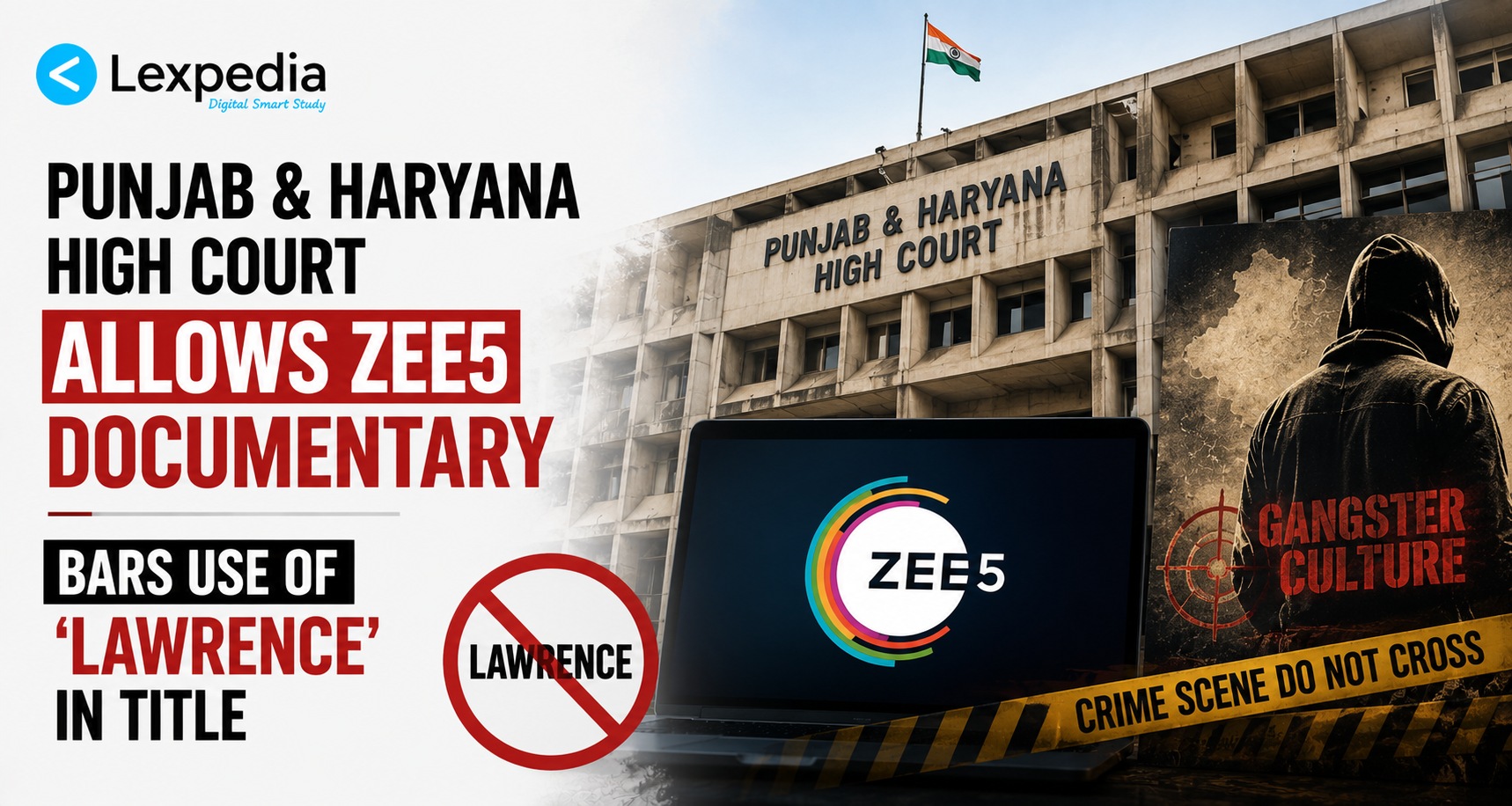
The Punjab and Haryana High Court has allowed streaming platform Zee5 to release its controversial documentary based on gangster culture but directed that the title must not contain the words “Lawrence”, “Bishnoi”, or “Punjab”. The Court held that the documentary does not glorify gangsters or criminal activities and therefore cannot be blocked merely on apprehensions of law-and-order concerns.
The matter was heard by Justice Jagmohan Bansal in a petition filed by Zee Entertainment Enterprises Limited challenging an advisory issued by the Union Ministry of Information and Broadcasting against the release of the documentary originally titled Lawrence of Punjab.
The documentary had triggered major controversy because it was allegedly inspired by gangster Lawrence Bishnoi and focused on organized crime and gang culture in Punjab. The Punjab government and central authorities had opposed its release, arguing that such content could influence youth and disturb public order.
During the hearing, Zee Entertainment argued that the documentary was not intended to glorify any criminal or gang. The company submitted that the content was based entirely on publicly available material including media reports and interviews with journalists, retired police officers, and legal experts.
After personally viewing the documentary, the High Court observed that it was not centered around one individual gangster but instead discussed multiple gangs and their activities. The Court noted that none of the interviewees praised or glorified criminal conduct.
Justice Jagmohan Bansal observed that the overall message of the documentary was actually against gangster culture and highlighted the destructive consequences of criminal life. The Court reportedly remarked:
“Life of gangsters is very short.”
The Court emphasized that the documentary merely compiled information already available in the public domain and did not contain any material that could directly incite violence or promote organized crime.
However, while permitting the release, the Court accepted Zee5’s statement that the title, trailers, and promotional material would be modified before release. The Bench specifically directed that the expressions:
- “Lawrence”,
- “Bishnoi”,
- and “Punjab”
must not appear in the title or promotional content.
The controversy began after the Union Ministry of Information and Broadcasting issued an advisory asking Zee5 not to release the documentary. The advisory reportedly came after Punjab Police expressed apprehensions that the content could adversely impact public order and encourage gangster glorification among impressionable youth.
Punjab Advocate General Maninderjit Singh Bedi opposed the release before the High Court and argued that Punjab was already struggling with the problem of gangster glorification on social media. The State informed the Court that more than 2,600 videos and social media links promoting gangster culture had already been blocked pursuant to earlier court orders.
The State further contended that content related to gangsters has the potential to normalize violence and influence young viewers toward criminal activities.
On behalf of the Union Government, it was argued that the Centre had authority under the Information Technology Act to issue such advisories in the interest of public order and state security. Authorities claimed that security agencies had raised concerns regarding possible glorification of crime through the documentary.
The High Court, however, found that the advisory had been issued without properly invoking specific statutory provisions under the Information Technology Act. The Court noted that although the government used language similar to Section 69A of the IT Act, it failed to record any proper satisfaction showing why blocking the documentary was necessary.
The Court also observed that many films and web series involving gangsters and violence are already available in the public domain. Merely depicting criminal activities in documentary form cannot automatically justify censorship unless there is direct incitement or glorification.
Justice Bansal further noted that the documentary was different from a fictional crime film because it was documentary content based on factual discussions and interviews. The Bench stated that there was nothing in the material suggesting that viewers would be inspired to commit crimes after watching it.
The High Court ultimately quashed the Centre’s advisory and paved the way for the release of the documentary subject to the title modifications.
The case has once again reignited the debate surrounding:
- censorship of OTT content,
- freedom of expression,
- glorification of gangsters in media,
- and the balance between artistic freedom and public order concerns in India.
The controversy also drew political attention in Punjab, with Congress leaders previously demanding a ban on the documentary alleging that it disrespected victims of gangster violence and promoted criminal culture.
The documentary is now expected to be released on Zee5 after changes are made to its title and promotional materials in compliance with the High Court’s directions.
Punjab & Haryana High Court ने Zee5 Documentary की Release को दी अनुमति, Title में ‘Lawrence’ शब्द के इस्तेमाल पर रोक
Punjab & Haryana High Court ने Zee5 को gangster culture पर आधारित अपनी विवादित documentary रिलीज करने की अनुमति दे दी है, लेकिन निर्देश दिया है कि उसके title में “Lawrence”, “Bishnoi” या “Punjab” शब्दों का इस्तेमाल नहीं किया जाएगा। Court ने कहा कि documentary gangsters या अपराध का glorification नहीं करती, इसलिए केवल आशंकाओं के आधार पर इसकी release नहीं रोकी जा सकती।
यह मामला Justice Jagmohan Bansal के समक्ष आया था। Zee Entertainment Enterprises Limited ने सूचना एवं प्रसारण मंत्रालय द्वारा जारी advisory को चुनौती दी थी, जिसमें Zee5 को Lawrence of Punjab नामक documentary रिलीज न करने की सलाह दी गई थी।
यह documentary कथित तौर पर gangster Lawrence Bishnoi और Punjab में बढ़ते gang culture पर आधारित थी। Punjab सरकार और केंद्र सरकार ने इसका विरोध करते हुए कहा था कि ऐसा content युवाओं को प्रभावित कर सकता है और law and order की स्थिति खराब कर सकता है।
सुनवाई के दौरान Zee Entertainment ने कहा कि documentary का उद्देश्य किसी gangster या अपराध को glorify करना नहीं है। कंपनी ने बताया कि documentary पूरी तरह public domain में उपलब्ध सामग्री, media reports, retired police officers, journalists और legal experts के interviews पर आधारित है।
High Court ने documentary देखने के बाद कहा कि यह किसी एक gangster पर केंद्रित नहीं है बल्कि कई gangs और उनके activities पर आधारित है। Court ने पाया कि documentary में शामिल किसी भी व्यक्ति ने अपराध या अपराधियों का महिमामंडन नहीं किया है।
Justice Jagmohan Bansal ने कहा कि documentary का overall message वास्तव में gangster culture के खिलाफ है और यह दिखाती है कि अपराध की जिंदगी कितनी विनाशकारी होती है। Court ने कहा:
“Gangsters की जिंदगी बहुत छोटी होती है।”
Court ने कहा कि documentary केवल public domain में उपलब्ध सामग्री का compilation है और इसमें ऐसा कुछ नहीं है जो हिंसा को बढ़ावा देता हो या अपराध करने के लिए प्रेरित करता हो।
हालांकि documentary की release की अनुमति देते हुए Court ने Zee5 के इस बयान को रिकॉर्ड किया कि release से पहले title, trailer और promotional material में बदलाव किया जाएगा। Court ने स्पष्ट किया कि:
- “Lawrence”,
- “Bishnoi”,
- और “Punjab”
शब्दों का इस्तेमाल title या promotional content में नहीं किया जाएगा।
विवाद तब शुरू हुआ था जब केंद्र सरकार के सूचना एवं प्रसारण मंत्रालय ने Zee5 को documentary रिलीज न करने की advisory जारी की थी। यह advisory Punjab Police की उस रिपोर्ट के बाद जारी हुई थी जिसमें कहा गया था कि documentary public order के लिए खतरा बन सकती है और gangster culture को बढ़ावा दे सकती है।
Punjab के Advocate General Maninderjit Singh Bedi ने Court में documentary का विरोध करते हुए कहा कि Punjab पहले से ही social media पर gangster glorification की समस्या से जूझ रहा है। राज्य सरकार ने Court को बताया कि gangster culture को बढ़ावा देने वाले 2600 से अधिक videos और social media links पहले ही block किए जा चुके हैं।
राज्य सरकार ने यह भी कहा कि ऐसा content युवाओं को अपराध की ओर आकर्षित कर सकता है और organized crime को सामान्य बना सकता है।
केंद्र सरकार की ओर से कहा गया कि Information Technology Act के तहत सरकार के पास public order और state security के हित में ऐसी advisory जारी करने की शक्ति है। सुरक्षा एजेंसियों ने भी documentary के माध्यम से crime glorification की आशंका जताई थी।
हालांकि High Court ने पाया कि advisory बिना किसी स्पष्ट statutory provision का सही उपयोग किए जारी की गई थी। Court ने कहा कि सरकार ने Section 69A IT Act जैसी भाषा का इस्तेमाल तो किया लेकिन documentary को block करने की आवश्यकता को लेकर कोई ठोस satisfaction record नहीं किया।
Court ने यह भी कहा कि कई gangster-based films और web series पहले से public domain में उपलब्ध हैं। केवल अपराध दिखाना censorship का आधार नहीं हो सकता जब तक कि उसमें सीधा glorification या incitement न हो।
Justice Bansal ने कहा कि यह documentary fictional crime film से अलग है क्योंकि यह factual discussions और interviews पर आधारित documentary content है। Court को ऐसा कुछ नहीं मिला जिससे लगे कि viewers अपराध करने के लिए प्रेरित होंगे।
अंततः High Court ने केंद्र सरकार की advisory को रद्द कर दिया और title में बदलाव की शर्त के साथ documentary की release का रास्ता साफ कर दिया।
इस मामले ने एक बार फिर:
- OTT content censorship,
- freedom of expression,
- gangster glorification,
- तथा artistic freedom और public order के बीच संतुलन
को लेकर बहस तेज कर दी है।
Punjab में इस documentary को लेकर राजनीतिक विवाद भी हुआ था। Congress नेताओं ने documentary पर प्रतिबंध लगाने की मांग करते हुए कहा था कि यह gangster violence के victims का अपमान करती है और criminal culture को बढ़ावा देती है।
अब High Court के निर्देशों के अनुसार title और promotional material में बदलाव के बाद documentary के Zee5 पर रिलीज होने की संभावना है।