From “Right to Be Forgotten” to “Right to Be Found”: A New Paradigm for Digital Rights in India
Lexpedia · 23 February 2026 · 2 min read

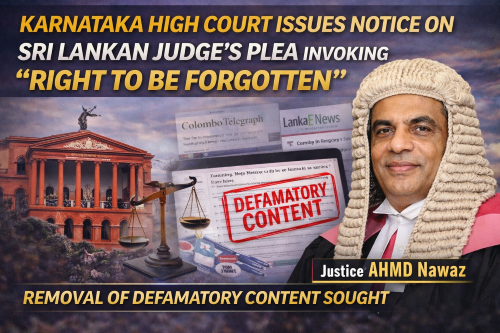
As digital footprints grow increasingly permanent, India’s courts are confronting the limitations of the Right to Be Forgotten (RTBF) and exploring a new concept: the Right to Be Found (RTBFn).
The Right to Be Forgotten, which allows individuals to seek de-indexing or removal of outdated or harmful personal information, emerged from the recognition of the Right to Privacy by the Supreme Court in Justice KS Puttaswamy (Retd.) v. Union of India. While conceptually appealing, RTBF has struggled to fully protect reputation, particularly in high-profile cases. Initial accusations often dominate media and public memory, while later acquittals or exonerations receive little attention, leaving lasting harm.
The Madras High Court (2021) noted that erasure may even be “counterproductive” for individuals seeking to prove their innocence. The Supreme Court has similarly cautioned that removal of past information raises complex questions about reconciling privacy under Article 21 with freedom of press under Article 19(1)(a).
What is the Right to Be Found?
The Right to Be Found focuses on updating, contextualising, and amplifying accurate information rather than erasing content. Under this approach:
- Past allegations are linked to subsequent acquittals or quashing orders.
- Algorithmic amplification is corrected, ensuring that both negative and exonerating developments are visible.
- Courts may issue writs of mandamus directing media platforms to publish updates or contextual reports.
- This right aims to preserve the historical record while mitigating reputational harm caused by incomplete or outdated information. Unlike erasure, it supports freedom of speech and press, while balancing dignity and fairness.
Limitations and Context
Experts note RTBFn may not suit matrimonial or family law disputes, where increased visibility could exacerbate trauma or social stigma. Its application is most meaningful in criminal, commercial, or public-interest contexts, where factual updates enhance informational justice.
Comparative Perspectives
- Europe: The EU and France emphasize the Right to Erasure under GDPR, but principles of accuracy and rectification (Articles 5 & 16) already reflect RTBFn logic.
- United States: Courts prioritize First Amendment freedoms; RTBF is largely rejected, but RTBFn’s focus on completeness aligns better with free-expression principles.
Why It Matters
In a digital age where memory is permanent but correction is optional, the Right to Be Found offers a normatively and constitutionally sound approach. Instead of silencing information, it ensures truth, fairness, and contextual integrity, paving the way for reputational rehabilitation without compromising public access to information.
For India, where dignity, reputation, and fairness are constitutional values, RTBFn may represent the next evolution of digital rights jurisprudence, balancing privacy with transparency in an algorithm-driven ecosystem.