Former CJI Ranjan Gogoi retires as Rajya Sabha MP; asked zero questions and participated in only one debate
Lexpedia News · 16 March 2026 · 5 min read
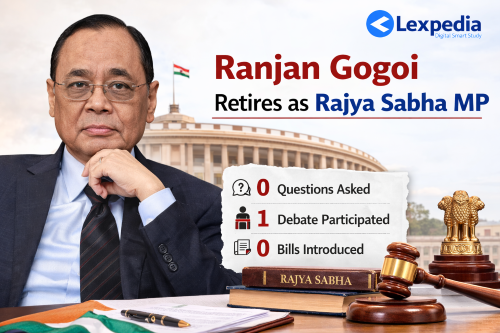
Former Chief Justice of India (CJI) Ranjan Gogoi has completed his six-year term as a nominated Member of Parliament in the Rajya Sabha, marking the end of a tenure that attracted attention due to his limited parliamentary participation.
At the commencement of the House proceedings, Rajya Sabha Chairman C.P. Radhakrishnan formally bid farewell to Gogoi, acknowledging his contribution as a distinguished jurist and noting that his experience from the judiciary brought valuable insights to parliamentary discussions.
Nomination to the Rajya Sabha
Ranjan Gogoi was nominated to the Rajya Sabha on 16 March 2020 by the President of India, just a few months after he retired as the 46th Chief Justice of India in November 2019.
His nomination sparked significant debate at the time, with critics arguing that accepting a parliamentary position so soon after retirement could raise concerns about judicial independence and post-retirement appointments.
However, supporters—including leaders within the legal community—argued that his presence in Parliament could help bridge the gap between the judiciary and the legislature.
Parliamentary performance during the six-year term
Data from parliamentary records shows that Gogoi’s participation in the Rajya Sabha was relatively limited:
- Questions asked: 0
- Private member bills introduced: 0
- Debates participated: 1
- Average attendance: about 53% of sittings.
Despite several major legislative discussions in Parliament during this period—including debates on farm laws, criminal law reforms, tribunal reforms, and women’s reservation—Gogoi did not participate in those debates.
Only parliamentary speech
Gogoi participated in only one debate, which took place in August 2023 during the discussion on the Government of National Capital Territory of Delhi (Amendment) Bill, commonly known as the Delhi Services Bill.
During this speech, he expressed the view that the basic structure doctrine of the Constitution has a “debatable jurisprudential basis.” The remark drew attention because it appeared to contrast with his earlier judicial observations endorsing the doctrine while serving as Chief Justice.
Explanation for limited attendance
In a 2021 interview, Gogoi said that his attendance in Parliament had been affected by the COVID-19 pandemic and by concerns regarding the seating arrangements during the period.
He also stated that he attended sessions only when he felt there were issues on which he should speak, emphasizing that as a nominated member he was not bound by any political party whip.
Significance of his Rajya Sabha tenure
Ranjan Gogoi’s nomination and tenure remain notable because he became the first former Chief Justice of India to be nominated to the Rajya Sabha shortly after retirement.
His appointment sparked a broader national debate about:
- The cooling-off period for retired judges
- The relationship between the judiciary and the executive
- The ethics of post-retirement public appointments for judges.
With his retirement from the Rajya Sabha, discussions about judicial independence and post-retirement roles for judges are likely to continue within legal and political circles.
पूर्व CJI रंजन गोगोई का राज्यसभा कार्यकाल समाप्त; 6 वर्षों में न कोई प्रश्न पूछा, न कोई विधेयक पेश किया
भारत के पूर्व Chief Justice of India (CJI) रंजन गोगोई का राज्यसभा के नामित सदस्य के रूप में छह वर्ष का कार्यकाल समाप्त हो गया। उनके कार्यकाल के दौरान संसद में उनकी भागीदारी सीमित रही।
राज्यसभा की कार्यवाही शुरू होने पर राज्यसभा के सभापति सी.पी. राधाकृष्णन ने गोगोई को विदाई दी और कहा कि एक प्रतिष्ठित न्यायविद के रूप में उन्होंने सदन की चर्चाओं में महत्वपूर्ण कानूनी अनुभव और दृष्टिकोण प्रदान किया।
राज्यसभा में नामांकन
रंजन गोगोई को 16 मार्च 2020 को राष्ट्रपति द्वारा राज्यसभा के लिए नामित किया गया था, जो उनके नवंबर 2019 में मुख्य न्यायाधीश पद से सेवानिवृत्त होने के कुछ महीनों बाद हुआ था।
इस नियुक्ति ने उस समय काफी विवाद उत्पन्न किया। आलोचकों का कहना था कि सेवानिवृत्ति के तुरंत बाद संसद में पद स्वीकार करना न्यायपालिका की स्वतंत्रता के सिद्धांत पर सवाल खड़े कर सकता है।
हालांकि कुछ लोगों ने इसे विधायिका और न्यायपालिका के बीच संवाद बढ़ाने का अवसर भी बताया।
छह वर्षों में संसदीय गतिविधि
संसदीय रिकॉर्ड के अनुसार, गोगोई की गतिविधियां इस प्रकार रहीं:
- पूछे गए प्रश्न: 0
- निजी सदस्य विधेयक: 0
- बहस में भागीदारी: 1
- औसत उपस्थिति: लगभग 53%।
इस दौरान संसद में कई महत्वपूर्ण कानूनों और नीतियों पर चर्चा हुई, जैसे:
- कृषि कानून
- नए आपराधिक कानून
- ट्रिब्यूनल सुधार कानून
- महिला आरक्षण से संबंधित संवैधानिक संशोधन
लेकिन गोगोई ने इन बहसों में हिस्सा नहीं लिया।
एकमात्र भाषण
उन्होंने केवल एक बहस में हिस्सा लिया, जो अगस्त 2023 में दिल्ली सेवाएं विधेयक पर हुई थी।
उस दौरान उन्होंने कहा था कि संविधान का “बेसिक स्ट्रक्चर सिद्धांत” एक बहस योग्य अवधारणा है। इस टिप्पणी ने ध्यान आकर्षित किया क्योंकि मुख्य न्यायाधीश रहते हुए उन्होंने अपने एक निर्णय में इसी सिद्धांत का समर्थन किया था।
कम उपस्थिति पर गोगोई का स्पष्टीकरण
2021 में दिए गए एक साक्षात्कार में गोगोई ने कहा था कि कोविड-19 महामारी और संसद में बैठने की व्यवस्था के कारण उनकी उपस्थिति कम रही।
उन्होंने यह भी कहा कि वह संसद में केवल तब जाते हैं जब उन्हें लगता है कि किसी महत्वपूर्ण विषय पर बोलना चाहिए, क्योंकि एक नामित सदस्य के रूप में वे किसी राजनीतिक दल के व्हिप से बंधे नहीं हैं।
महत्व
रंजन गोगोई का राज्यसभा कार्यकाल इसलिए भी महत्वपूर्ण रहा क्योंकि वे सेवानिवृत्ति के तुरंत बाद राज्यसभा के लिए नामित होने वाले पहले पूर्व मुख्य न्यायाधीश बने।
उनकी नियुक्ति ने व्यापक बहस को जन्म दिया, जिसमें प्रमुख प्रश्न थे:
- सेवानिवृत्त न्यायाधीशों के लिए “कूलिंग-ऑफ पीरियड” की आवश्यकता
- न्यायपालिका और कार्यपालिका के बीच संबंध
- न्यायाधीशों के सेवानिवृत्ति के बाद सार्वजनिक पद स्वीकार करने की नैतिकता।