Bill to amend Transgender Persons Act introduced in Lok Sabha; proposes removal of “self-perceived gender identity”
Lexpedia News · 13 March 2026 · 5 min read
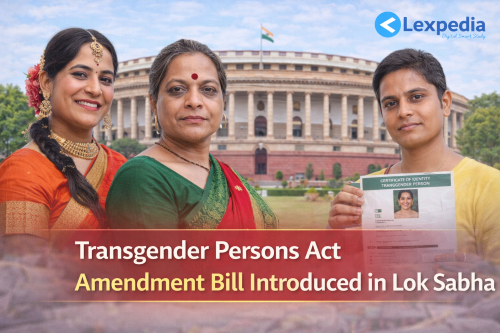
The Union Government has introduced the Transgender Persons (Protection of Rights) Amendment Bill, 2026 in the Lok Sabha, proposing major changes to the Transgender Persons (Protection of Rights) Act, 2019. The Bill was introduced by Union Minister for Social Justice and Empowerment Dr. Virendra Kumar.
One of the most significant proposals in the amendment is the removal of the provision recognising “self-perceived gender identity” as the basis for identifying a transgender person.
The government states that the amendment aims to clarify the legal definition of transgender persons and address difficulties in implementing the existing law.
Key changes proposed in the Bill
1. Removal of self-identification provision
The Bill seeks to omit Section 4(2) of the 2019 Act, which currently recognises a transgender person’s right to self-perceived gender identity.
Under the proposed law, self-identification alone would not be sufficient for legal recognition as a transgender person.
2. Revised definition of “transgender person”
The Bill proposes a narrower and more specific definition of transgender persons. The revised definition includes:
-
Persons belonging to socio-cultural communities such as hijra, kinner, aravani, jogta and eunuch
-
Persons with intersex variations, including congenital variations in genitalia, chromosomes, hormones or gonadal development
-
Individuals who were forced through mutilation, castration, surgical or hormonal procedures to present as transgender
At the same time, the proposed definition clarifies that people with different sexual orientations or self-perceived identities alone will not fall under the definition of transgender persons.
3. New procedure for identity certificate
The amendment proposes a medical verification process before granting legal recognition as a transgender person.
Under the proposed system:
-
A designated medical board headed by a Chief Medical Officer or Deputy Chief Medical Officer will examine the case
-
The District Magistrate will issue the certificate of identity based on the board’s recommendation.
Currently, under the 2019 Act, a certificate can be issued largely based on the individual’s self-declared identity.
4. Changes for gender change after surgery
The Bill also modifies the process for recognition of gender change after gender reassignment surgery.
A medical institution performing such surgery must provide details to the District Magistrate, who may then issue an updated gender certificate.
5. New criminal offences and stricter punishments
The amendment introduces specific offences with graded punishments, particularly targeting acts such as:
-
Kidnapping or abducting persons and forcibly altering their gender identity
-
Mutilation, castration or medical procedures performed to force someone into a transgender identity
Punishments proposed include:
-
10 years to life imprisonment with a minimum fine of ₹2 lakh for offences involving adults
-
Up to life imprisonment and a minimum fine of ₹5 lakh for offences involving children.
The Bill also criminalises forcing persons or children to present themselves as transgender for begging, servitude or bonded labour.
6. Changes in National Council for Transgender Persons
The Bill proposes restructuring the National Council for Transgender Persons, with representatives from States and Union Territories nominated by the Central Government on a rotational regional basis.
Background: The 2019 Transgender Persons Act
The Transgender Persons (Protection of Rights) Act, 2019 was enacted to prohibit discrimination against transgender individuals and promote their welfare.
The law was enacted after the landmark Supreme Court judgment in NALSA v. Union of India (2014), which recognised transgender persons as a third gender and affirmed the right to self-identification of gender identity.
Significance and debate
The proposed amendment has generated significant debate because it moves away from the principle of self-identification recognised in earlier legal developments.
Supporters argue the amendment will clarify definitions and ensure targeted protection for communities facing severe discrimination, while critics say it could reduce autonomy in gender identity recognition and increase bureaucratic scrutiny.
The Bill will now undergo Parliamentary debate and scrutiny before it can become law.
लोकसभा में ट्रांसजेंडर व्यक्तियों के कानून में संशोधन विधेयक पेश; “स्व-पहचान” प्रावधान हटाने का प्रस्ताव
केंद्र सरकार ने Transgender Persons (Protection of Rights) Amendment Bill, 2026 को लोकसभा में पेश किया है। इस विधेयक का उद्देश्य Transgender Persons (Protection of Rights) Act, 2019 में महत्वपूर्ण संशोधन करना है। यह विधेयक सामाजिक न्याय एवं अधिकारिता मंत्री डॉ. वीरेंद्र कुमार द्वारा प्रस्तुत किया गया।
इस विधेयक का सबसे महत्वपूर्ण प्रस्ताव “self-perceived gender identity” (स्व-अनुभूत लैंगिक पहचान) के आधार पर ट्रांसजेंडर पहचान को मान्यता देने वाले प्रावधान को हटाना है।
विधेयक में प्रस्तावित प्रमुख परिवर्तन
1. स्व-पहचान प्रावधान हटाने का प्रस्ताव
विधेयक 2019 अधिनियम की धारा 4(2) को हटाने का प्रस्ताव करता है, जिसमें ट्रांसजेंडर व्यक्ति को स्व-अनुभूत लैंगिक पहचान का अधिकार दिया गया था।
संशोधन के बाद केवल स्वयं की पहचान के आधार पर कानूनी मान्यता प्राप्त करना संभव नहीं होगा।
2. ट्रांसजेंडर की नई परिभाषा
विधेयक ट्रांसजेंडर व्यक्ति की नई और अधिक सीमित परिभाषा प्रस्तुत करता है, जिसमें शामिल हैं:
-
हिजड़ा, किन्नर, अरावणी, जोगता, यूनक जैसी सामाजिक-सांस्कृतिक पहचान वाले व्यक्ति
-
इंटरसेक्स विविधताओं वाले व्यक्ति
-
वे लोग जिन्हें जबरन सर्जरी या शारीरिक परिवर्तन के माध्यम से ट्रांसजेंडर पहचान अपनाने के लिए मजबूर किया गया हो।
इसके साथ ही यह स्पष्ट किया गया है कि केवल अलग यौन अभिरुचि या स्वयं की लैंगिक पहचान रखने वाले व्यक्ति इस परिभाषा में नहीं आएंगे।
3. पहचान प्रमाणपत्र की नई प्रक्रिया
संशोधन के अनुसार:
-
एक मेडिकल बोर्ड मामले की जांच करेगा
-
जिला मजिस्ट्रेट मेडिकल बोर्ड की सिफारिश के आधार पर पहचान प्रमाणपत्र जारी करेंगे।
4. जेंडर परिवर्तन की प्रक्रिया
यदि कोई व्यक्ति जेंडर रिअसाइनमेंट सर्जरी कराता है, तो संबंधित चिकित्सा संस्थान इसकी जानकारी जिला मजिस्ट्रेट को देगा और उसके बाद संशोधित प्रमाणपत्र जारी किया जा सकता है।
5. नए अपराध और कड़ी सजा
विधेयक में नए अपराध शामिल किए गए हैं, जैसे:
-
किसी व्यक्ति का अपहरण कर जबरन ट्रांसजेंडर पहचान थोपना
-
मेडिकल प्रक्रियाओं के माध्यम से पहचान बदलने के लिए मजबूर करना
सजा:
-
वयस्क मामलों में 10 वर्ष से आजीवन कारावास और न्यूनतम ₹2 लाख जुर्माना
-
बच्चों से जुड़े मामलों में आजीवन कारावास और न्यूनतम ₹5 लाख जुर्माना।
6. राष्ट्रीय परिषद में बदलाव
विधेयक में National Council for Transgender Persons की संरचना में भी बदलाव का प्रस्ताव है, जिसमें राज्यों और केंद्रशासित प्रदेशों के प्रतिनिधियों को क्षेत्रीय आधार पर रोटेशन से नामित किया जाएगा।
यह विधेयक भारत में ट्रांसजेंडर अधिकारों से जुड़े कानून में महत्वपूर्ण नीतिगत बदलाव का संकेत देता है।
जहाँ सरकार का कहना है कि यह संशोधन कानून की स्पष्टता और लक्षित संरक्षण सुनिश्चित करने के लिए आवश्यक है, वहीं आलोचकों का मानना है कि इससे स्व-पहचान के अधिकार और लैंगिक स्वतंत्रता पर असर पड़ सकता है.
अब यह विधेयक संसद में बहस और संसदीय प्रक्रिया से गुजरेगा।