SC Questions Muslim Inheritance Law, Suggests Uniform Civil Code (UCC) as Possible Solution
Lexpedia News · 10 March 2026 · 5 min read
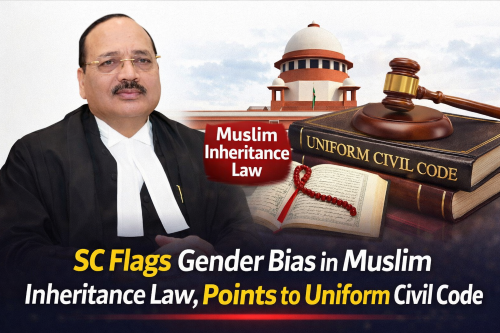
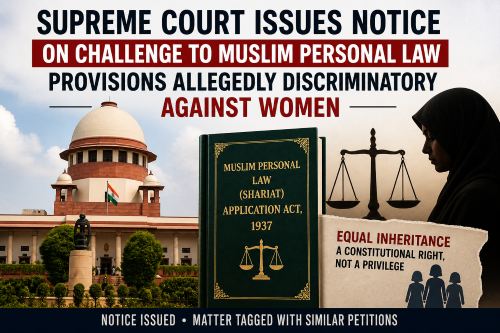
The Supreme Court of India recently heard a petition challenging provisions of Muslim personal law relating to inheritance, arguing that they discriminate against Muslim women and violate the constitutional principles of equality.
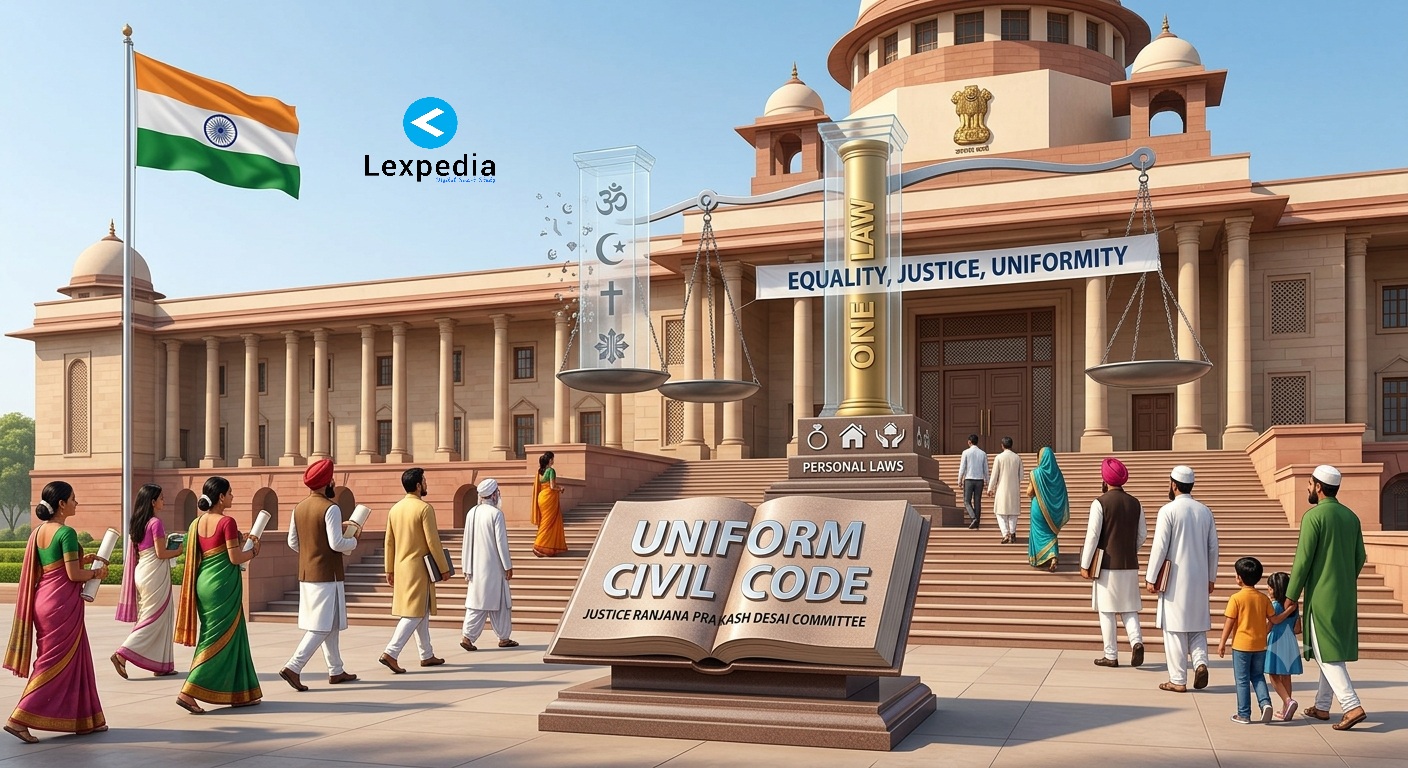
During the hearing, the Court observed that the issue highlights the broader need for a Uniform Civil Code (UCC) and remarked that legislative intervention may be the appropriate route to address such concerns.
The petition challenges aspects of inheritance under the Muslim Personal Law (Shariat) Application Act, 1937, arguing that the existing framework results in unequal property rights for Muslim women.
Bench of the Court
The matter was heard by a three-judge bench comprising:
- Chief Justice of India Surya Kant
- Justice Joymalya Bagchi
- Justice R. Mahadevan
Petitioner's Arguments
Senior Advocate Prashant Bhushan, appearing for the petitioners, argued that the inheritance rules under Muslim personal law treat women unequally compared to men, violating constitutional guarantees of equality.
According to the petition:
- Muslim women often receive smaller shares of inheritance compared to male heirs.
- Such provisions conflict with Articles 14 and 15 of the Constitution, which prohibit discrimination on grounds of sex.
Bhushan also relied on the Supreme Court’s landmark judgment in Shayara Bano v. Union of India (2017), where the Court struck down the practice of instant triple talaq as unconstitutional. He argued that similar constitutional scrutiny should apply to discriminatory inheritance rules.
He further contended that inheritance is a civil right rather than an essential religious practice, and therefore it should not be immune from constitutional review.
Concerns Raised by the Supreme Court
During the hearing, the Bench raised important questions regarding the consequences of striking down the Shariat inheritance provisions.
Chief Justice Surya Kant asked whether invalidating the existing law could create a legal vacuum, since Muslim inheritance is currently governed by personal law rather than a comprehensive statutory framework.
The Court observed that:
- If the relevant provisions of the Shariat Act, 1937 are struck down, there may be no immediate legal framework governing inheritance among Muslims.
- This could potentially leave women in a worse position than they currently are.
The Bench also referred to the Bombay High Court decision in State of Bombay v. Narasu Appa Mali (1951), which held that personal laws are generally not subject to constitutional challenge.
Supreme Court’s Observations on Uniform Civil Code
While discussing the broader implications, Chief Justice Surya Kant remarked that the “answer is a Uniform Civil Code.”
Justice Joymalya Bagchi added that it may be more appropriate for Parliament to address such reforms, since the Directive Principles of State Policy under Article 44 encourage the State to enact a Uniform Civil Code.
The Court emphasised that issues involving religious personal laws often require legislative reform rather than judicial intervention.
Suggestion to Amend the Petition
The Bench suggested that the petitioners should amend their petition to propose specific remedies, particularly explaining what legal framework would apply if the Shariat inheritance provisions were struck down.
After the petitioner agreed to revise the pleadings, the Court adjourned the matter for further hearing.
Significance of the Case
The case raises important constitutional questions regarding:
- Gender equality in inheritance laws
- The scope of judicial review over religious personal laws
- The ongoing debate on implementing a Uniform Civil Code in India
Legal experts note that the outcome of the case could significantly influence future debates about personal law reforms and women's rights within religious communities.
Case Title
Poulomi Pavini Shukla v. Union of India
(Diary No. 67256/2025)
“समाधान समान नागरिक संहिता है”: मुस्लिम महिलाओं के खिलाफ भेदभाव के आरोपों पर सुप्रीम कोर्ट की टिप्पणी
भारत के सर्वोच्च न्यायालय ने एक याचिका पर सुनवाई की, जिसमें मुस्लिम पर्सनल लॉ में उत्तराधिकार से संबंधित प्रावधानों को मुस्लिम महिलाओं के खिलाफ भेदभावपूर्ण बताया गया है।
सुनवाई के दौरान अदालत ने कहा कि यह मुद्दा समान नागरिक संहिता (Uniform Civil Code) की आवश्यकता को रेखांकित करता है और इस प्रकार के सुधार विधायिका द्वारा किए जाना अधिक उचित हो सकता है।
केस का नाम
Poulomi Pavini Shukla v. Union of India
(डायरी संख्या 67256/2025)
यह याचिका मुस्लिम पर्सनल लॉ (शरीयत) आवेदन अधिनियम, 1937 के तहत उत्तराधिकार से जुड़े प्रावधानों को चुनौती देती है।
पीठ (Bench)
इस मामले की सुनवाई तीन न्यायाधीशों की पीठ ने की:
- मुख्य न्यायाधीश सूर्यकांत
- न्यायमूर्ति जॉयमाल्य बागची
- न्यायमूर्ति आर. महादेवन
याचिकाकर्ता की दलीलें
वरिष्ठ अधिवक्ता प्रशांत भूषण ने तर्क दिया कि मुस्लिम उत्तराधिकार कानूनों में महिलाओं को पुरुषों की तुलना में कम हिस्सा मिलता है, जो संविधान के समानता के सिद्धांत के विपरीत है।
याचिका में कहा गया कि:
- मुस्लिम महिलाओं को अक्सर पुरुष उत्तराधिकारियों की तुलना में कम संपत्ति का हिस्सा मिलता है।
- यह संविधान के अनुच्छेद 14 और 15 के तहत समानता के अधिकार का उल्लंघन है।
उन्होंने शायरा बानो बनाम भारत संघ (2017) मामले का हवाला भी दिया, जिसमें सुप्रीम कोर्ट ने तत्काल तीन तलाक (Triple Talaq) को असंवैधानिक घोषित किया था।
सुप्रीम कोर्ट की चिंताएं
सुनवाई के दौरान अदालत ने पूछा कि यदि शरीयत कानून के उत्तराधिकार प्रावधानों को निरस्त कर दिया जाए, तो क्या इससे कोई कानूनी रिक्तता (legal vacuum) पैदा नहीं होगी।
मुख्य न्यायाधीश ने कहा कि यदि वर्तमान व्यवस्था समाप्त हो जाए, तो महिलाओं के पास उत्तराधिकार के लिए कोई स्पष्ट कानूनी ढांचा नहीं रह सकता।
पीठ ने Narasu Appa Mali (1951) मामले का भी उल्लेख किया, जिसमें कहा गया था कि पर्सनल लॉ को सामान्यतः संवैधानिक परीक्षण के दायरे में नहीं लाया जा सकता।
समान नागरिक संहिता पर टिप्पणी
सुनवाई के दौरान मुख्य न्यायाधीश सूर्यकांत ने कहा कि “इसका समाधान समान नागरिक संहिता है।”
न्यायमूर्ति जॉयमाल्य बागची ने कहा कि ऐसे सुधार संसद द्वारा किए जाना अधिक उचित होगा, क्योंकि संविधान के नीति निदेशक तत्वों (Article 44) में समान नागरिक संहिता लागू करने की बात कही गई है।
याचिका में संशोधन का सुझाव
अदालत ने याचिकाकर्ता को सुझाव दिया कि वे अपनी याचिका में संभावित कानूनी समाधान का स्पष्ट उल्लेख करें, ताकि यदि शरीयत कानून के प्रावधानों को हटाया जाए तो वैकल्पिक व्यवस्था क्या होगी।
इसके बाद अदालत ने मामले की सुनवाई आगे के लिए स्थगित कर दी।
मामले का महत्व
यह मामला महत्वपूर्ण है क्योंकि यह कई संवैधानिक प्रश्न उठाता है:
- महिलाओं के उत्तराधिकार अधिकारों में समानता
- धार्मिक पर्सनल लॉ पर न्यायिक समीक्षा की सीमा
- भारत में समान नागरिक संहिता पर चल रही बहस
विशेषज्ञों का मानना है कि यह मामला महिलाओं के अधिकारों और पर्सनल लॉ सुधारों पर भविष्य की कानूनी बहस को प्रभावित कर सकता है।