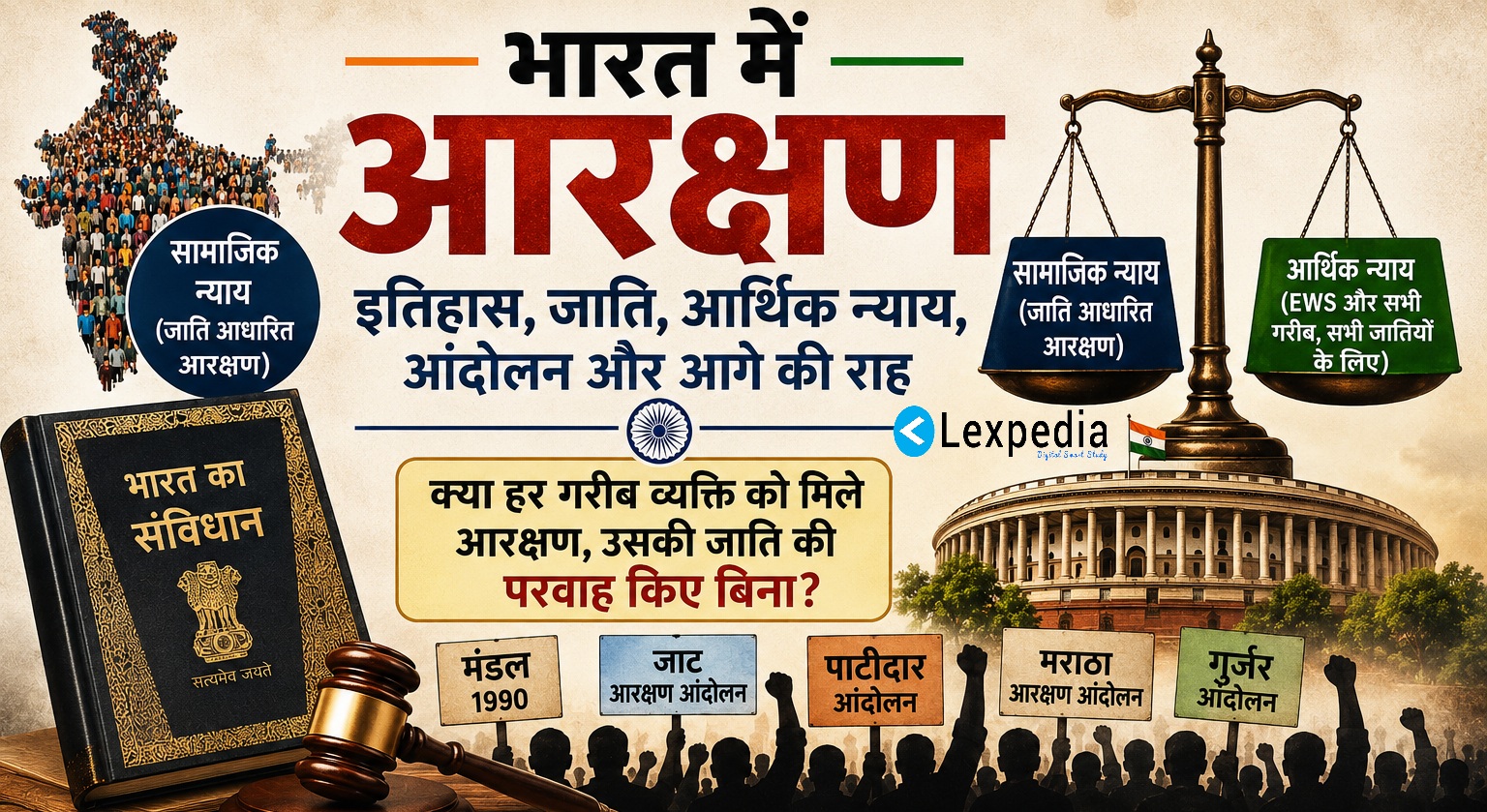
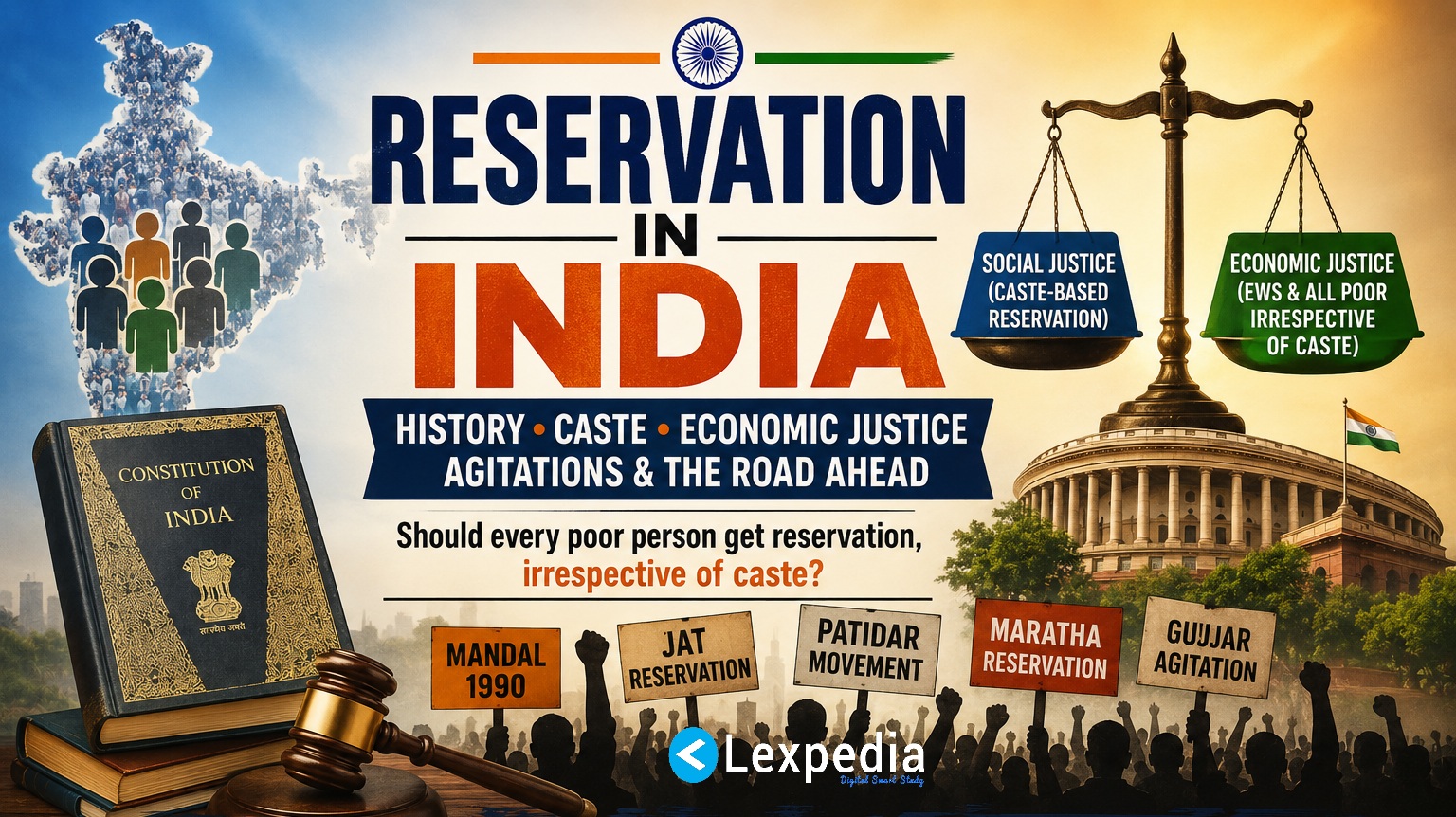
Reservation For SC/ST Advocates In Bar Council Elections Requires Statutory Amendment: Supreme Court
Lexpedia · 22 January 2026 · 2 min read
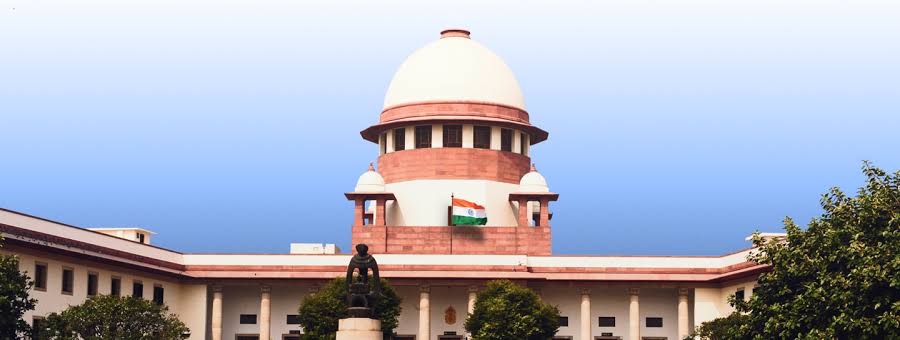
The Supreme Court of India on Friday declined to issue directions for reservation for Scheduled Caste and Scheduled Tribe advocates in elections to State Bar Councils and the Bar Council of India, holding that such a measure can be introduced only through a statutory amendment to the Advocates Act, 1961.
A Bench comprising Chief Justice Surya Kant, Justice Joymalya Bagchi and Justice Vipul Pancholi observed that in the absence of an express statutory provision, the Court could not issue a writ of mandamus directing reservation for SC/ST advocates.
“It is not in dispute that such a reservation can be provided only through amendment in the statute… In that being so, we find it difficult to issue a mandamus to provide any reservation to SC ST in the absence of an express provision,” the Court said.
Plea Before the Court
The Court was hearing a writ petition filed by Universal Dr. Ambedkar Advocates Association, seeking a declaration that the phrase “proportional representation” under Section 3(2)(b) of the Advocates Act, 1961 includes proportional representation for Scheduled Castes, Scheduled Tribes and other marginalised communities in Bar Councils.
In the alternative, the petitioner sought directions for reservation of seats for these communities until appropriate legislation was enacted.
Section 3(2)(b) of the Advocates Act provides for election of members of State Bar Councils through the single transferable vote system, with the number of elected members linked to the size of the electorate.
Arguments By The Petitioner
Senior Advocate N.S. Nappinai, appearing for the petitioner, relied on earlier Supreme Court decisions in Yogamaya M.G. v. Union of India (women lawyers) and Pankaj Sinha v. Bar Council of India (persons with disabilities), to argue that the Court had previously taken steps to ensure inclusivity in Bar bodies.
She urged the Court to consider alternative measures such as co-option or reduction in registration fees for SC/ST advocates, similar to the relief granted in Pankaj Sinha.
Court’s Response
Responding to the submissions, Chief Justice Surya Kant observed that reservation for women lawyers had been achieved through consensus and collective agreement within the legal fraternity, and that extending similar benefits to SC/ST advocates would require comprehensive legislative intervention.
The Bench noted that both the State Bar Council of Telangana and the Bar Council of India had already informed the High Court that the issue of reservation was under active consideration by competent authorities.
Given that Bar Council elections in several states were already underway, the Court held that it was too late to issue interim directions at this stage.
Liberty Reserved
While dismissing the plea for directions, the Court clarified that the petitioner would remain at liberty to approach the competent authority for appropriate relief. It also observed that if no statutory amendment is brought in future, the petitioner may approach the Court again at an appropriate time.
Case Title: Universal Dr. Ambedkar Advocates Association v. Union of India