Why ‘Irretrievable Breakdown of Marriage’ Cannot Be a Ground for Divorce Without Legislative Backing
Lexpedia · 20 August 2025 · 3 min read
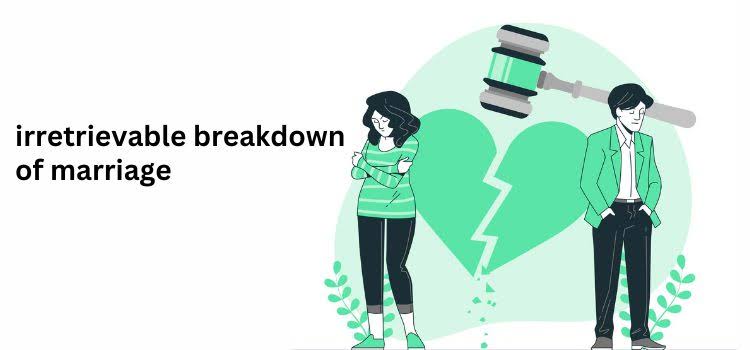
The ground of “irretrievable breakdown of marriage” is not yet recognized under Indian statutory law. While courts, particularly the Supreme Court, have occasionally granted divorce using this expression under Article 142 of the Constitution, doing so raises serious questions about judicial overreach and legislative supremacy.
The term is ambiguous, elastic, and highly subjective, leaving room for inconsistent applications and potential misuse. Allowing such a ground without a clear legal framework risks weakening the institution of marriage, particularly in the Indian cultural context where family and social structures are deeply rooted in tradition.
Parliament’s Silence Despite Law Commission Recommendation
Despite the 71st Law Commission Report (1978) recommending its inclusion as a ground for divorce, Parliament has chosen not to amend the Hindu Marriage Act, 1955, to incorporate it. This legislative silence is telling suggesting that Indian society is not yet ready for such a broad and open-ended ground. In contrast, certain regional laws that existed prior to the HMA, such as the Travancore Nayar Act of 1925, included more refined grounds like "incompatibility of temperament." However, these were overridden after the central law came into force.
Granting Divorce Should Not Be Left to Discretion Alone
The risk of judges using personal discretion to grant divorce on vague and unrecognized grounds is concerning. For example, one trial court may deny divorce seeing potential for reconciliation, while an appellate court may allow it on the same facts. This legal uncertainty is not ideal in matrimonial matters. There is a fine balance to be struck protecting individuals from being trapped in dead marriages, while preventing divorce from becoming too casual. Indian society, with its unique familial structure and social fabric, requires a more measured and cautious approach.
Article 142 and the Problem of “Complete Justice”
The Supreme Court, under Article 142, has repeatedly granted divorce citing irretrievable breakdown, in cases like:
-
Naveen Kohli v. Neelu Kohli (2006)
-
K. Srinivasa Rao v. D.A. Deepa (2013)
-
R. Srinivas Kumar v. R. Shametha (2019)
-
Shilpa Sailesh v. Varun Sreenivasan (2023)
This practice raises a serious concern: Can “complete justice” override legislative intent? Does a litigant always need to reach the apex court to be freed from a broken marriage? If the Supreme Court can invoke irretrievable breakdown, then shouldn’t lower courts also be allowed to grant relief following the guidelines laid down in Shilpa Sailesh? Or does such a move blur the line between judicial and legislative functions?
What the Law Currently Says
In Vishnu Dutt Sharma v. Manju Sharma (2009), the Supreme Court itself held: “No such ground of irretrievable breakdown of the marriage is provided by the legislature… This Court cannot add such a ground to Section 13 of the Act as that would be amending the Act, which is a function of the legislature. In other rulings like ONGC v. Gujarat Energy Transmission Corp Ltd (2017) and Nidhi Kaim v. State of M.P. (2017), the Court held that Article 142 cannot be used to bypass statutory provisions or ignore binding precedents under Article 141.
Until Parliament amends matrimonial laws to include "irretrievable breakdown" as a ground for divorce, courts including the Supreme Court should refrain from granting divorce on this basis. Doing so may amount to judicial legislation, which undermines the rule of law. If this ground is to be recognized, it must be done transparently, through parliamentary debate and public consensus, not through backdoor judicial activism. Without such legislative clarity, claims for divorce must stand or fall only on the statutorily recognized grounds, nothing beyond.