The Supreme Court to Hear Plea by Divorced Man Seeking Right to Surrogacy; Challenges Gender Bias in Law
Lexpedia · 2 May 2025 · 3 min read
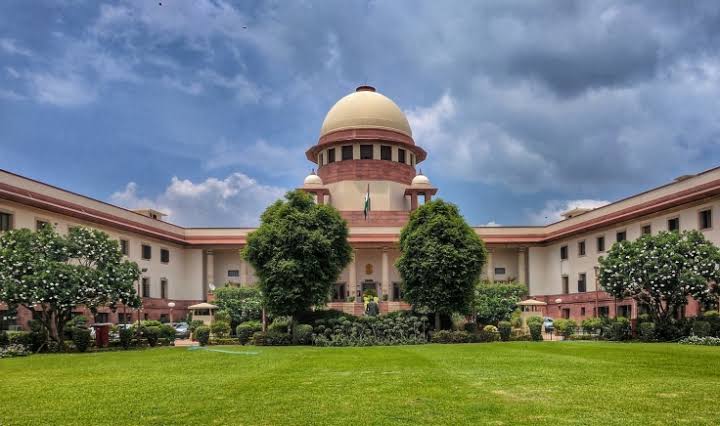
The Supreme Court of India has agreed to examine a significant constitutional challenge raised by a 45-year-old divorced man, who has moved the apex court seeking the right to have a child through surrogacy. The petitioner has contested the gender-specific eligibility criteria laid down under the Surrogacy (Regulation) Act, 2021, which allows only widowed or divorced women between the ages of 35 and 45 to avail of surrogacy, while excluding single or divorced men.
A bench comprising Justice B.V. Nagarathna and Justice K.V. Viswanathan issued notice in the matter and scheduled the case for hearing in July 2025. The petition also coincides with a larger batch of cases before the same bench challenging provisions of the Surrogacy (Regulation) Act, 2021, and the Surrogacy (Regulation) Rules, 2022, especially with respect to the upper age limits for intending parents.
Constitutional Challenge to Section 2(1)(s)
The petitioner has sought to strike down Section 2(1)(s) of the Act, arguing that it amounts to an unconstitutional and discriminatory exclusion of single and divorced men from the surrogacy framework. He claims that such exclusion violates fundamental rights under Articles 14, 15, and 21 of the Constitution. “Parenthood is not a privilege conferred upon a particular gender but a fundamental right rooted in the principles of equality, dignity, and autonomy,” the plea states. It adds that the gender-based classification fails the twin test of reasonable classification under Article 14 and is “manifestly arbitrary,” relying on the apex court’s landmark ruling in Shayara Bano v. Union of India.
Violation of Reproductive Autonomy and Bodily Integrity
The petitioner argues that the right to reproductive autonomy is not limited to women. Citing the judgments in K.S. Puttaswamy v. Union of India and Suchita Srivastava v. Chandigarh Administration, the plea asserts that reproductive choice forms an essential facet of privacy and bodily autonomy under Article 21. “The exclusion of single and divorced men from surrogacy directly impinges upon their fundamental right to make reproductive choices and imposes an unreasonable restriction on their bodily integrity and dignity,” the petition states.
Contradictory Approach in Indian Laws on Parenthood
The petition highlights the inconsistency in Indian laws, pointing out that single men are permitted to adopt under the Juvenile Justice (Care and Protection of Children) Act, 2015, and the Hindu Adoption and Maintenance Act, 1956, thereby acknowledging that parenthood is not contingent on marital status.
Further, reliance is placed on the Supreme Court’s ruling in Githa Hariharan v. RBI, which held that both men and women are equally competent to raise children.
Call for Transformative Constitutional Interpretation
The petitioner argues that the surrogacy law must be read in a progressive, liberal manner that aligns with transformative constitutionalism, a principle upheld in recent decisions such as Navtej Singh Johar v. Union of India and Joseph Shine v. Union of India. These rulings emphasized that the Constitution must evolve with changing societal norms and protect individual dignity and autonomy. “Laws regulating surrogacy should enable individuals to realize their reproductive rights within the evolving context of modern family structures,” the plea states, describing the existing provision as regressive and rooted in patriarchal stereotypes.
International Human Rights Standards Cited
The plea also refers to international conventions, including Article 16 of the Universal Declaration of Human Rights (UDHR) and Article 23 of the International Covenant on Civil and Political Rights (ICCPR), both of which recognize the right to found a family without discrimination. The Convention on the Elimination of All Forms of Discrimination Against Women (CEDAW) is also cited to argue that reproductive rights must be equally accessible to men.
Reliefs Sought
The petitioner has sought declaration that the exclusion of single/divorced men under Section 2(1)(s) is unconstitutional. A direction to strike down or read down the provision to include divorced men as eligible for surrogacy. The matter will be taken up for detailed hearing in July 2025.
Case Title: Dr. Maheshwara M.V. v. Union of India