Supreme Court Reiterates That 'Sharia Courts' Have No Legal Recognition, Strikes Down Family Court's Decision
Lexpedia · 30 April 2025 · 2 min read
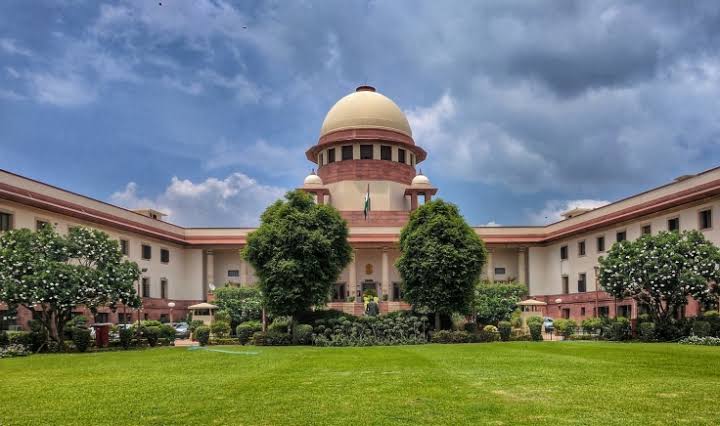
In a significant judgment, the Supreme Court of India reaffirmed that institutions such as Court of Kazi, Sharia Courts, or Darul Kaja, by any name, have no recognition in law and their decisions are unenforceable unless voluntarily accepted by the parties involved.
Judgment in Shahjahan vs. State of Uttar Pradesh
The bench comprising Justice Sudhanshu Dhulia and Justice Ahsanuddin Amanullah was considering an appeal by a woman who had challenged the Allahabad High Court's decision. The High Court upheld the Family Court's decision, which had denied her maintenance on the grounds that she was the cause of the matrimonial dispute. The Family Court had relied on a compromise deed filed before a Court of Kazi to make this finding. In light of these findings, the Supreme Court overturned the Family Court's judgment and directed the husband to pay the wife a monthly maintenance of Rs. 4,000 from the date of the filing of her maintenance petition in the Family Court.
Sharia Courts and Fatwas Lack Legal Sanction
In a sharp critique, the Supreme Court reiterated the 2014 Vishwa Lochan Madan v Union of India judgment, which held that Sharia Courts and fatwas do not have legal validity. It stressed that any declaration or decision made by these bodies cannot be enforced through coercive measures. The Court emphasized that such decisions can only stand if both parties voluntarily accept them, and only then do they remain valid inter-se the parties involved.
Family Court’s Flawed Reasoning
The Supreme Court criticized the Family Court's reasoning, stating that it relied on an incorrect assumption regarding the nature of the second marriage. The Family Court had concluded that the second marriage meant there would be no demand for dowry, which the Court labeled as "conjecture and surmise."
The judgment further pointed out that the compromise deed presented before the Family Court could not be used as a basis for its decision, as it did not record the wife's admission of any mistake. The compromise deed merely noted that both parties had agreed to live together, and there was no mention of fault or blame on either side.
Case Title: Shahjahan vs. State of Uttar Pradesh