Supreme Court Reinstates 3-Year Advocate Practice for Judicial Services Entry Exam
Lexpedia News · 20 May 2025 · 5 min read
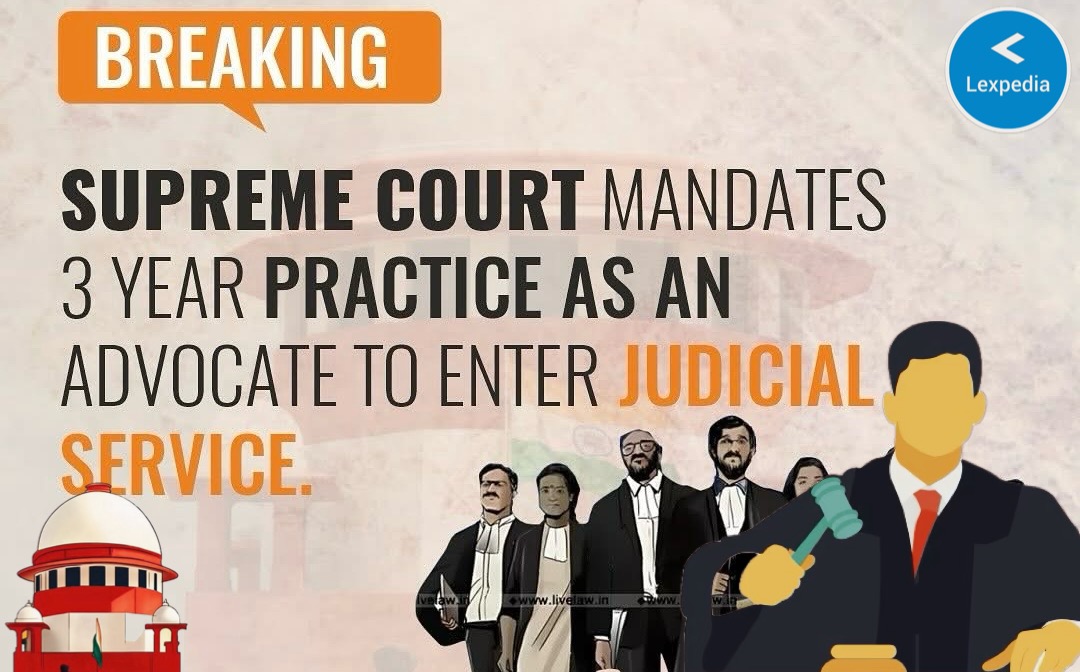
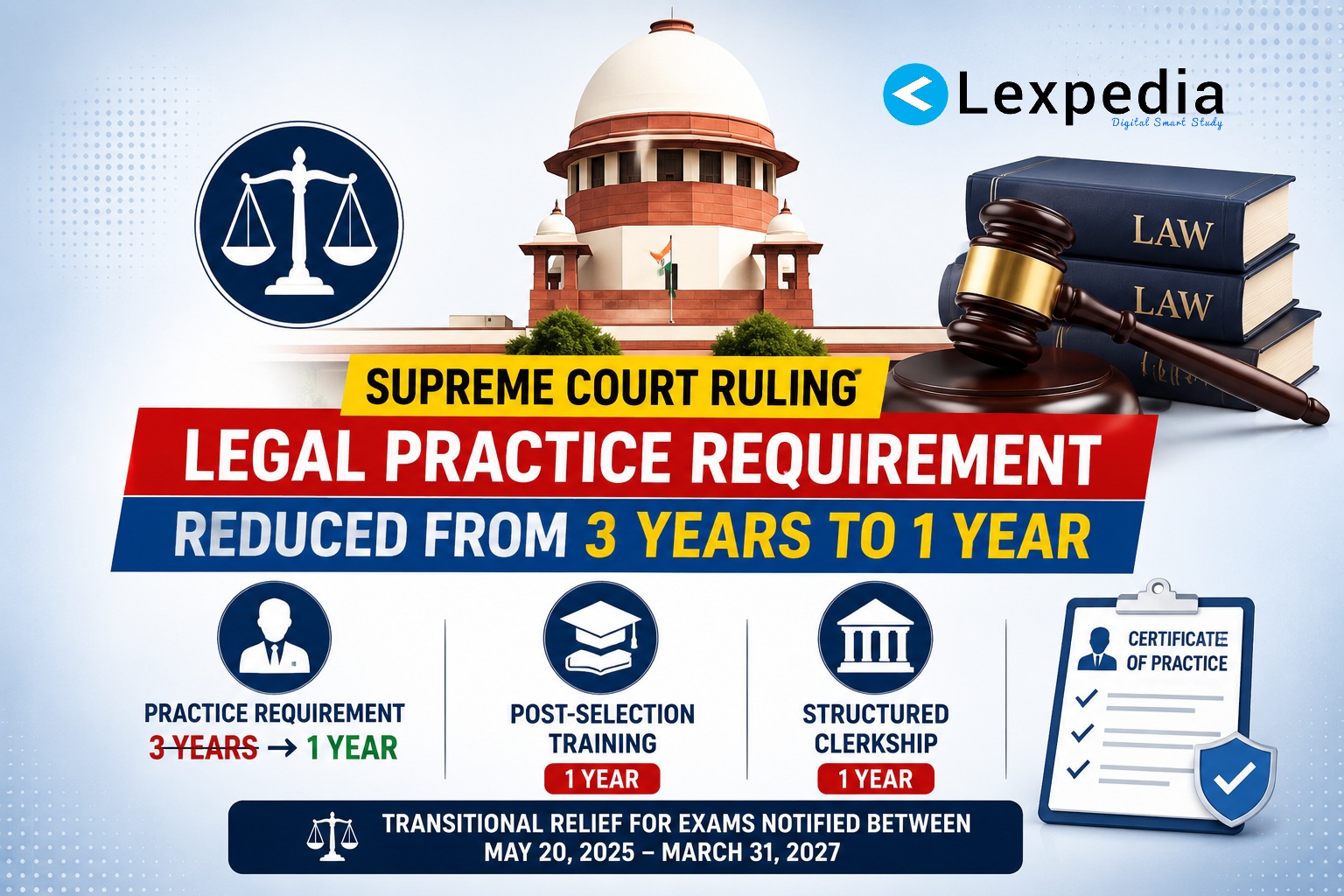
In a pivotal decision, the Supreme Court has reinstated the mandate requiring a minimum of three years of practice as an advocate for candidates aspiring to entry-level posts in judicial service. This significant change, pronounced on Tuesday, May 20, 2025, aims to address the challenges faced by the judiciary due to the induction of fresh law graduates without practical experience.
The Court explicitly directed that "All High Courts and State Governments shall amend the service rules to the effect that candidates desirous of appearing in Civil Judge (Junior Division) must have a practice of a minimum period of 3 years to be eligible for said examination".
However, a crucial clarification was issued: this condition will only apply to future recruitment processes and will not affect those already notified by High Courts prior to the judgment. Chief Justice of India BR Gavai underscored this point, stating that the minimum practice requirement "shall not be applicable where the High Courts have already commenced the appointment process of Civil Judges Junior Division before the date of this judgment, and this shall be applicable only when the next appointment process begins".
The bench, which included Chief Justice of India BR Gavai, Justice AG Masih, and Justice K Vinod Chandran, emphasized the critical need for practical experience, noting that "for the last 20 years, during which the recruitment of fresh law graduates have been appointed as judicial officers without a single day of practice at the bar has not been a successful experience. Such fresh law graduates have led to many problems..".
The Court further highlighted that "Neither knowledge based on law books nor pre-service training could be an adequate substitute to the first hand experience of the working of the court system and administration of justice".
The apex court underscored that relying solely on "bookish knowledge" and pre-service training has proven insufficient for the demanding and sensitive nature of judicial roles, which directly impact citizens' lives, liberty, property, and reputation. The Court highlighted the critical need for practical exposure to the nuances of courtroom proceedings, including observing how lawyers argue and judges conduct trials.
Experience gained as law clerks of judges:
A significant concession was made for aspiring candidates: experience gained as law clerks of judges will be counted towards fulfilling the three-year practice requirement. This clarifies a pathway for those who have gained practical insights through judicial clerkships.
Status of ongoing recruitment drives:
The judgment also brought clarity regarding the status of ongoing recruitment drives. The Court confirmed that all recruitment processes which were previously kept in abeyance due to the pendency of this case can now proceed. This decision was delivered in the context of the All India Judges Association case.
This ruling marks a return to a condition that was largely done away with in 2002, when the Supreme Court allowed fresh law graduates to apply for Munsiff-Magistrate posts without prior practice. However, subsequent applications sought the reinstatement of this condition, with several High Courts backing the move, advocating that such experience is "counter-productive" if absent. The Court had reserved its judgment on January 28, 2025, and had notably stayed the recruitment process initiated by the Gujarat High Court that lacked the minimum service condition.
न्यायिक सेवा प्रवेश के लिए 3 साल की वकालत प्रैक्टिस की शर्त बहाल: सुप्रीम कोर्ट ने जारी किए अहम स्पष्टीकरण
एक महत्वपूर्ण फैसले में, सुप्रीम कोर्ट ने न्यायिक सेवा में प्रवेश-स्तर के पदों के लिए उम्मीदवारों हेतु तीन साल की वकालत प्रैक्टिस की न्यूनतम शर्त को बहाल कर दिया है. यह महत्वपूर्ण बदलाव, जो मंगलवार, 20 मई, 2025 को सुनाया गया, व्यावहारिक अनुभव के बिना नए कानून स्नातकों की भर्ती के कारण न्यायपालिका के सामने आने वाली चुनौतियों का समाधान करना चाहता है.
कोर्ट ने स्पष्ट रूप से निर्देश दिया कि "सभी उच्च न्यायालय और राज्य सरकारें सेवा नियमों में संशोधन करेंगी ताकि सिविल जज (जूनियर डिवीजन) में उपस्थित होने के इच्छुक उम्मीदवारों के लिए कम से कम 3 साल की प्रैक्टिस की अवधि पात्रता के लिए आवश्यक हो". हालांकि, एक महत्वपूर्ण स्पष्टीकरण जारी किया गया: यह शर्त केवल भविष्य की भर्ती प्रक्रियाओं पर लागू होगी और 20 मई, 2025 से पहले उच्च न्यायालयों द्वारा अधिसूचित प्रक्रियाओं को प्रभावित नहीं करेगी. भारत के मुख्य न्यायाधीश बी आर गवई ने इस बिंदु पर जोर दिया, यह कहते हुए कि न्यूनतम प्रैक्टिस की आवश्यकता "उन मामलों में लागू नहीं होगी जहां उच्च न्यायालयों ने इस निर्णय की तारीख से पहले सिविल जज जूनियर डिवीजन की नियुक्ति प्रक्रिया पहले ही शुरू कर दी है, और यह केवल तभी लागू होगी जब अगली नियुक्ति प्रक्रिया शुरू होगी".
न्यायमूर्ति बी आर गवई, न्यायमूर्ति ए जी मसीह, और न्यायमूर्ति के विनोद चंद्रन की पीठ ने व्यावहारिक अनुभव की महत्वपूर्ण आवश्यकता पर जोर दिया. उन्होंने टिप्पणी की कि "पिछले 20 वर्षों से, जिसके दौरान नए कानून स्नातकों को बिना किसी दिन की प्रैक्टिस के न्यायिक अधिकारी के रूप में नियुक्त किया गया है, वह एक सफल अनुभव नहीं रहा है। ऐसे नए कानून स्नातकों ने कई समस्याओं को जन्म दिया है।". कोर्ट ने आगे कहा कि "कानून की किताबों पर आधारित ज्ञान या पूर्व-सेवा प्रशिक्षण अदालत प्रणाली और न्याय प्रशासन के कामकाज के पहले हाथ के अनुभव का पर्याप्त विकल्प नहीं हो सकता है".
इच्छुक उम्मीदवारों के लिए एक महत्वपूर्ण छूट दी गई: न्यायाधीशों के लॉ क्लर्क के रूप में प्राप्त अनुभव को तीन साल की प्रैक्टिस की आवश्यकता को पूरा करने के लिए गिना जाएगा. यह उन लोगों के लिए एक मार्ग स्पष्ट करता है जिन्होंने न्यायिक क्लर्कशिप के माध्यम से व्यावहारिक अंतर्दृष्टि प्राप्त की है.
इस फैसले ने चल रही भर्ती अभियानों की स्थिति के बारे में भी स्पष्टता लाई। कोर्ट ने पुष्टि की कि इस मामले की लंबितता के कारण पहले निलंबित रखी गई सभी भर्ती प्रक्रियाएं अब आगे बढ़ सकती हैं. यह निर्णय ऑल इंडिया जजेस एसोसिएशन मामले के संदर्भ में सुनाया गया था.
यह निर्णय उस शर्त की वापसी को चिह्नित करता है जिसे 2002 में बड़े पैमाने पर समाप्त कर दिया गया था, जब सुप्रीम कोर्ट ने नए कानून स्नातकों को बिना किसी पूर्व प्रैक्टिस के मुंसिफ-मजिस्ट्रेट पदों के लिए आवेदन करने की अनुमति दी थी. हालांकि, बाद के आवेदनों ने इस शर्त की बहाली की मांग की, जिसमें कई उच्च न्यायालयों ने इस कदम का समर्थन किया, यह तर्क देते हुए कि अनुभव की अनुपस्थिति में ऐसी भर्तियां "प्रति-उत्पादक" हैं. कोर्ट ने 28 जनवरी, 2025 को अपना फैसला सुरक्षित रख लिया था और विशेष रूप से गुजरात उच्च न्यायालय द्वारा शुरू की गई भर्ती प्रक्रिया पर रोक लगा दी थी जिसमें न्यूनतम सेवा शर्त का अभाव था.