Lexpedia — Digital Smart Study
Legal News
Judgements
Articles
Syllabus
Bare Acts
Exam Notifications
Legal NewsArticlesBare Acts
Lexpedia — Digital Smart Study

India's most comprehensive legal exam preparation platform. Prepare for Judiciary, UGC NET, AIBE, CLAT and more.

Download the App

Get it on Google PlayDownload on the App Store

Follow Us

Exams

  • Judiciary Exams
  • UGC NET Law
  • AIBE
  • CLAT / LLB Entrance
  • LLM Entrance
  • ADA / APP / APO

Resources

  • Legal News
  • Latest Judgements
  • Landmark Judgements
  • Legal Articles
  • Exam Notifications
  • Bare Acts
  • Syllabus

Company

  • About Lexpedia
  • Contact Us
  • Privacy Policy
  • Terms & Conditions
  • Refund Policy

Partner with Us

Advertise with Lexpedia

Reach 1M+ law students across India

Share PYQs with Us

Help students succeed — upload papers

© 2026 Lexpedia. All rights reserved.

PrivacyTermsRefund
Lexpedia — Digital Smart Study
Legal News
Judgements
Articles
Syllabus
Bare Acts
Exam Notifications
Legal NewsArticlesBare Acts
  1. Home
  2. News
  3. Supreme Court Quashes Arrest and Remand in Ashish Kakkar Case Over Non-Compliance with CrPC

Supreme Court Quashes Arrest and Remand in Ashish Kakkar Case Over Non-Compliance with CrPC

Lexpedia · 30 March 2025 · 2 min read

Supreme Court Quashes Arrest and Remand in Ashish Kakkar Case Over Non-Compliance with CrPC
Share:

In a landmark decision, the Supreme Court recently set aside the arrest and remand of Ashish Kakkar, an appellant accused in a serious criminal case. The ruling highlighted the mandatory compliance with Section 50 of the Code of Criminal Procedure (CrPC), which requires that the grounds of arrest be provided in writing, or the arrest and remand would be considered invalid.

Background of the Case

The case revolves around Ashish Kakkar, who was arrested in December 2024 under multiple sections of the Indian Penal Code (IPC), including Sections 384, 420, 468, 471, 509, and 120B. After his arrest, Kakkar was remanded to police custody for three days. However, he challenged the legality of his arrest and remand based on three key grounds:

  1. Non-compliance with Section 41A of the CrPC.
  2. The lack of an opportunity to be heard at the time of remand.
  3. The failure to provide grounds of arrest in writing, as mandated by law.

Focus on Grounds of Arrest

The Supreme Court focused its examination on the third ground, which was about the non-provision of the grounds of arrest. The arrest memo furnished to Kakkar contained only basic details like the name of the accused and place of arrest. It also mentioned that he was arrested based on the statement of a co-accused, but did not include any substantive charges or legal grounds for his arrest.

The Court noted that this memo could not be considered a valid grounds of arrest as it lacked any critical details about the nature of the charges or legal justification for his detention. Section 50 of the CrPC, which mandates the furnishing of arrest grounds in writing, was therefore violated in this case.

Court’s Ruling on Procedural Violations

The bench of Justices MM Sundresh and Rajesh Bindal agreed that the arrest memo did not comply with the legal requirement of providing written grounds for arrest. The Court emphasized that Section 50 of the CrPC is mandatory and is designed to safeguard the constitutional rights of the arrested individual under Article 22(1) of the Constitution of India. The failure to comply with this statutory provision meant that both the arrest and the subsequent remand were invalid.

Referring to the earlier judgment in Prabir Purkayastha v. State (2024), the Court reiterated the importance of adhering to procedural safeguards in criminal law.

Implications of the Ruling

This ruling serves as a reminder of the importance of due process in the criminal justice system. It reiterates that law enforcement agencies must strictly comply with the provisions of the CrPC to ensure that constitutional rights are not violated during arrests. The Ashish Kakkar case highlights that non-compliance with legal requirements can result in the invalidity of the arrest and remand.


arrestArrest WarrantNoticeCustodial Violence

Related Legal News

Barasat Court Sends Three Accused In Killing Of Suvendu Adhikari’s PA To 13-Day Police Custody

11 May 2026 · Lexpedia News

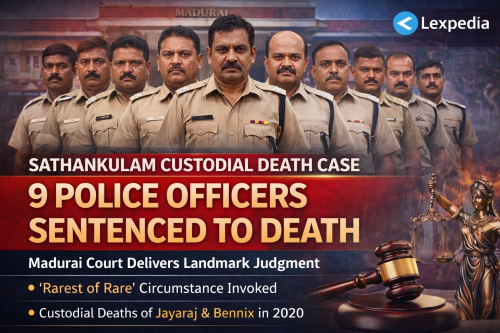
Sathankulam Custodial Death Case: Tamil Nadu Court Sentences 9 Police Officers to Death

6 April 2026 · Lexpedia News

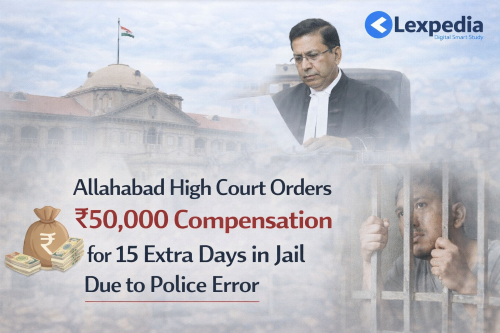
Allahabad High Court awards ₹50,000 compensation to accused for 15 extra days in jail due to police error

19 March 2026 · Lexpedia News

Srinagar Court Issues Non-Bailable Warrant Against Farooq Abdullah in JKCA Misappropriation Case

13 March 2026 · Lexpedia News

Latest Articles

MONTHLY MAGAZINE APRIL, 2026

Lexpedia News

MONTHLY MAGAZINE MARCH

Lexpedia News

MONTHLY MAGAZINE FEBRUARY

Lexpedia News

MONTHLY MAGAZINE JANUARY

Lexpedia

Preamble to the Constitution of India and the Constituent Assembly: Foundation of Indian Democracy

Lexpedia News

Lexpedia — Digital Smart Study

India's most comprehensive legal exam preparation platform. Prepare for Judiciary, UGC NET, AIBE, CLAT and more.

Download the App

Get it on Google PlayDownload on the App Store

Follow Us

Exams

  • Judiciary Exams
  • UGC NET Law
  • AIBE
  • CLAT / LLB Entrance
  • LLM Entrance
  • ADA / APP / APO

Resources

  • Legal News
  • Latest Judgements
  • Landmark Judgements
  • Legal Articles
  • Exam Notifications
  • Bare Acts
  • Syllabus

Company

  • About Lexpedia
  • Contact Us
  • Privacy Policy
  • Terms & Conditions
  • Refund Policy

Partner with Us

Advertise with Lexpedia

Reach 1M+ law students across India

Share PYQs with Us

Help students succeed — upload papers

© 2026 Lexpedia. All rights reserved.

PrivacyTermsRefund