Supreme Court Issues Landmark Guidelines To High Courts; Reserved Judgments Must Be Delivered Within 3 Months
Lexpedia News · 29 May 2026 · 7 min read
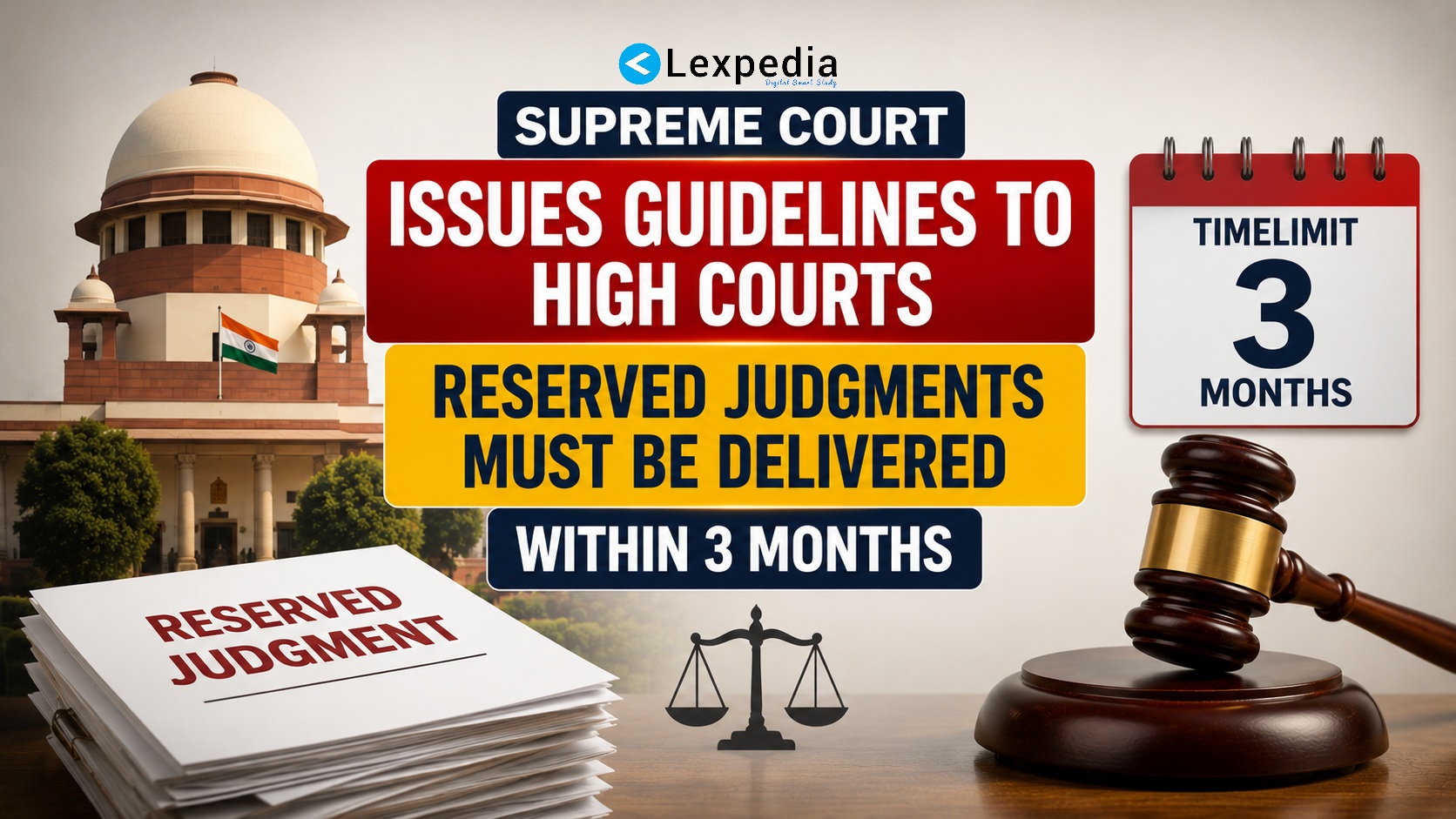
In a significant move aimed at addressing judicial delays, the Supreme Court of India has issued a comprehensive set of guidelines to all High Courts across the country to ensure timely delivery of reserved judgments. Invoking its powers under Article 142 of the Constitution, the Court laid down binding directions intended to curb prolonged delays in pronouncing judgments after hearings have concluded.
The decision is being viewed as one of the most important judicial administrative reforms in recent years, particularly in light of growing concerns over instances where judgments remained reserved for months or even years, causing uncertainty and hardship to litigants.
According to reports, the Supreme Court directed that reserved judgments should ordinarily be pronounced within three months from the date on which the matter is reserved for orders. The Court emphasized that excessive delays undermine public confidence in the justice delivery system and adversely affect litigants awaiting final adjudication of their disputes.
Key Directions Issued By The Supreme Court
The Court reportedly framed an elaborate mechanism to monitor delays and ensure accountability within High Courts.
Among the major directions are:
- If a reserved judgment is not delivered within three months, the Registrar General of the concerned High Court must place the matter before the Chief Justice of the High Court.
- The Chief Justice must then bring the delay to the notice of the concerned Bench within two weeks.
- If the judgment is still not delivered thereafter, the Chief Justice may consider assigning the matter to another Bench after notifying the parties and advocates concerned. The newly assigned Bench may rehear the case and pronounce judgment.
- Any party to the litigation may file an application seeking release of the judgment if it remains pending beyond the prescribed period. Such applications are required to be listed expeditiously.
Directions Regarding Uploading Of Judgments
The Supreme Court also addressed delays in uploading reasoned judgments after pronouncement of operative orders.
According to reports:
- If the operative portion of a judgment is pronounced in open court but the detailed judgment is not uploaded within 15 days, the matter must be brought before the Chief Justice.
- If the reasoned judgment is not uploaded within one month, parties may seek administrative intervention for reassignment of the matter.
The Court reportedly observed that litigants often face serious prejudice when only operative portions are pronounced and detailed reasons remain unavailable for extended periods.
High Courts Directed To Upgrade Monitoring Systems
The Supreme Court further directed High Courts to strengthen technological monitoring mechanisms.
Reports indicate that High Court websites will be required to:
- Display the date on which judgment was reserved.
- Reflect whether the operative portion has been pronounced.
- Record the date of uploading of the final judgment.
- Provide automated notifications to parties and advocates.
The Court also directed that automated reports regarding pending reserved judgments be periodically placed before the Chief Justice of the respective High Court.
Background Of The Case
The issue came before the Supreme Court amid growing concerns regarding prolonged delays in pronouncement of judgments in various High Courts. Judicial delays in reserved matters have repeatedly attracted criticism from litigants and legal observers, particularly in criminal appeals, bail matters, and civil disputes where parties continue to face uncertainty while awaiting final decisions.
The Supreme Court had earlier also expressed concern over cases where judgments remained reserved for exceptionally long periods and had reiterated principles laid down in earlier landmark decisions such as Anil Rai v. State of Bihar concerning timely pronouncement of judgments.
Importance Of The Judgment
Legal experts are describing the ruling as a major step toward enhancing judicial accountability, institutional transparency, and efficient administration of justice.
The judgment seeks to address a recurring concern within the justice system — that prolonged delays in delivering reserved judgments can effectively amount to denial of timely justice. The Court appears to have reinforced the principle that “Justice delayed is justice denied.”
The directions are expected to significantly influence administrative functioning across High Courts and may lead to the creation of stronger monitoring frameworks for reserved judgments in the coming months.
सुप्रीम कोर्ट ने हाई कोर्टों के लिए जारी किए ऐतिहासिक दिशा-निर्देश; आरक्षित फैसले 3 महीने के भीतर सुनाने का निर्देश
न्यायिक देरी की समस्या को दूर करने की दिशा में एक महत्वपूर्ण कदम उठाते हुए सुप्रीम कोर्ट ऑफ इंडिया ने देशभर के हाई कोर्टों के लिए आरक्षित फैसलों (Reserved Judgments) के समयबद्ध उच्चारण को सुनिश्चित करने हेतु विस्तृत दिशा-निर्देश जारी किए हैं। संविधान के अनुच्छेद 142 के तहत अपनी शक्तियों का प्रयोग करते हुए अदालत ने ऐसे बाध्यकारी निर्देश दिए हैं जिनका उद्देश्य सुनवाई पूरी होने के बाद फैसले सुनाने में होने वाली अत्यधिक देरी को रोकना है।
इस फैसले को हाल के वर्षों के सबसे महत्वपूर्ण न्यायिक प्रशासनिक सुधारों में से एक माना जा रहा है, क्योंकि लंबे समय से ऐसी शिकायतें सामने आती रही हैं कि कई मामलों में फैसले महीनों अथवा वर्षों तक आरक्षित रहते हैं, जिससे पक्षकारों को भारी अनिश्चितता और कठिनाइयों का सामना करना पड़ता है।
रिपोर्टों के अनुसार, सुप्रीम कोर्ट ने निर्देश दिया है कि आरक्षित निर्णय सामान्यतः तीन महीने के भीतर सुनाए जाने चाहिए। अदालत ने कहा कि अत्यधिक देरी न्याय प्रणाली में जनता के विश्वास को प्रभावित करती है और न्याय की प्रतीक्षा कर रहे पक्षकारों को गंभीर नुकसान पहुँचाती है।
सुप्रीम कोर्ट द्वारा जारी प्रमुख निर्देश
अदालत ने देरी की निगरानी और जवाबदेही सुनिश्चित करने के लिए विस्तृत तंत्र निर्धारित किया है।
मुख्य निर्देशों में शामिल हैं:
- यदि कोई आरक्षित फैसला तीन महीने के भीतर नहीं सुनाया जाता है, तो संबंधित हाई कोर्ट के रजिस्ट्रार जनरल को मामला मुख्य न्यायाधीश (Chief Justice) के समक्ष रखना होगा।
- मुख्य न्यायाधीश को इसके बाद दो सप्ताह के भीतर संबंधित पीठ के संज्ञान में यह देरी लानी होगी।
- यदि इसके बाद भी फैसला नहीं सुनाया जाता है, तो मुख्य न्यायाधीश मामले को दूसरी पीठ को सौंपने पर विचार कर सकते हैं। नई पीठ आवश्यकता पड़ने पर पुनः सुनवाई कर निर्णय दे सकती है।
- मुकदमे का कोई भी पक्षकार निर्धारित अवधि के बाद निर्णय जारी कराने के लिए आवेदन प्रस्तुत कर सकता है, जिसे शीघ्र सूचीबद्ध किया जाएगा।
फैसलों को अपलोड करने संबंधी निर्देश
सुप्रीम कोर्ट ने केवल निर्णय सुनाने में देरी ही नहीं बल्कि विस्तृत कारणयुक्त फैसलों (Reasoned Judgments) को अपलोड करने में होने वाली देरी पर भी चिंता व्यक्त की।
रिपोर्टों के अनुसार:
- यदि अदालत केवल ऑपरेटिव हिस्सा (Operative Portion) सुनाती है और विस्तृत फैसला 15 दिनों के भीतर अपलोड नहीं किया जाता, तो मामला मुख्य न्यायाधीश के समक्ष रखा जाएगा।
- यदि एक महीने तक भी कारणयुक्त फैसला उपलब्ध नहीं कराया जाता, तो पक्षकार प्रशासनिक हस्तक्षेप की मांग कर सकते हैं।
अदालत ने कथित रूप से कहा कि केवल ऑपरेटिव आदेश सुनाकर विस्तृत कारण लंबे समय तक उपलब्ध न कराना पक्षकारों के अधिकारों को प्रभावित करता है।
हाई कोर्टों को तकनीकी निगरानी व्यवस्था मजबूत करने का निर्देश
सुप्रीम कोर्ट ने हाई कोर्टों को तकनीकी और डिजिटल निगरानी तंत्र मजबूत करने के निर्देश भी दिए हैं।
रिपोर्टों के अनुसार, हाई कोर्ट की वेबसाइटों पर निम्नलिखित जानकारी प्रदर्शित करनी होगी:
- फैसला कब आरक्षित किया गया।
- क्या ऑपरेटिव हिस्सा सुनाया जा चुका है।
- अंतिम निर्णय कब अपलोड किया गया।
- पक्षकारों और अधिवक्ताओं को स्वचालित सूचना भेजना।
अदालत ने यह भी निर्देश दिया कि आरक्षित मामलों की लंबित स्थिति संबंधी स्वचालित रिपोर्ट समय-समय पर संबंधित हाई कोर्ट के मुख्य न्यायाधीश को भेजी जाए।
मामले की पृष्ठभूमि
यह मुद्दा सुप्रीम कोर्ट के समक्ष ऐसे समय आया जब विभिन्न हाई कोर्टों में फैसले सुनाने में हो रही असाधारण देरी को लेकर लगातार चिंता व्यक्त की जा रही थी। विशेष रूप से आपराधिक अपीलों, जमानत मामलों और दीवानी विवादों में लंबे समय तक निर्णय लंबित रहने की शिकायतें सामने आती रही हैं।
सुप्रीम कोर्ट पहले भी कई मामलों में ऐसे विलंब पर चिंता जता चुका है और Anil Rai v. State of Bihar जैसे महत्वपूर्ण फैसलों में समयबद्ध निर्णय देने के सिद्धांतों को रेखांकित कर चुका है।
फैसले का महत्व
कानूनी विशेषज्ञ इस निर्णय को न्यायिक जवाबदेही, संस्थागत पारदर्शिता, और न्याय प्रशासन की दक्षता को मजबूत करने की दिशा में ऐतिहासिक कदम मान रहे हैं।
यह फैसला न्याय व्यवस्था में लंबे समय से चली आ रही उस समस्या को संबोधित करता है जिसमें आरक्षित फैसलों में अत्यधिक देरी को न्याय से वंचित किए जाने के समान माना जाता रहा है। अदालत ने एक बार फिर इस सिद्धांत को मजबूत किया है कि “Justice Delayed Is Justice Denied” (विलंबित न्याय, न्याय से वंचित करना है)।
इन दिशा-निर्देशों का देशभर के हाई कोर्टों की प्रशासनिक कार्यप्रणाली पर व्यापक प्रभाव पड़ने की संभावना है और आने वाले समय में आरक्षित मामलों की निगरानी के लिए अधिक मजबूत व्यवस्थाएँ विकसित की जा सकती हैं।