Supreme Court Asks Odisha to Decide on Premature Release of Dara Singh, Convicted in Graham Staines Murder Case
Lexpedia · 21 March 2025 · 3 min read
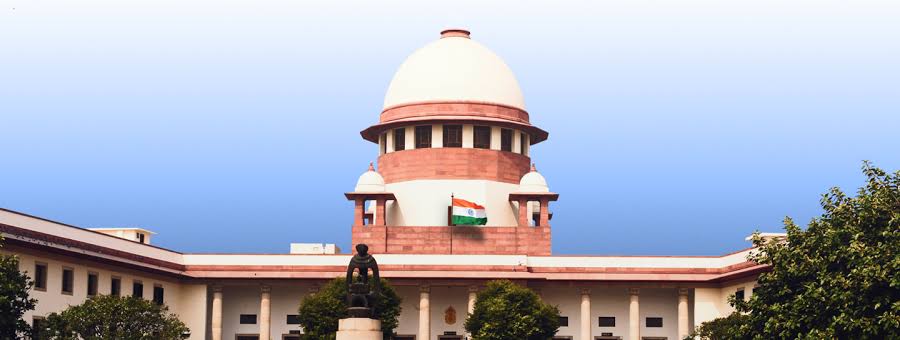
The Supreme Court of India directed the State of Odisha to take a decision on the plea for the premature release of Dara Singh, who is serving a life sentence for the 1999 murder of Australian missionary Graham Staines and his two sons in Orissa. A bench comprising Justice Manoj Misra and Justice KV Viswanathan was hearing the writ petition filed by Singh seeking remission of his sentence after serving over 24 years in imprisonment.
Background of the Case
On January 22, 1999, Dara Singh led a mob that set fire to the vehicle of Graham Staines and his two sons, Philip (aged 10) and Timothy (aged 6), who were sleeping inside. This heinous act led to the tragic deaths of the three individuals in Manoharpur village, Keonjhar district, Orissa.
Court Proceedings:
- Trial Court: In 2003, Dara Singh was sentenced to death.
- Orissa High Court: In 2005, the death penalty was commuted to life imprisonment.
- Supreme Court: The life sentence was confirmed by the Supreme Court in 2011.
Singh's Plea for Premature Release
Writ Petition for Remission: Singh, represented by Advocates Hari Shankar Jain and Vishnu Shankar Jain, filed a writ petition seeking remission of his sentence. In his petition, he argued that he had served over 24 years in prison and was now a reformed individual. Singh emphasized that the crime was committed in a fit of youthful rage and that he had since repented for his actions.
Relying on Reformative Theory: Singh's legal team invoked the reformative theory of punishment, which contends that an individual who has shown remorse and undergone reform should be given a chance for premature release. The petition also referenced the Supreme Court's 2022 judgment that allowed the premature release of convicts involved in the Rajiv Gandhi assassination case.
State of Odisha's Position
During the hearing, the counsel for the State of Odisha informed the bench that the state was deliberating upon the issue of Singh's premature release. The bench, after considering this, decided to adjourn the matter for six weeks.
Supreme Court's Observations
The bench observed that it was expected the state would take a decision on Singh's premature release within this time frame. The bench further stated that the decision would be recorded when the matter is heard again. The Court expected that a decision would be made in the interim period. At the next hearing, the decision taken by the state will be brought on record.
Conclusion
The Supreme Court’s decision to adjourn the matter for six weeks places significant attention on the State of Odisha's stance regarding Dara Singh's premature release. The outcome of this case may set an important precedent in cases involving life sentences and the reformative aspect of punishment. The legal community and public await further developments as the matter progresses.
Case Title: RABINDRA KUMAR PAL @ DARA SINGH Versus STATE OF ODISHA