Reducing Pendency in the Supreme Court of India: A Path Forward
Lexpedia · 14 April 2025 · 6 min read
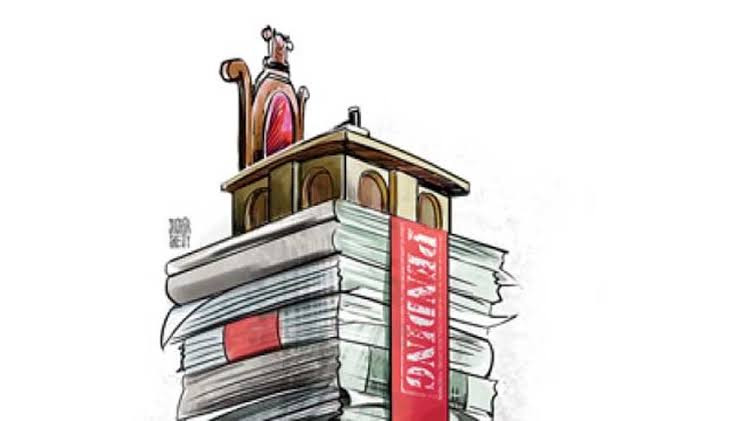
India's Supreme Court stands as the highest authority in the nation's judicial system, often called upon to uphold constitutional values and protect citizens' rights. Yet, the Court finds itself buried under an ever-growing backlog of cases. As of now, 81,712 cases are pending before it, raising serious concerns about timely access to justice. This enormous pendency not only delays relief for litigants but also prevents the Court from focusing on constitutional cases that shape national jurisprudence.
While many reforms to reduce pendency require government action—like appointing more judges or creating new benches—this article argues that the Supreme Court has ample room to act on its own, without waiting for external actors. By reforming internal procedures and adopting a data-driven approach, the Court can significantly ease its caseload and improve the quality and speed of justice delivery.
Rethinking “Miscellaneous Days”
One of the most critical procedural inefficiencies lies in the Court's tradition of designating Mondays and Fridays as "Miscellaneous Days". On these days, the Court doesn't hear full arguments or decide cases on merits. Instead, it conducts admission hearings—brief interactions to decide whether a case is worth hearing in detail. Between 2015 and 2019, an analysis showed that out of every 100 admission hearings, only 13 cases were admitted for full hearing. Despite this, the Court devoted 89 out of 191 working days in the previous year—nearly 47% of its time—to admission hearings.
These hearings are often fleeting, averaging just 93 seconds per case, and largely speculative in nature. Spending nearly half the working year on shortlisting 13% of cases is clearly an inefficient use of judicial time.
A Way Forward: Written Submissions Instead of Oral Admission Hearings
A more effective solution would be for judges to evaluate admission-stage matters based on written submissions in their chambers. If a judge finds the submissions unclear or borderline, a hearing could be scheduled. This system already exists for Review Petitions, and can easily be extended to admission hearings. Implementing this change would require an amendment to the Supreme Court Rules—something the Court can do on its own, with the President’s approval. This shift would free up several weeks of hearing time every year and allow judges to spend more time on substantive, merit-based cases.
Grouping and Listing Similar Cases
Another inefficiency arises from the disorganised listing of cases. Currently, lawyers often request that their cases be “tagged” with similar ones, especially when multiple appeals stem from the same judgment. But this system depends on lawyers being aware of similar cases—a tall order given the vastness of the Court’s docket. Worse, some lawyers exploit the process to “forum shop,” tagging or untagging cases to appear before a judge they consider favourable.
Proactive Case Management by the Court
Instead, the Court itself should proactively group similar matters—whether based on subject matter, geographical origin, or type of relief sought—and list them together before the same bench. For instance:
-
All land acquisition disputes from a particular revenue district can be heard together.
-
All pension-related claims against a common employer can be listed on the same day.
This would lead to judicial consistency, allow subject-matter specialization, and prevent the duplication of hearings. It also speeds up case disposal by enabling bench-level familiarity with recurring legal issues.
Moving to a Genuine E-Filing System
Though the Court technically allows e-filing, the current system is rudimentary. Lawyers upload scanned PDFs of their pleadings, which are often not machine-readable and sometimes even get printed out by the registry staff for physical review. This defeats the purpose of digitisation and creates scope for clerical errors like wrong formatting, margin sizes, or missing pages—causing further delays.
A Modern, Structured Filing System
What the Court needs is a structured e-filing system where lawyers can enter information into online forms—entering not only text but also structured data like:
-
Case type
-
FIR number
-
Revenue district
-
Value of the dispute
-
Sentence duration (in criminal cases)
This would help automate case classification, reduce rejection due to formatting errors, and eventually enable sophisticated data analytics and AI tools to manage cases more intelligently.
Data-Driven Case Prioritization
For years, the Supreme Court has expressed interest in using Artificial Intelligence (AI) to streamline court operations. But without large, reliable datasets, even simple analytics become impossible. Today, case details are buried inside unstructured PDFs. If the Court collects structured data through its filings, it can:
-
Identify simple or small-value cases that can be fast-tracked.
-
Prioritise criminal appeals where a convict has already served 50% of their sentence.
-
Develop real-time dashboards for pendency trends, judge workloads, and case aging.
The recently improved case categorisation system is a step forward, but without structured data input at the filing stage, its usefulness remains limited.
Establishing a Permanent Reform Body
Sustainable reform requires institutional memory and long-term vision. Currently, every Chief Justice of India (CJI) brings a different approach to pendency, and policy continuity is lacking. Additionally, few reforms are backed by solid data or stakeholder input.
To solve this, the Court should establish a permanent body focused on pendency reduction. This unit should consist of:
-
Experts in court procedure and Supreme Court practice,
-
Data scientists and legal technologists,
-
Representatives of the Bar,
-
And members of the Registry.
The body can:
-
Track the impact of past reforms,
-
Pilot new ideas,
-
Conduct regular consultations,
-
And prepare publicly available reports to build consensus and transparency.
Crucially, such a body could develop a multi-year pendency reduction roadmap with the buy-in of future CJIs, ensuring sustained progress beyond individual tenures.
Addressing Concerns Around Fewer Hearings
A common concern is that reducing oral hearings—especially at the admission stage—may hurt litigants’ chances or reduce lawyers' income. When the Court abolished oral hearings for Review Petitions in the 1970s, the decision faced backlash from the legal community. But in P.N. Eswara Iyer v. Registrar, a Constitution Bench upheld the move, calling it pragmatic and not violative of any right.
Even jurisdictions with far lower caseloads—like the U.S., U.K., and Australia—have adopted written submission models for initial case filtering. India's Court, which faces thousands of fresh filings each month, must embrace similar pragmatism.
India’s Supreme Court, the highest guardian of justice, cannot afford to be paralyzed by pendency. While large-scale judicial reform will eventually require legislative and executive cooperation, there is much that can be done within the Court’s own powers.
By ending inefficient practices like excessive miscellaneous days, implementing structured e-filing, leveraging data to streamline decisions, and institutionalising reform, the Court can take meaningful steps toward restoring speed and efficiency in justice delivery. These are not distant dreams—they are within reach, if the Court chooses to act decisively.