Justice Dinesh Maheshwari Appointed Chairperson of 23rd Law Commission of India
Lexpedia · 21 April 2025 · 4 min read
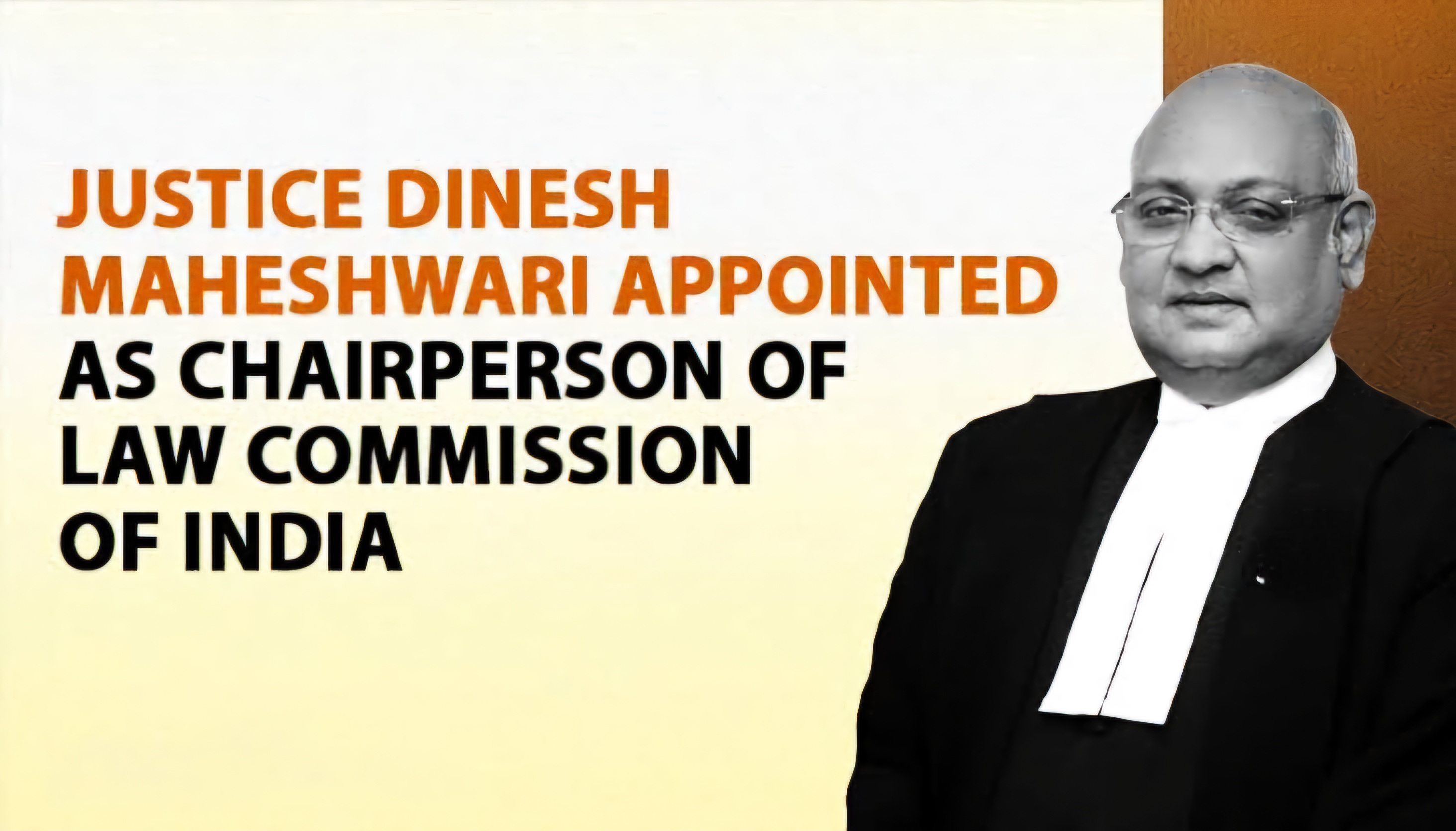
In a significant development, Justice (Retired) Dinesh Maheshwari, a former Judge of the Supreme Court of India, has been appointed as the Chairperson of the 23rd Law Commission of India. Justice Maheshwari's appointment has been welcomed by legal experts and practitioners across the country, as he is widely regarded for his deep understanding of legal issues and his impeccable judicial career. His tenure as a Supreme Court judge saw him preside over several landmark cases, and his vast experience is expected to guide the Commission in making informed, practical recommendations for the country's evolving legal landscape.
The Law Commission plays a critical role in advising the government on legal reforms, and with Justice Maheshwari at its helm, the expectations for positive changes and modernizing the legal system are high. As the Commission embarks on its new term, his leadership will be pivotal in addressing the challenges faced by the Indian legal system.
New Team of the 23rd Law Commission
In addition to Justice Dinesh Maheshwari, two other distinguished individuals, Advocate Hitesh Jain and Professor DP Verma, have been appointed as members of the 23rd Law Commission. Advocate Hitesh Jain, a prominent legal professional, is known for his expertise in constitutional law and has handled several high-profile cases during his career. His background in litigation and understanding of complex legal issues will prove valuable to the Commission's work.
Professor DP Verma, who serves as a faculty member at Banaras Hindu University (BHU), brings an academic perspective to the Commission. His extensive knowledge of legal theory and his experience in educating future legal minds will contribute greatly to the research and policy development work of the Commission. Together, the new team will serve a term lasting until August 30, 2027, and they will be tasked with evaluating the existing legal framework and recommending reforms that are essential for India’s progress. Their combined expertise in law, education, and practice makes them well-equipped to address the pressing issues within the Indian legal system.
Completion of Tenure of the 22nd Law Commission
The formation of the 23rd Law Commission comes after the successful completion of the tenure of the 22nd Law Commission, which was headed by Justice (Retd) Ritu Raj Awasthi, a former Chief Justice of the Karnataka High Court. Justice Awasthi’s leadership in the previous commission was marked by significant efforts to modernize the Indian legal system.
Under her stewardship, the Commission issued a range of impactful reports, addressing issues related to criminal law reform, the administration of justice, and family law. Notably, the 22nd Commission made recommendations for changes in the Criminal Procedure Code (CrPC), Indian Penal Code (IPC), and other key legislations to align them with contemporary needs. Additionally, the 22nd Commission worked on various aspects of judicial efficiency, seeking to streamline court processes and improve the overall functioning of the judicial system in India. The outgoing Commission's work has laid the foundation for the 23rd Law Commission, which will continue its efforts to build upon these reforms.
Anticipated Focus of the 23rd Law Commission
As the 23rd Law Commission begins its work, it is expected to focus on several critical areas of law and legal reform. One of the primary objectives of the new Commission will be to address outdated laws that no longer serve the modern needs of the country. This includes examining colonial-era laws that are still in use and assessing their relevance in today’s social and economic environment. Another crucial area will be the streamlining of judicial processes, with the aim of reducing the backlog of cases and making the judicial system more efficient.
The Commission will also look into the increasing role of digital technologies in the legal space, ensuring that India’s legal framework is adaptable to advancements such as artificial intelligence, data privacy, and cybersecurity. Additionally, access to justice for marginalized communities—including women, children, and economically disadvantaged groups—will be a key focus. The 23rd Law Commission will likely recommend measures to enhance legal aid, improve representation in the courts, and ensure that the legal system is more inclusive and equitable for all citizens.
Eager Anticipation for the First Report
As the new team takes charge, the legal community is eagerly anticipating the release of the Commission’s first report, which is expected to set the tone for its upcoming work. Legal experts believe the report will address some of the most pressing issues within India’s legal and judicial systems, such as the delay in justice delivery, the need for judicial reforms, and the improvement of court infrastructure.
There is also a significant interest in the Commission’s stance on criminal law reforms, particularly regarding issues such as decriminalization of certain offenses, the death penalty, and reforming the prison system. The first report will likely serve as a comprehensive roadmap for the future direction of the Commission and its proposed reforms. Legal professionals, policymakers, and the public will be closely monitoring the Commission’s progress, as its recommendations could potentially have a lasting impact on the Indian legal system.