Trump’s Anti-Globalization Policies: A Challenge to Global Institutions
Maheshpriya · 8 February 2025 · 4 min read
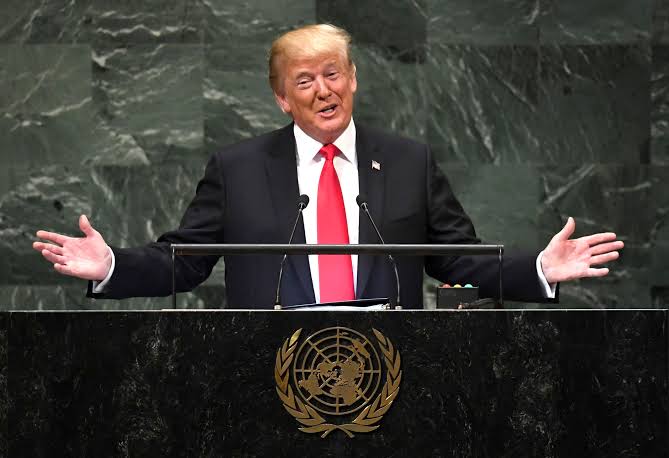
In pursuit of America First, U.S. President Donald Trump is dismantling globalization, a system that has defined the world order since the post-Cold War era, or at least distancing America from the pivotal role it once played in global governance. Under American leadership, the world established international institutions for trade, governance, security, and social action. Trump believes these institutions have fallen short of their aims and benefit other countries at America's expense.
Attack on ICC
The latest in a series of Trump’s anti-globalization measures includes sanctions targeting individuals involved in International Criminal Court (ICC) investigations of U.S. citizens or allies such as Israel. The ICC issued an arrest warrant for Israel’s Prime Minister Benjamin Netanyahu in connection with the Gaza conflict. Similarly, the ICC also issued an arrest warrant for Russia's President Vladimir Putin in 2023, accusing him of committing war crimes during the Ukraine conflict, specifically for the illegal deportation of children.
The ICC, a permanent tribunal, prosecutes individuals for war crimes, crimes against humanity, genocide, and the crime of aggression. However, both Russia and the U.S. have imposed measures against ICC personnel and actions, with Russia placing ICC chief prosecutor Karim Khan and other judges on its wanted list.
G20 Foreign Ministers Meet
In a move directly impacting multilateral cooperation, U.S. Secretary of State Marco Rubio announced that he would not attend the upcoming G20 Foreign Ministers’ meeting in Johannesburg, South Africa. Rubio criticized South Africa’s policies, particularly regarding its stance on solidarity, equality, and sustainability.
In a separate statement, President Trump declared that South Africa was confiscating land and treating certain classes of people unfairly, threatening to cut all future funding unless the issue was addressed. Trump's close ally, Elon Musk, has also publicly claimed that South Africa follows an anti-white policy, despite a lack of concrete evidence.
In January 2023, South Africa and Malaysia launched a campaign to defend the rulings of the International Court of Justice (ICJ) and ICC, opposing U.S. sanctions targeting these bodies. A coalition of nine countries, known as the Hague Group, was formed to support Palestinian rights and coordinate measures against alleged violations of international law by Israel.
During Trump’s First Term
During his first term (2017-2021), Trump took drastic steps against the ICC, imposing sanctions on its officials and undermining its authority. While the Biden administration reversed some of these decisions, Trump's second term (should he return to office) may reignite his confrontational stance. The U.S. House of Representatives has passed a new ICC sanctions bill (H.R. 8282), currently under Senate review.
The Future of G20
Trump’s criticism of multilateral institutions casts doubt on the future of the G20. While Rubio’s statement targets South Africa’s role as G20 chair, it raises broader questions about the U.S.’s commitment to the G20 platform. The G20 Foreign Ministers’ meeting is scheduled for February 20-21, and the Leaders' Summit, where Trump is expected to attend, will take place on November 22.
Trump's first administration had already shifted the G20’s emphasis from free trade to reciprocal trade in 2017, aligning with his aggressive stance on international trade and China. The Trump 2.0 administration may push for a more radical approach, weakening the G20 as a multilateral institution.
Why Is India Concerned?
India’s growing influence in global governance is tied to its leadership of the Global South, particularly within the G20. India's presidency of the G20 in 2023 and its role as a consensus-building bridge between the Global North and Global South have been vital for its diplomatic strategy.
However, the current shift in U.S. policy under Trump 2.0 poses a challenge. If the U.S. were to skip the G20 or withdraw altogether, it would significantly weaken the grouping and open the door for greater Russo-Chinese influence. This shift could jeopardize India's ability to leverage the G20 for international cooperation and global solutions.
In a worst-case scenario, the U.S. withdrawal from multilateral organizations like the G20 could further complicate India’s position within the group, undermining its strategic goals for global governance and international law.