Trump's 25% Tariff on Steel and Aluminium Imports: Impact on Global Markets and India's Steel and Aluminium Sectors
Lexpedia · 10 February 2025 · 4 min read
WHAT HAS HAPPENED?
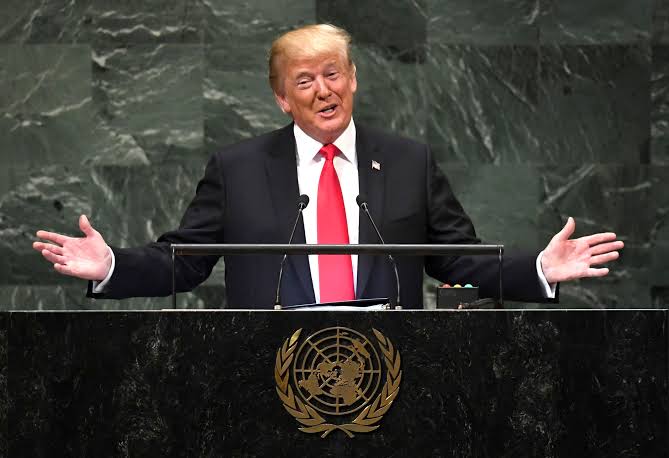
On 10 February, US President Donald Trump continued his tariff measures and imposed a 25% duty on all steel and aluminium imports into America. This move is expected to upend the global metals market.
“Our nation requires steel and aluminium to be made in America, not in foreign lands. We need to create in order to protect our country’s future,” Trump said. “It’s time for our great industries to come back to America. We want them back to America. This is the first of many.” Trump stated that the tariffs, which he had floated on Sunday, would apply to all countries with "no exemptions, no exceptions."
“This is a big deal,” Trump said. “This is the beginning of making America rich again.”
WHAT WILL BE ITS IMPACT?
The US imports 25% of its steel requirement, most of which comes from Canada ($25.26 billion), China ($13.86 billion), Mexico ($13.28 billion), and the European Union, free of any tariffs.
In the case of aluminium, 70% of its needs are met by imports, mostly from Canada. These nations will face an immediate impact from the tariffs. It is not clear how these nations will react and whether they will retaliate in any manner. One thing is certain, analysts have pointed out, that these tariffs will increase the cost of steel within America from current levels of $775 per tonne to $900 per tonne.
WILL INDIA BE AFFECTED?
Not much directly, as India does not export a large quantity of steel to the US. India exported just 95,000 tonnes of the commodity to the US in 2024, against its overall production capacity of 145 million tonnes, according to Union steel secretary Sandeep Poundrik.
However, the indirect fallout is expected to be significant and could hurt the already struggling Indian players if the government does not act swiftly.
HOW BAD WILL BE THE INDIRECT IMPACT?
In 2023-24, India became a net importer of steel again after many years. Large-scale imports, especially from China, have dampened domestic prices and hurt the profitability of the domestic players. Trump’s recent measures will exacerbate the situation.
Their export earnings will decline as global steel prices depart from previous levels. Apart from that, most countries are expected to raise protections to safeguard their domestic industry, and this would hit export volumes.
The Indian government needs to act swiftly as imports are set to surge. The domestic steel industry has already sought protection from predatorily priced imports. In its letter to the Ministry of Commerce and Industry, the Indian Steel Association (ISA) said that beginning with the imposition of a 25% duty under Section 232 by the US under its Trade Expansion Act, 1962, several countries have introduced multiple trade remedy measures against steel product imports.
ISA said that import surge is a threat to domestic manufacturing as there exists a significant overcapacity far exceeding domestic consumption in China, Japan, and South Korea. The Ministry of Steel in India had last year asked the Union Ministry of Commerce to impose a 25% duty on steel products, citing an 80% surge in steel imports from China to 1.61 million tonnes between January-July 2024. The Ministry of Commerce and Industry has already begun a safeguard duty investigation on December 19.
WHAT ABOUT ALUMINIUM SECTOR?
India is the second largest aluminium producer after China, with an output of around four million tonnes. But compared to peers, its consumption is low. India’s per capita annual consumption is just two kilograms, against the global average of eight kilograms.
However, demand is increasing, and imports are rising. The industry has been demanding protection. This tariff move will increase imports and cause lower exports. The domestic market will be flush with the commodity, causing aluminium prices to tank for local players.
DID TRUMP’S TARIFF WORK LAST TIME?
In 2018, he imposed a 25% duty on steel and 10% on aluminium. It effectively kickstarted the trade war then. Since 2018, when Trump first imposed tariffs on steel imports, domestic steel capacity has risen by just 6%. However, production has not registered any increase and is still below the 2019 level. The number of people employed in the US steel industry has not risen either.
Studies show that these tariffs, on the contrary, cost jobs as steel consumers trimmed workers as higher prices hurt their profit margins. The US aluminium production in 2024 was the lowest in the last 100 years.