The Harrowing Journey of Indian Migrants: Deported from the US and the Dangerous 'Donkey Route' to America
Maheshpriya · 8 February 2025 · 3 min read
WHAT’S HAPPENING?
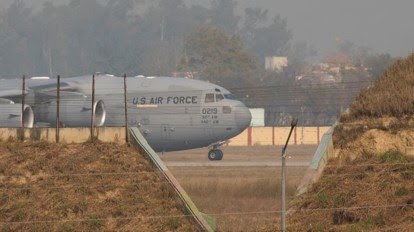
In a stark reminder of the high stakes for many seeking a better life in the United States, the US recently deported 104 Indian migrants, who were handcuffed and shackled for a nearly 24-hour flight back to India. This deportation follows US President Donald Trump's crackdown on illegal immigration, a topic discussed during a recent phone call with Indian Prime Minister Narendra Modi, according to reports from AP. For these deported individuals, their American Dream has come to an end, many of whom have risked everything — legally and illegally — to reach the shores of America.
ILLEGAL INDIANS IN US
Data shows that as of today, the US is home to 725,000 undocumented Indian nationals. Many more are on their way, hoping to enter the US illegally. So, what drives these countless Indians to seek a future in the United States? For many, it’s the hope for better economic opportunities in the ‘Land of the Free’. They believe that reaching a major US city will provide them with decent work and an improved life.
Beyond jobs, many Indians are drawn to the US by social networks and a sense of pride in having family members settled there. According to the Pew Research Centre’s 2021 estimates, Indians have become the third-largest group of undocumented immigrants in the United States. Notably, India is the only country outside Latin America in the top five. Since 2011, the number of undocumented Indians in the US has grown by 70%, marking the fastest growth rate among all nationalities.
THE DUNKI ROUTES
The journey many take to enter the US has become known as the ‘donkey route’. This term refers to the perilous journey migrants face, often passing through various Central American countries such as Panama, Costa Rica, El Salvador, and Guatemala. After navigating these nations, migrants attempt to cross into the US with the help of agents and human smugglers.
The process often begins with a migrant contacting an agent who promises to help them reach the US for a fee ranging from $50,000 (Rs 44 lakh) to $100,000 (Rs 87 lakh). These agents arrange visas or travel through countries with relatively easier visa requirements, such as Ecuador, Bolivia, or Guyana. In some cases, direct visas to Mexico are arranged from Dubai.
However, the journey does not end with reaching Latin America; it is only the beginning of the treacherous and dangerous path through jungles and mountain terrain to the US-Mexico border. For some, the journey proves fatal. Traffickers have admitted that 10 to 12% of migrants either die on the way or are killed for failing to pay the fees.
One tragic case involved an Indian migrant who, after traveling through Dubai, Kazakhstan, Turkey, and Panama, was killed by criminals on the El Salvador-Guatemala border. His family later learned that he had been shot and killed by criminals while attempting to cross the border.
WHAT IS THE DARIEN GAP?
A major obstacle in this perilous journey is the Darien Gap, a 97-kilometer stretch of dense rainforest, swamps, and mountains. It is the only break in the Pan-American Highway, which spans from Alaska to Argentina. This area is notorious for its extreme terrain, harsh climate, and lack of infrastructure, making it impassable for most travelers.
For migrants desperate to reach the US, however, the Darien Gap has become an unavoidable gateway. Crossing it means facing steep mountains, muddy swamplands, fast-moving rivers, and dangerous wildlife, such as venomous snakes, jaguars, and deadly insects. But perhaps the greatest threat comes from the criminal organizations that control the route. Smuggling networks, drug cartels, and armed groups demand payments from migrants, rob them, or subject them to violence, making the journey even more perilous.