Supreme Court's e-Courts Project Phase III: A Leap Towards Smart and Secure Judicial System
Maheshpriya · 7 February 2025 · 4 min read

In a significant development aimed at modernizing India’s judicial infrastructure, the Supreme Court of India is moving forward with e-Courts Project Phase III, which integrates cutting-edge technologies to enhance user experience and improve the overall efficiency of the judicial system. The project seeks to create a "smart" system where data entry and file scrutiny are minimized, streamlining court processes.
Key Highlights of e-Courts Project Phase III
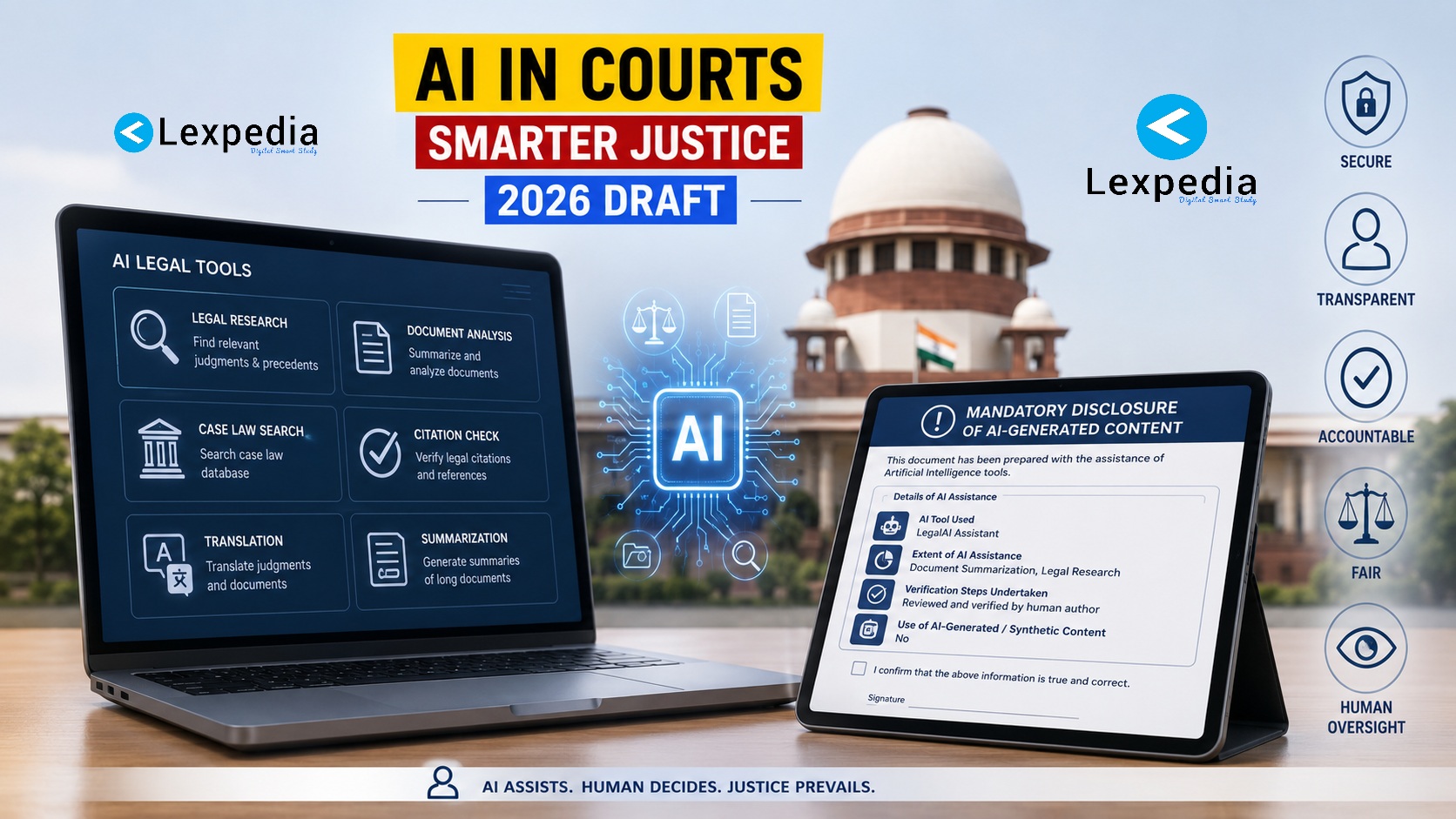
1. Technological Integration: The focus of Phase III is on leveraging Artificial Intelligence (AI) and its subfields, including Machine Learning (ML), Optical Character Recognition (OCR), and Natural Language Processing (NLP). These technologies will be utilized across various judicial functions, such as:
- Intelligent scheduling of cases.
- Predictive analytics for case forecasts.
- Automation of filing and case documentation.
- Enhanced case information systems for better accessibility and efficiency.
- Communication with litigants through chatbots and translation services.
2. Committee for Secure Connectivity and Data Privacy: A Sub-Committee consisting of six judges from various High Courts, supported by domain experts and a technical working group, has been established by the Chairperson of the eCommittee of the Supreme Court. This committee’s key mandate is to ensure the security and privacy of citizens' data within the e-Courts infrastructure. It will focus on suggesting mechanisms for:
- Secure connectivity and authentication systems.
- Data protection measures to preserve citizens' right to privacy.
- Ensuring compliance with privacy laws while embracing technological advancements.
3. Financial Allocation: The Government has earmarked Rs. 7210 Crore for the full implementation of e-Courts Phase III, covering 24 project components. Among these, one crucial component is focused on Future Technological Advancements such as AI, Blockchain, and other emerging technologies. The Detailed Project Report (DPR) allocates Rs. 53.57 Crore for the technological advancements component, which will be implemented in High Courts across India by 2027.
Minister’s Statement in Rajya Sabha
The information about the e-Courts Phase III project was provided by the Minister of State for Law and Justice, Shri Arjun Ram Meghwal, in a written reply to a question raised in the Rajya Sabha. He explained that the project's integration of modern technologies aims to enhance administrative efficiency, streamline judicial processes, and facilitate quicker and more transparent interactions with litigants.
Key Objectives and Future Vision
- Efficiency and Automation: The core objective of integrating technologies like AI and NLP is to significantly improve the administrative efficiency of the judicial system. This includes reducing human error, accelerating case processing, and making the judicial system more accessible and user-friendly.
- Privacy and Security: With the growing integration of digital systems, the data security of court proceedings and citizens’ personal information has become a top priority. The Sub-Committee’s work will ensure that digital infrastructure is secure and that the right to privacy of litigants is preserved while using these advanced technologies.
- Long-Term Vision: The introduction of AI and blockchain technologies will play a pivotal role in improving not only the efficiency of court operations but also ensuring that records and judgments are secure and tamper-proof. The project’s focus on Future Technological Advancements aims to future-proof the judicial system by incorporating emerging technologies that will address challenges faced by the judiciary in the coming decades.
Legal and Administrative Implications
- Streamlining Judicial Operations: The use of AI for case scheduling and predictions will help in the effective management of court proceedings. By predicting case durations and identifying bottlenecks, AI could reduce delays and improve the speed of justice.
- Data Protection Concerns: With digital transformation, the security of sensitive data in legal proceedings becomes paramount. The Sub-Committee will focus on creating a robust data protection framework to mitigate the risks of cyber threats and ensure compliance with privacy laws.
- Increased Access and Transparency: The integration of chatbots, translation systems, and automated filing will make the judicial process more accessible to the public, especially those who face language barriers or technological limitations.
- Long-Term Technological Integration: The allocation for AI and Blockchain indicates a clear commitment to the long-term integration of future technologies, which could drastically reshape how the judiciary handles records, evidence, and case management in the coming years.
Conclusion
The e-Courts Project Phase III represents a major leap forward in the modernization of India’s judicial system. By harnessing the power of technologies such as AI, NLP, and blockchain, the project aims to streamline court processes, enhance data security, and improve the overall efficiency and transparency of the judicial system. As the project progresses, it holds the potential to bring about a transformative change in how legal proceedings are conducted, making the system more efficient, secure, and user-friendly for both the judiciary and litigants.