Supreme Court Upholds 10% EWS Quota; Affirms Reservation Based Solely on Economic Criteria
Lexpedia News · 9 October 2025 · 3 min read
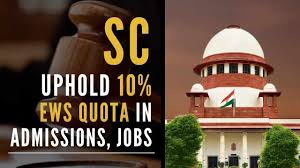
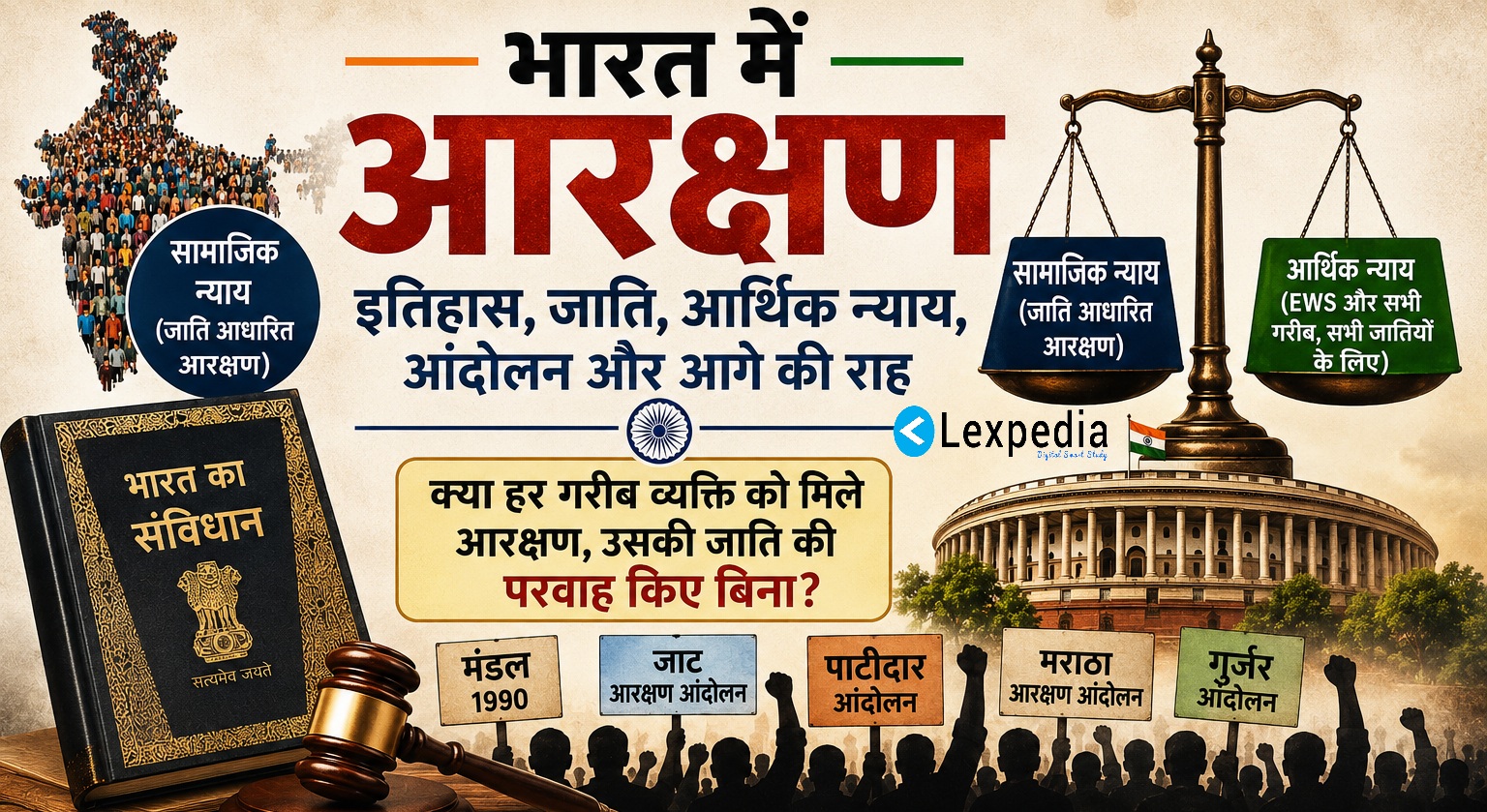
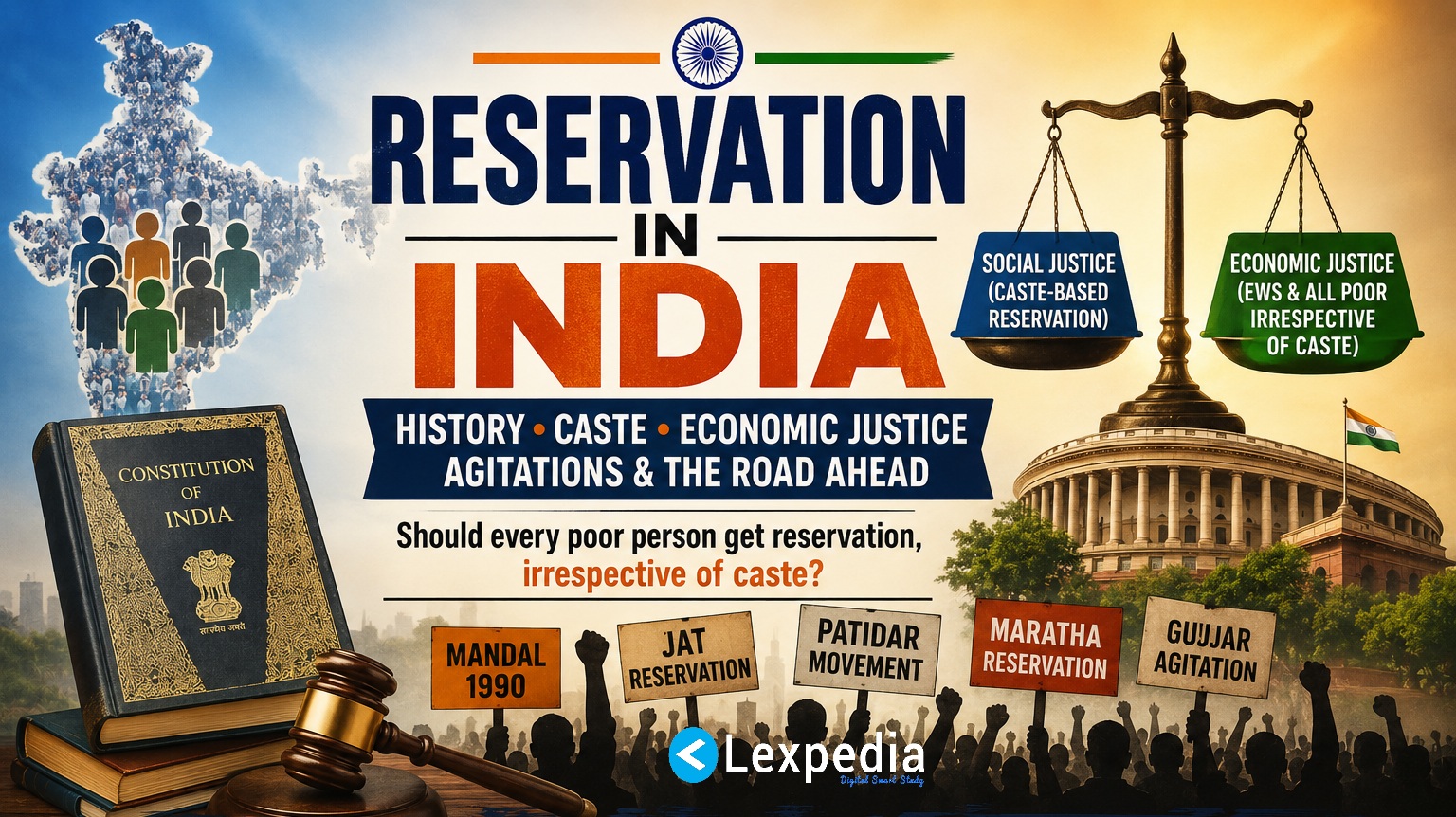
In a landmark judgment with profound implications for affirmative action and the constitutional framework of reservations in India, the Supreme Court, by a 3:2 majority, upheld the constitutional validity of the 103rd Constitutional Amendment Act, 2019, which provides for a 10% reservation in government jobs and educational institutions for the Economically Weaker Sections (EWS).
The verdict, delivered by a five-judge Constitution Bench, effectively endorses the principle that economic backwardness alone can be a criterion for providing reservations, an issue that has been at the centre of national debate.
Key Highlights of the Verdict
The five-judge bench, comprising Justices Dinesh Maheshwari, Bela M. Trivedi, J.B. Pardiwala, S. Ravindra Bhat, and then Chief Justice U.U. Lalit, delivered a split verdict that confirmed the legality of the quota.
-
Constitutional Validity of Economic Criteria: The majority opinion held that the Constitution permits the state to make special provisions, including reservation, based solely on economic criteria. They stated that reservation is a tool for affirmative action to address all forms of disadvantages, not just social and educational backwardness.
-
Exclusion of SC/ST/OBC from EWS Quota: The majority further held that the exclusion of citizens belonging to the Scheduled Castes (SCs), Scheduled Tribes (STs), and Other Backward Classes (OBCs) who already benefit from existing caste-based reservations, from the ambit of the EWS quota, is constitutionally permissible.
-
The 50% Ceiling Limit: A crucial point addressed was the breach of the 50% ceiling limit for reservations, as established in the seminal case of Indra Sawhney v. Union of India (1992). The majority reasoned that the 50% rule is not "inflexible" and primarily applies to reservations for the socially and educationally backward classes (SEBCs), not the general category EWS quota. The court thus held that the additional 10% EWS quota does not violate the Basic Structure of the Constitution.
-
Reservation in Private Unaided Institutions: The judgment also upheld the power of the state to enforce this reservation in private unaided educational institutions, a move considered essential to the scheme's full implementation.
The Dissenting View
The minority view, authored by Justice S. Ravindra Bhat (for himself and then CJI U.U. Lalit), agreed on the constitutional power of the state to implement a quota based on economic criteria. However, they declared the specific Amendment unconstitutional on two main grounds:
-
Exclusion as Discrimination: The dissenting opinion argued that the exclusion of the "poorest of the poor" from the SC, ST, and OBC communities from the EWS quota was a violation of the Equality Code and the Basic Structure. Justice Bhat noted that by excluding these socially disadvantaged groups, the amendment practices "explicit discrimination."
-
Breach of 50% Limit: The minority also expressed grave concern that permitting the breach of the 50% ceiling would become a "gateway for further infractions," leading to the compartmentalisation of society and undermining the constitutional commitment to social justice.
Background and Impact
The 103rd Amendment, which inserted clauses (6) into both Article 15 and Article 16 of the Constitution, was enacted in 2019. It was immediately challenged on the ground that reservations cannot be granted solely on economic criteria and that the amendment violates the Basic Structure of the Constitution, particularly by exceeding the 50% cap.
The Supreme Court’s definitive ruling brings finality to the legal challenge, clearing the path for the continued implementation of the 10% reservation across the country, while simultaneously acknowledging the complex and sometimes contradictory nature of India's reservation policy. The judgment, however, leaves a lingering debate on the principle of exclusion, a point emphatically raised in the strong dissenting opinions.