Supreme Court Sets Aside Dismissal of Madhya Pradesh Judicial Officer
Lexpedia · 6 January 2026 · 4 min read
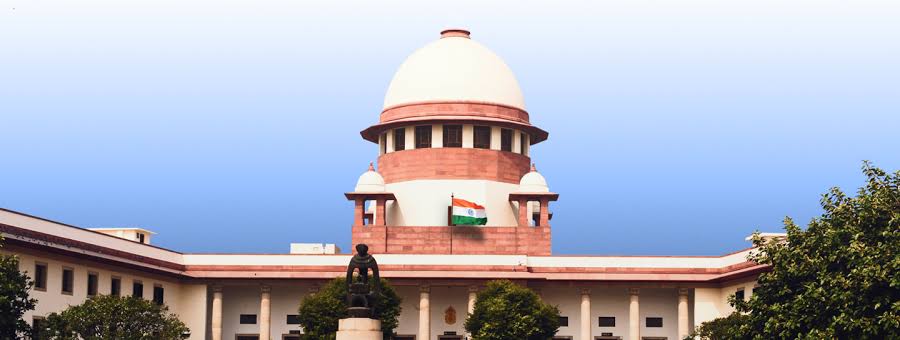
The Supreme Court on Monday set aside the dismissal of a Madhya Pradesh judicial officer, holding that disciplinary proceedings cannot be initiated against members of the district judiciary merely for passing allegedly incorrect or erroneous judicial orders.
A Bench of Justice JB Pardiwala and Justice KV Vishwanathan allowed the appeal filed by Nirbhay Singh Suliya, who had been removed from service in 2014 while serving as an Additional District and Sessions Judge on allegations of corruption and adopting a “double standard” in deciding bail applications under the Excise Act.
Allegations and Disciplinary Action
The action followed a departmental inquiry initiated by the High Court after allegations that Suliya had adopted a double standard while deciding bail applications in cases registered under Section 34(2) of the Madhya Pradesh Excise Act.
It was alleged that he granted bail in certain cases involving seizure of more than 50 bulk litres of liquor, while rejecting bail in several other similar cases on the ground that bail cannot be granted as the seized quantity exceeded 50 bulk litres.
Caution Against Mechanical Disciplinary Proceedings
Justice KV Vishwanathan, who authored the main judgment, emphasised that High Courts must exercise great caution while initiating disciplinary proceedings against judicial officers.
He observed that merely because an order is wrong, or there is an error of judgment, a judicial officer should not be put through the ordeal of departmental proceedings “without anything more”.
The Court underlined that such proceedings have a chilling effect on the independence of the district judiciary and often discourage trial court judges from exercising judicial discretion, particularly in bail matters.
Concurring Opinion: Impact on Bail Jurisprudence
In his concurring judgment, Justice JB Pardiwala noted that the lurking fear of administrative action has resulted in trial court judges becoming reluctant to grant bail even in deserving cases, leading to an excessive inflow of bail applications before the High Courts and the Supreme Court. “A mere wrong order or wrong exercise of discretion in the grant of bail by itself without anything more cannot be a ground to initiate departmental proceedings,” Justice Pardiwala stated.
He further observed that fear of administrative action should not result in bail being declined even in deserving cases, as this undermines the justice delivery system.
False Complaints and Accountability of the Bar
The Bench issued strong directions to curb false and frivolous complaints against judicial officers.
It held that proceedings must be initiated against persons found to be engineering such complaints, including, in appropriate cases, contempt of court proceedings.
If the complainant is a recalcitrant member of the Bar, the Court directed that apart from contempt action, a reference be made to the Bar Council for disciplinary proceedings, with directions for expeditious disposal.At the same time, the Court clarified that where a complaint of misconduct is found to be prima facie true, prompt disciplinary action must follow, and in appropriate cases, criminal prosecution should be initiated to “weed out black sheep sullying the fair name of the judiciary.”
Judicial Independence and Integrity
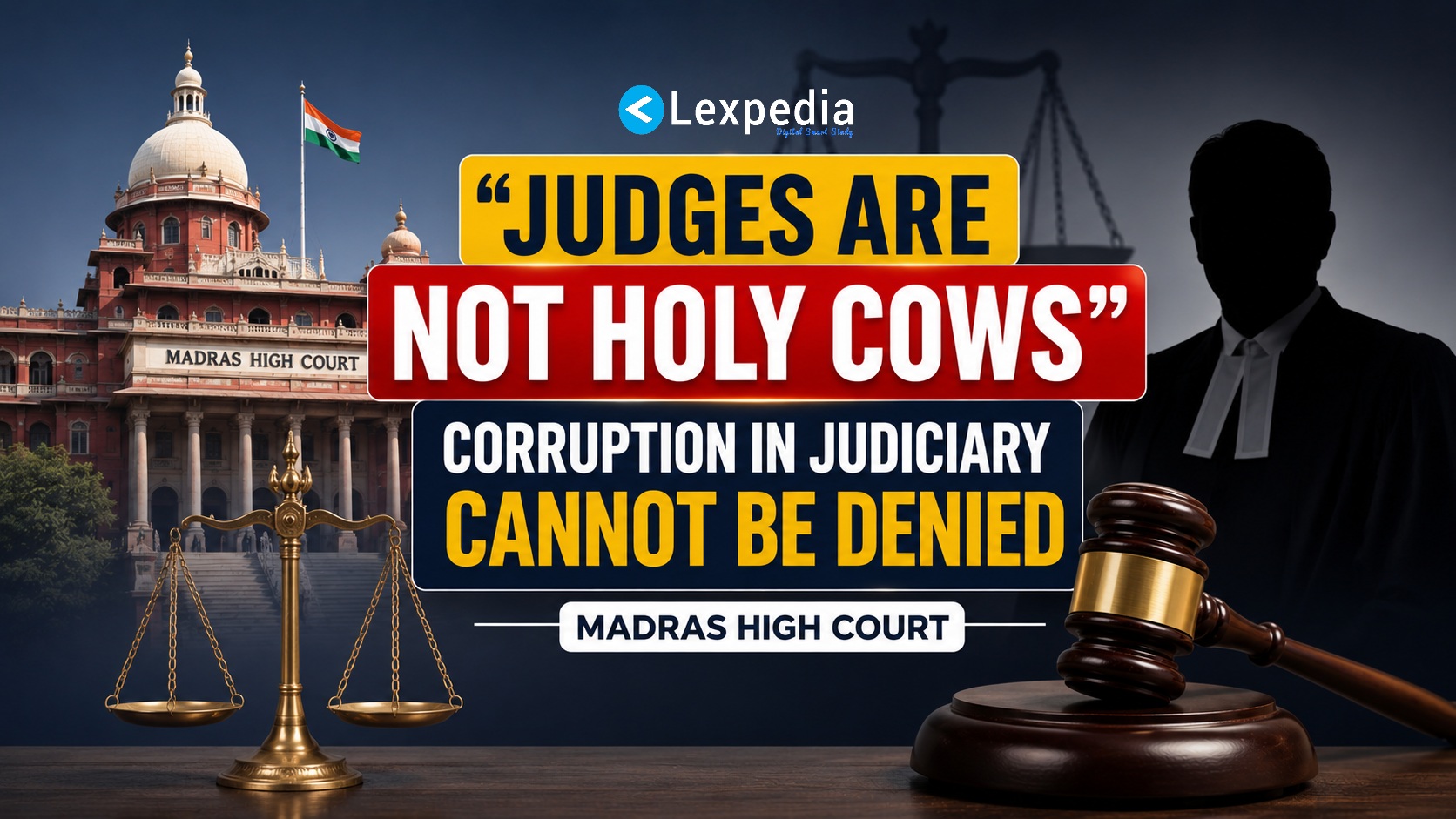
Justice Pardiwala stressed that while corruption at any level of the judiciary is intolerable, a mere wrong order or incorrect exercise of discretion, by itself, cannot justify departmental proceedings.
The Court observed that judges of the district judiciary function in a charged atmosphere and wield powers essential to the rule of law. If their autonomy is compromised by fear of administrative control, democracy itself would suffer.
Referring to M.S. Bindra v. Union of India, the Bench reiterated that an officer’s reputation and service record cannot be ignored and that suspicion based on mere hunches is insufficient. “To dunk an officer into the puddle of doubtful integrity, it is not enough that the doubt fringes on a mere hunch… There must be components of probability,” Justice Pardiwala observed.
Relief Granted
Setting aside the dismissal, the Supreme Court directed that the appellant be deemed to have continued in service till the normal age of superannuation, with full back wages and all consequential benefits. The Court ordered that the monetary benefits be released within eight weeks, carrying interest at 6%, and directed that a copy of the judgment be circulated to all High Courts.
Background of the Case
A departmental inquiry was conducted against Suliya under Rule 14 of the Madhya Pradesh Civil Services (Classification, Control and Appeal) Rules, 1966. One of the two charges was held proved, and the Administrative Committee of the High Court recommended removal from service, which was approved by the Full Court.
The State Government issued the removal order on September 2, 2014, and the Governor of Madhya Pradesh rejected the statutory appeal in March 2016. Suliya’s writ petition before the Madhya Pradesh High Court was dismissed on July 25, 2024, leading to the present appeal before the Supreme Court.
Case Title: Nirbhay Singh Suliya v. State of Madhya Pradesh & Anr.