Supreme Court Rules Remarks Like "Miyan-Tiyan" and "Pakistani" Do Not Constitute Offense of Hurting Religious Sentiments
Lexpedia · 4 March 2025 · 2 min read
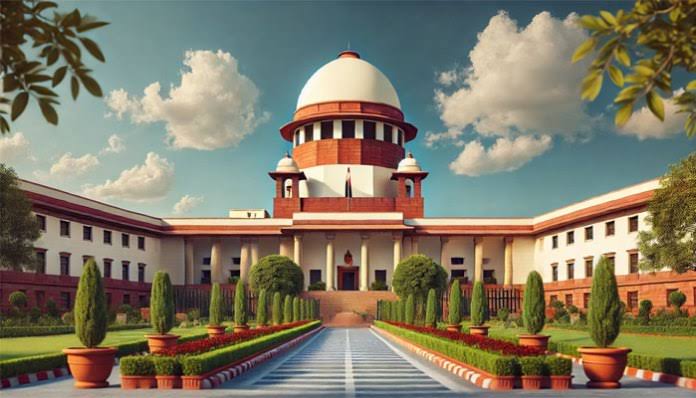
In a significant ruling, the Supreme Court observed that calling a person "Miyan-Tiyan" or "Pakistani," although in poor taste, does not amount to an offense under Section 298 of the Indian Penal Code (IPC), which deals with uttering words with the deliberate intent to wound religious feelings.
Court Discharges Accused of Hurting Religious Sentiments
The Court was hearing an appeal against a judgment from the Jharkhand High Court, which had declined to discharge the appellant from charges under Section 298 IPC. The appellant had been accused of hurting the religious sentiments of the complainant by referring to him with derogatory terms like “Miyan-Tiyan” and “Pakistani.”
A bench of Justices B V Nagarathna and Satish Chandra Sharma ruled that the statements made, while inappropriate and in bad taste, did not meet the legal threshold to constitute an offense under Section 298 IPC.
The Court emphasized:
"Undoubtedly, the statements made are in poor taste. However, it does not amount to hurting the religious sentiments of the informant."
Details of the Case: Alleged Abuse and Charges
The complaint was filed by an Urdu translator and acting clerk in the Sub-Divisional Office, Chas, who alleged that when he visited the appellant in connection with an RTI application, the appellant abused him using religious references and applied criminal force to prevent the discharge of official duties.
As a result, charges were framed against the appellant under Sections 353 (assault to deter public servant from discharge of duty), 298 (hurting religious feelings), and 504 (intentional insult with intent to provoke breach of peace) of the IPC.
Supreme Court's Findings
The Supreme Court, after reviewing the complaint, found that the necessary elements to constitute the offenses were absent. The Court specifically noted:
- There was no assault or use of force to attract Section 353 IPC.
- The appellant's actions did not provoke a breach of peace, and thus, the charge under Section 504 IPC could not stand.
Consequently, the Court discharged the appellant from the charges, stating that there was insufficient evidence to support the allegations made by the complainant.
Case Title: Hari Nandan Singh v. State of Jharkhand