Supreme Court dismisses plea to declare Guru Gobind Singh Jayanti a national holiday
Lexpedia News · 17 March 2026 · 3 min read
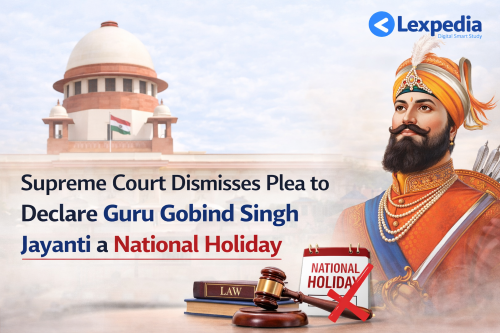
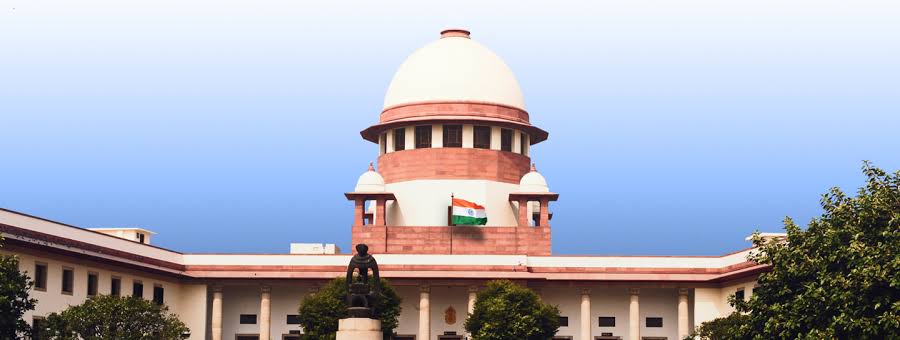
The Supreme Court of India has dismissed a Public Interest Litigation (PIL) seeking to declare Guru Gobind Singh Jayanti as a national public holiday across the country.
The matter was heard by a Bench comprising Justice Vikram Nath and Justice Sandeep Mehta, which refused to entertain the plea filed by the All India Shiromani Singh Sabha.
Key observations by the Court
While dismissing the petition, the Court made notable oral remarks:
- India already has numerous public and religious holidays
- There is no need to add more holidays
Justice Sandeep Mehta observed:
“India is a holy country of holidays. Let us not add to that.”
The Court indicated that it was not inclined to interfere in such policy matters.
What the petition sought
The PIL, filed in 2020, sought:
- Declaration of Guru Gobind Singh Jayanti (birth anniversary of the 10th Sikh Guru) as a national holiday
- A direction to the Union and State Governments to create a uniform policy for declaring public/gazetted holidays
The petitioner argued that:
- There is no clear legislation or uniform framework governing public holidays in India
- Holiday declarations are often made on a discretionary or ad-hoc basis
- Guru Gobind Singh is a national icon whose contributions justify nationwide recognition
Court’s response to policy argument
Despite the arguments, the Bench declined to issue directions, indicating that:
- The matter falls within the domain of the executive and policy-making authorities
- Courts should not interfere in decisions regarding declaration of holidays
The Court also declined the request to frame guidelines for public holidays.
Background and significance
Guru Gobind Singh, the tenth Sikh Guru, is widely revered for:
- Establishing the Khalsa Panth
- Promoting values of sacrifice, courage, and equality
The petition highlighted his importance as both a religious and national figure, but the Court maintained that recognition through holidays is a policy matter, not a judicial one.
Final outcome
- Plea dismissed by the Supreme Court
- No direction issued for declaring a national holiday
- No guidelines framed for public holiday policy
The Court stated that a detailed order may follow, but its position against adding more holidays was clear.
Significance of the ruling
This decision reinforces that:
- Courts generally avoid interference in policy matters like national holidays
- Executive discretion prevails in determining public holidays
- PILs seeking symbolic recognition may not succeed without a legal or constitutional mandate
सुप्रीम कोर्ट ने गुरु गोबिंद सिंह जयंती को राष्ट्रीय अवकाश घोषित करने की याचिका खारिज की
Supreme Court of India ने गुरु गोबिंद सिंह जयंती को राष्ट्रीय अवकाश घोषित करने की मांग वाली जनहित याचिका (PIL) को खारिज कर दिया।
यह मामला Justice Vikram Nath और Justice Sandeep Mehta की पीठ के समक्ष आया, जिसने याचिका को सुनने से इनकार कर दिया।
कोर्ट की प्रमुख टिप्पणी
याचिका खारिज करते समय अदालत ने कहा:
- भारत में पहले से ही बहुत अधिक छुट्टियां हैं
- नई छुट्टियां जोड़ने की आवश्यकता नहीं है
Justice संदीप मेहता ने टिप्पणी की:
“भारत छुट्टियों का देश है, इसमें और न जोड़ें।”
याचिका में क्या मांग की गई थी
याचिका में मांग की गई थी:
- गुरु गोबिंद सिंह जयंती को राष्ट्रीय अवकाश घोषित किया जाए
- केंद्र और राज्य सरकारों को सार्वजनिक छुट्टियों के लिए एक समान नीति बनाने का निर्देश दिया जाए
याचिकाकर्ता ने तर्क दिया कि:
- भारत में छुट्टियों के निर्धारण के लिए कोई स्पष्ट कानून नहीं है
- यह प्रक्रिया अक्सर मनमानी (discretionary) होती है
- गुरु गोबिंद सिंह एक महान राष्ट्रीय व्यक्तित्व हैं
कोर्ट का रुख
सुप्रीम कोर्ट ने कहा कि:
- यह मामला नीतिगत (policy) निर्णय से जुड़ा है
- इस पर निर्णय लेना सरकार का कार्य है, न कि अदालत का
अदालत ने छुट्टियों के लिए दिशा-निर्देश बनाने से भी इनकार कर दिया।
महत्व
यह निर्णय स्पष्ट करता है कि:
- अदालतें नीतिगत मामलों में हस्तक्षेप से बचती हैं
- सार्वजनिक छुट्टियों का निर्धारण कार्यपालिका का अधिकार क्षेत्र है
- केवल भावनात्मक या प्रतीकात्मक आधार पर PIL स्वीकार नहीं की जाएगी