Bombay High Court Questions Legality of AI Tools Simulating Celebrity Personalities Without Consent
Lexpedia News · 5 March 2026 · 6 min read
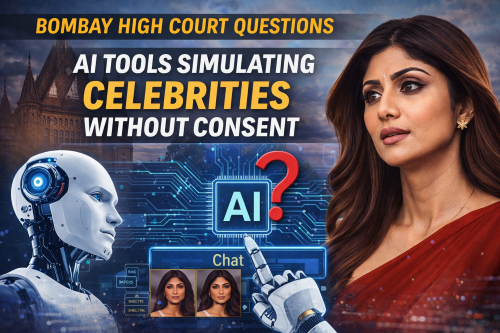
In a significant development concerning the intersection of artificial intelligence and personality rights, the Bombay High Court recently questioned the legality of AI tools that simulate the personalities of celebrities without their consent.
The observations were made by Justice Sharmila Deshmukh during the hearing of a personality rights lawsuit filed by Bollywood actor Shilpa Shetty Kundra against multiple platforms and entities allegedly misusing her identity online.
Court Questions AI Platforms
During the hearing, the Court expressed serious concern about platforms that allow users to interact with AI-generated versions of celebrities, including tools that allow users to “chat” with a simulated version of a famous personality.
Justice Deshmukh questioned the legal basis for such services and asked the counsel appearing for an AI chatbot platform:
“Without the permission of the personality, can you use an AI to chat with anybody in any manner? What is your right to do that?”
The judge further emphasized that these platforms knowingly generate artificial representations of real individuals, raising concerns about the misuse of a person’s name, likeness, voice and personality traits.
Background of the Case
The matter arises from a lawsuit filed by Shilpa Shetty alleging the misuse of her identity through deepfake videos, morphed images and AI-generated content circulated on various digital platforms.
Earlier in December 2025, a vacation bench of the Bombay High Court had directed the immediate removal of AI-generated and manipulated content using the actor’s image, voice and likeness without consent.
The current hearing involved broader relief sought by the actor, including restraining over 30 platforms, AI services and e-commerce websites from publishing or distributing content that misuses her identity.
AI-Generated Personality and Legal Concerns
During the proceedings, the Court noted that while users uploading photographs online may be one thing, AI systems deliberately generating synthetic personalities is a different legal issue.
Justice Deshmukh questioned how such AI tools could recreate a person’s identity without permission and make it available to the general public.
The Court observed that these practices could potentially violate personality rights, privacy rights and intellectual property protections, especially when used for commercial purposes.
Concerns Over Online Commentary on Court Proceedings
Apart from the AI issue, the Court also raised concerns about unverified commentary on YouTube regarding pending legal proceedings involving Shetty and her husband.
The judge observed that commentary on ongoing cases may spread misinformation and asked whether such videos could be verified for authenticity.
The Court remarked that news organizations are expected to provide authenticated reports of court proceedings, while unverified commentary on social media may harm the reputation of the parties involved.
Platforms Respond to Court
Counsel appearing for companies including Google, Tenor and the AI chatbot platform informed the Court that infringing URLs were being removed whenever they were brought to their notice.
However, Shetty’s legal team disputed this claim and argued that several infringing links continued to remain accessible online.
The Court allowed the actor to file an application alleging non-compliance if the allegedly infringing content remained active.
Intermediary Liability
During the hearing, GIF platform Tenor argued that it functions as an intermediary and cannot proactively monitor all uploaded content.
The Court directed Tenor to file an affidavit opposing the request for a blanket injunction.
Meanwhile, e-commerce platforms including Amazon and other marketplaces informed the Court that listings using Shetty’s name or image without permission had already been removed and that they would continue removing such listings when specific URLs are identified.
Growing Legal Debate Around AI and Personality Rights
The case highlights the growing legal challenges posed by AI-generated deepfakes and digital impersonation.
Courts in India have increasingly been called upon to protect celebrities and public figures from unauthorized use of their name, image, voice and personality traits in the digital space.
Legal experts believe that such cases could play a crucial role in shaping the future regulation of generative AI technologies and personality rights in India.
बिना अनुमति सेलिब्रिटी की पर्सनैलिटी की नकल करने वाले AI टूल्स की वैधता पर बॉम्बे हाईकोर्ट ने उठाए सवाल
आर्टिफिशियल इंटेलिजेंस और पर्सनैलिटी राइट्स से जुड़े एक महत्वपूर्ण मामले में बॉम्बे हाईकोर्ट ने उन AI टूल्स की वैधता पर सवाल उठाए हैं जो बिना अनुमति के सेलिब्रिटी की पर्सनैलिटी की नकल करते हैं।
यह टिप्पणी जस्टिस शर्मिला देशमुख ने बॉलीवुड अभिनेत्री शिल्पा शेट्टी कुंद्रा द्वारा दायर पर्सनैलिटी राइट्स मुकदमे की सुनवाई के दौरान की।
AI प्लेटफॉर्म्स पर कोर्ट के सवाल
सुनवाई के दौरान अदालत ने उन डिजिटल प्लेटफॉर्म्स पर चिंता व्यक्त की जो यूज़र्स को AI के माध्यम से किसी सेलिब्रिटी के वर्चुअल वर्जन से बातचीत (chat) करने की अनुमति देते हैं।
जस्टिस देशमुख ने AI चैटबॉट प्लेटफॉर्म के वकील से पूछा—
“पर्सनैलिटी की अनुमति के बिना क्या आप AI का इस्तेमाल करके किसी से भी इस तरह चैट कर सकते हैं? ऐसा करने का आपका क्या अधिकार है?”
अदालत ने कहा कि ऐसे प्लेटफॉर्म किसी व्यक्ति के नाम, आवाज़, चेहरा और पर्सनैलिटी की विशेषताओं का कृत्रिम रूप से निर्माण कर रहे हैं।
मामले की पृष्ठभूमि
यह मामला अभिनेत्री शिल्पा शेट्टी द्वारा दायर उस मुकदमे से जुड़ा है जिसमें उन्होंने आरोप लगाया कि उनकी पहचान का इस्तेमाल डीपफेक वीडियो, मॉर्फ्ड इमेज और AI-जनरेटेड कंटेंट में किया जा रहा है।
इससे पहले दिसंबर 2025 में बॉम्बे हाईकोर्ट की एक वेकेशन बेंच ने शेट्टी की इमेज, आवाज़ और समानता का इस्तेमाल करने वाले AI-जनरेटेड कंटेंट को तुरंत हटाने का आदेश दिया था।
30 से अधिक प्लेटफॉर्म्स के खिलाफ मांग
वर्तमान सुनवाई में शेट्टी ने 30 से अधिक प्लेटफॉर्म्स, AI सेवाओं और ई-कॉमर्स वेबसाइटों को उनके बारे में कंटेंट प्रकाशित करने से रोकने की मांग की है।
कोर्ट की चिंताएं
अदालत ने कहा कि यदि कोई यूज़र वेबसाइट पर फोटो अपलोड करता है तो वह अलग बात है, लेकिन AI का किसी व्यक्ति की पर्सनैलिटी का कृत्रिम निर्माण करना और उसे सार्वजनिक रूप से उपलब्ध कराना अलग प्रकार की कानूनी समस्या है।
कोर्ट ने कहा कि ऐसा करना पर्सनैलिटी राइट्स, प्राइवेसी और बौद्धिक संपदा अधिकारों का उल्लंघन हो सकता है।
YouTube पर अनवेरिफाइड कमेंट्री पर भी चिंता
अदालत ने शेट्टी और उनके पति से जुड़े लंबित मामलों पर YouTube पर हो रही अनवेरिफाइड कमेंट्री पर भी चिंता व्यक्त की।
जस्टिस देशमुख ने कहा कि कोर्ट की कार्यवाही की सही और प्रमाणित जानकारी केवल समाचार माध्यमों द्वारा दी जानी चाहिए, जबकि सोशल मीडिया पर गलत जानकारी फैलने का खतरा रहता है।
प्लेटफॉर्म्स का पक्ष
Google, Tenor और अन्य प्लेटफॉर्म्स के वकीलों ने अदालत को बताया कि जब भी उल्लंघन करने वाले लिंक की जानकारी दी जाती है, उन्हें हटा दिया जाता है।
हालांकि, शेट्टी के वकील ने इस दावे का विरोध किया।
अदालत ने शेट्टी को यह अनुमति दी कि यदि ऐसे लिंक अभी भी सक्रिय हैं तो वह नियमों के उल्लंघन का आवेदन दाखिल कर सकती हैं।