Supreme Court Dismisses Plea for Son's Eviction from Parental Property Under Senior Citizens Act
Lexpedia · 28 March 2025 · 4 min read

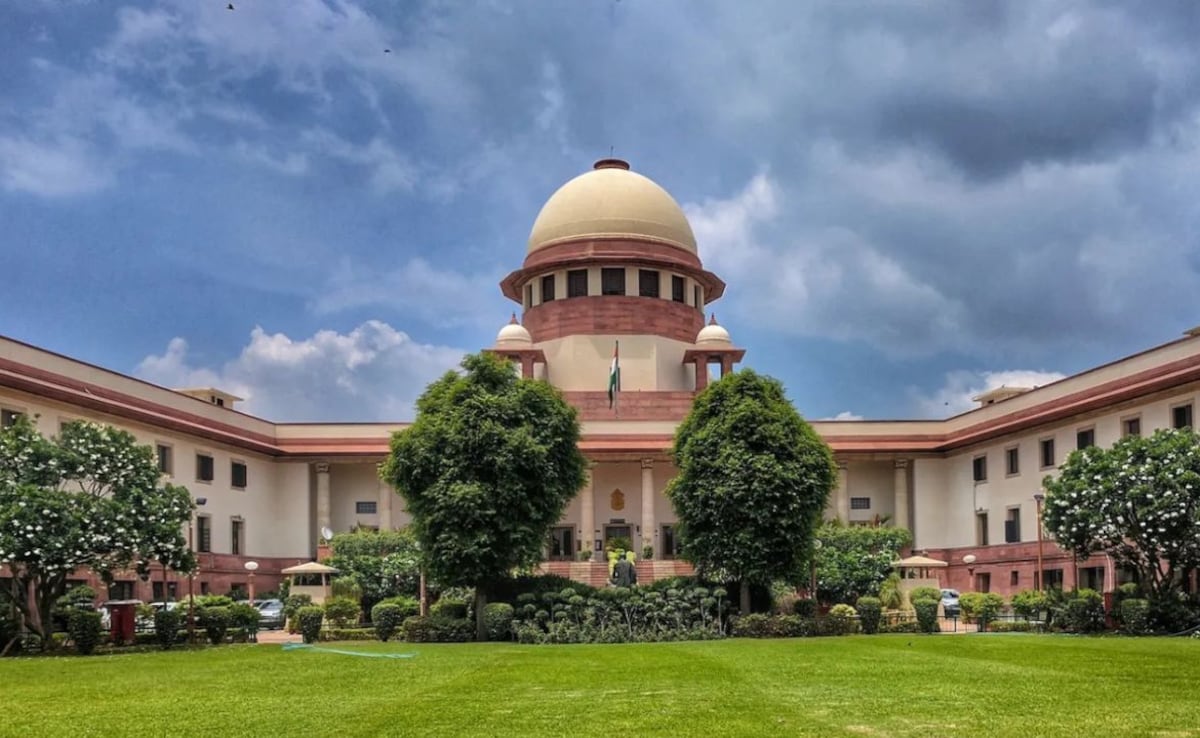
The Supreme Court has dismissed a plea from an elderly mother seeking the eviction of her son from their ancestral home. The Court clarified that the Maintenance and Welfare of Parents and Senior Citizens Act, 2007 (hereinafter "2007 Act") ensures maintenance for elderly parents but does not explicitly permit the automatic eviction of children from parental property.
Background of the Case
The case stems from a dispute between elderly parents and their son, following strained familial relations. The elderly mother approached the Supreme Court after the Appellate Tribunal had ordered the eviction of her son from their ancestral house, where he ran a utensils shop. The parents had been awarded monthly maintenance by the family court, but the father also sought his son's eviction, citing ill-treatment and neglect of his duties towards the elderly parents.
Court's Observations on the Senior Citizens Act
The Supreme Court Bench, consisting of Justices Pankaj Mithal and SVN Bhatti, held that the 2007 Act does not specifically provide for eviction orders. The Court emphasized that eviction orders under the Act are not automatic but may only be passed in exceptional circumstances to safeguard the well-being of senior citizens.
"The provisions of the Senior Citizens Act, nowhere specifically provide for drawing proceedings for eviction of persons from any premises owned or belonging to such a senior person," the Court observed.
Previous Precedents and Jurisdictional Clarification
The Court referred to earlier judgments in the cases of S. Vanitha vs. Commissioner, Bengaluru Urban District & Ors. (2021) and Urmila Dixit vs. Sunil Sharan Dixit & Ors. (2025), which held that Tribunals under the 2007 Act could order eviction if deemed necessary to protect the senior citizen. However, the Court made it clear that eviction is not mandatory in every case and must be backed by substantial reasoning.
Details of the Tribunal and High Court's Rulings
Initially, the Tribunal upheld the family court's maintenance order but did not direct the son's eviction. Instead, it allowed him to continue living in a designated part of the house (the shop and a room with a bathroom). When the Appellate Tribunal set aside this order and directed his eviction, the son appealed, and the High Court partially allowed the appeal, setting aside the eviction order but upholding other directions.
The mother, dissatisfied with the High Court's ruling, approached the Supreme Court, citing the Urmila Dixit case to argue that eviction was necessary for the protection of senior citizens.
Supreme Court's Final Ruling
Affirming the High Court's decision, the Supreme Court ruled that eviction under the 2007 Act is not automatic. It emphasized that the Appellate Tribunal's decision to order eviction lacked any substantial reasoning as to why eviction was necessary to protect the elderly parents. Additionally, the Court pointed out that the civil court was already handling a pending dispute regarding the son’s share of the property.
"The Appellate Court had not recorded any reason necessitating the eviction of the son or that in the facts and circumstances of the case, it is expedient to order eviction so as to ensure the protection of the senior citizen," the Court observed.
Consequently, the Supreme Court dismissed the appeal, stating that the 2007 Act's primary focus is on maintenance, not eviction.
Court's Reflection on Family Dynamics
In the opening remarks, the Court expressed concern over the increasing family disputes, particularly between elderly parents and their children. It lamented the erosion of the family unit in modern society, stating:
"In India we believe in 'Vasudhaiva Kutumbakam,' i.e., the earth, as a whole, is one family. However, today we are not even able to retain the unity in the immediate family, what to say of building one family for the world. The very concept of 'family' is being eroded and we are on the brink of one person one family," the Court noted.
Key Legal Takeaways
- Eviction under the 2007 Act is not automatic; it is not mandated by law and can only be passed in exceptional cases.
- The Tribunal has discretion to order eviction, but substantial justification is required.
- The Supreme Court emphasized that the 2007 Act focuses on maintenance and not the eviction of children from parental properties.
Case Title: SAMTOLA DEVI VERSUS STATE OF UTTAR PRADESH & ORS.