Supreme Court Dismisses PIL for Protection of Hindus in Bangladesh
Lexpedia · 25 February 2025 · 4 min read
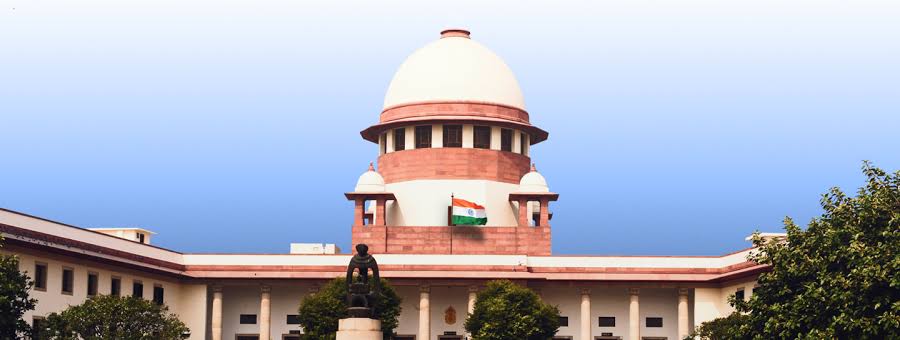
On February 24, 2025, the Supreme Court of India dismissed a Public Interest Litigation (PIL) filed by Rajesh Dhanda, seeking protection for Hindus in Bangladesh from violence against minority communities. The petition raised several legal and humanitarian issues concerning the situation of religious minorities in Bangladesh, particularly in relation to the Hindu community, which has been reportedly subjected to violence in the neighboring country. The court, however, ruled that it could not entertain the matter, citing issues of foreign policy and jurisdictional limits.
Details of the PIL
The PIL was filed by Rajesh Dhanda, who holds leadership roles in both the Bhagwan Jagannath Rath Yatra Mahotsav Committee (Ludhiana) and the ISKCON Mandir Steering Board. The petitioner sought judicial intervention for the following:
- Extension of Citizenship Deadline: The petition urged the Indian government to extend the deadline for Bangladesh-fled Hindus to apply for Indian citizenship, claiming that the deadline was too short for refugees seeking to escape violence.
- Aid for Hindu Minorities in Bangladesh: The PIL requested that the Ministry of External Affairs (MEA) and the Ministry of Home Affairs (MHA) provide humanitarian aid and assistance to the Hindu minorities in Bangladesh through the Indian High Commission stationed in Dhaka.
- International Pressure on Bangladesh: The petitioner also called for global diplomatic pressure on Bangladesh, invoking International Law, to end the atrocities against its Hindu minority community.
Court's Observations and Dismissal
The Supreme Court bench, consisting of Chief Justice Sanjiv Khanna and Justice Sanjay Kumar, immediately expressed reluctance to entertain the PIL. The CJI Sanjiv Khanna emphasized that the issues raised pertained to foreign affairs and the internal matters of Bangladesh, which were beyond the scope of the Indian judiciary. He stated:
“It pertains to foreign affairs... how can this court comment upon the affairs of another country? It would be so odd if this Court interferes with another country, that too a neighbor!”
The court noted that such matters, particularly involving diplomatic relations and international governance, were best handled by the Executive—specifically, the Indian government—and not by the judiciary.
The Role of Senior Advocate Mukul Rohatgi
Senior Advocate Mukul Rohatgi, appearing on behalf of the petitioner, recognized the concerns of the bench and chose to withdraw the PIL after the court’s advice. The bench recorded this development, noting that the petitioner could approach the Indian government for further assistance or action. The PIL was, therefore, dismissed as withdrawn, marking the end of this legal challenge in the Supreme Court.
Legal and Jurisdictional Considerations
The court’s decision rested heavily on principles of judicial restraint and the separation of powers. The judiciary, particularly in a case of this nature, refrained from commenting on or intervening in matters of foreign relations, which fall under the purview of the Executive branch. The Supreme Court's approach is in line with the traditional stance that the judiciary should not encroach upon the domain of foreign policy and international diplomacy, which are managed by the central government.
Furthermore, the PIL raised concerns about the status of Hindus in a foreign country, triggering the India-Bangladesh diplomatic relationship. While the Indian government is responsible for its foreign policies and humanitarian efforts, the Court maintained that it could not compel the government to act on such matters through judicial orders.
Key Highlights and Implications
- Refusal to Interfere: The Supreme Court declined to interfere in the foreign affairs of Bangladesh, reinforcing the idea that the judiciary should not comment on or influence matters involving international relations.
- Jurisdictional Boundaries: The judgment reinforces the notion that the Indian judiciary must respect the boundaries of diplomatic and foreign policy issues, which lie outside the purview of judicial intervention.
- Focus on Executive Action: The dismissal highlights the role of the government in addressing issues of international humanitarian concern, such as those involving the Bangladesh-fled Hindu refugees. The petitioner was advised to engage with the Ministry of External Affairs (MEA) and other relevant authorities for appropriate action.
- International Law and Diplomatic Pressure: The request for global pressure to be exerted on Bangladesh under International Law was significant, but the court noted that such actions require diplomatic channels and the involvement of governments, rather than judicial intervention.
Next Steps for the Petitioner
Following the withdrawal of the PIL, the petitioner, Rajesh Dhanda, may now seek recourse by approaching the Indian Government directly, possibly advocating for measures to provide humanitarian aid or extend the citizenship application deadline for Hindu refugees from Bangladesh. Dhanda could also explore international platforms to raise awareness of the situation, but the judicial route has now been closed.
Conclusion
The Supreme Court's decision underscores the complex nature of foreign relations and diplomatic concerns, where the judiciary's role is limited to ensuring that laws are followed, but not to engaging in matters of international diplomacy or foreign affairs. While the plight of Hindus in Bangladesh remains a humanitarian concern, the court ruled that the matter should be addressed through governmental channels rather than the judicial system.
This dismissal also emphasizes the importance of the separation of powers within the Indian legal and political system and the need for coordination between different branches of government to handle such sensitive international issues.