Supreme Court Directs States & UTs to Frame Rules Under Anand Marriage Act, 1909
Lexpedia · 22 September 2025 · 3 min read
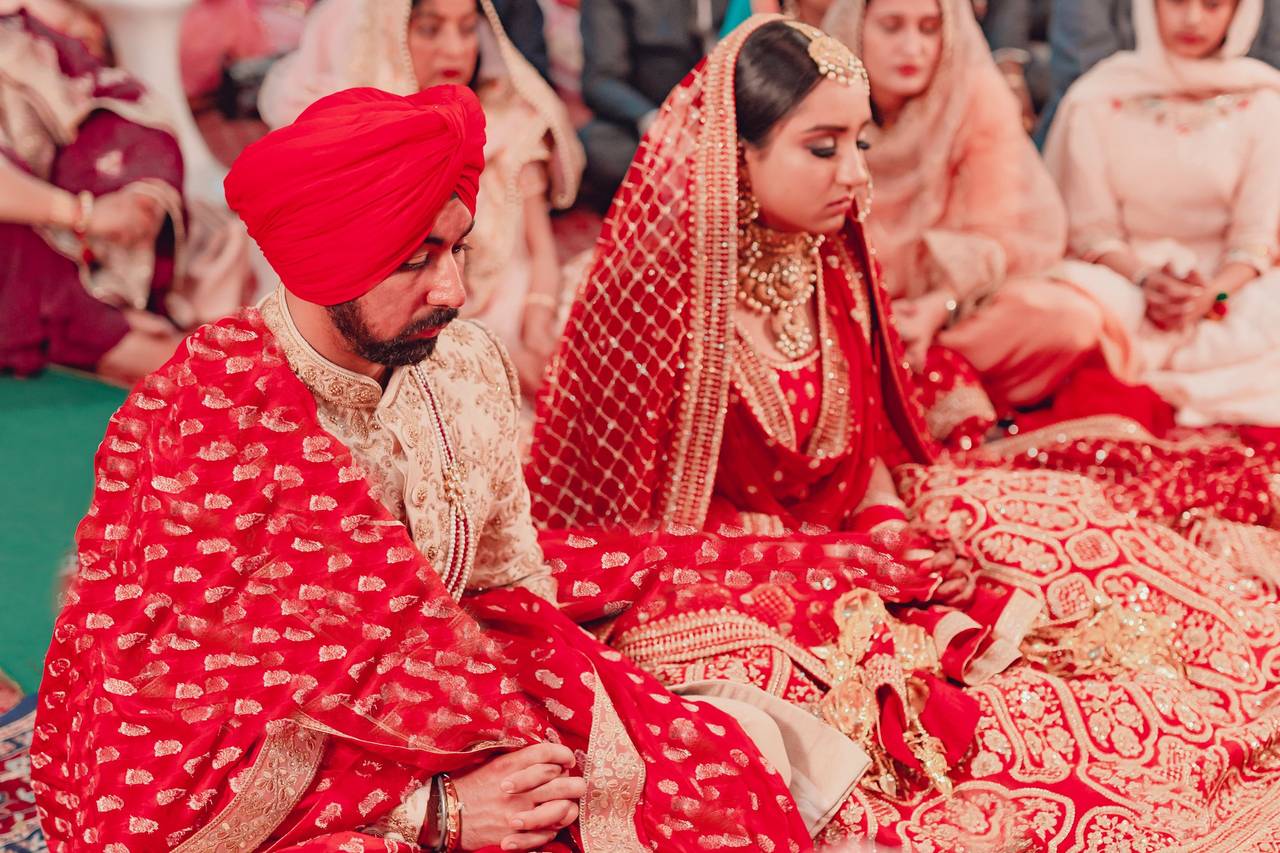
The Supreme Court directed 17 States and 7 Union Territories (UTs) to frame rules under the Anand Marriage Act, 1909 for the registration of Sikh marriages (Anand Karaj) within four months. The Court stressed that decades of non-implementation created unequal treatment of Sikh citizens across India, violating the principle of equality.
Court’s Observations on Constitutional Promise and Equality
"The fidelity of a constitutional promise is measured not only by the rights it proclaims, but by the institutions that make those rights usable. In a secular republic, the State must not turn a citizen's faith into either a privilege or a handicap. When the law recognises Anand Karaj as a valid form of marriage yet leaves no machinery to register it, the promise is only half kept. What remains is to ensure that the route from rites to record is open, uniform and fair."
Until state-specific rules are notified, the Court directed all States and UTs to immediately register Anand Karaj marriages under their existing general marriage laws (like the Special Marriage Act). The marriage certificate must explicitly mention the 'Anand Karaj' rite if the couple requests. This ensures no citizen is denied proof of marriage.
A bench of Justices Vikram Nath and Sandeep Mehta issued specific, time-bound directives to operationalize the Anand Marriage Act, 1909, which was amended in 2012 to include provisions for Sikh marriage registration.
The Court heard a writ petition filed by Amanjot Singh Chadha, highlighting hardship faced by Sikh couples due to non-uniform implementation of the law. Some states had framed necessary rules, many had not, creating discriminatory effects based on location.
-
Section 6 of the Act (inserted in 2012) imposes a mandatory statutory duty on States to create a registration mechanism for Sikh marriages under Anand Karaj.
-
The Court rejected arguments claiming the duty was discretionary or dependent on the Sikh population size.
-
While non-registration does not invalidate a marriage, a marriage certificate is critical for rights related to inheritance, succession, maintenance, insurance, and spousal benefits, especially protecting women and children.
-
“In a secular framework that respects religious identity while ensuring civic equality, the law must provide a neutral and workable route by which marriages solemnised by Anand Karaj are recorded and certified on the same footing as other marriages.”
Directions Issued by the Supreme Court
-
Rule Notification: Every respondent that has not yet notified rules under Section 6 must do so within four months. These rules shall be published in the Official Gazette and laid before the State Legislature per Section 6(4).
-
Interim Registration: Until such rules are notified, marriages solemnised by Anand Karaj shall be registered under prevailing marriage laws without discrimination. On request, the certificate must mention the marriage was solemnised by Anand Karaj.
-
Existing Rules: States/UTs that have already notified rules must continue them and, within three months, issue clarificatory circulars to registering authorities, publish applicable forms, fees, documents, and timelines, and ensure certified extracts' availability. No additional or duplicate registrations shall be required.
-
Nodal Officer Appointment: Every respondent shall designate a Secretary-level Nodal Officer within two months to oversee compliance, issue administrative directions, and address grievances regarding Anand Karaj marriage registrations.
-
Union of India Role: The Union of India will act as the coordinating authority, circulating model rules within two months to States/UTs seeking guidance and compiling a consolidated status report within six months. This report will be presented to the Court and published online.
-
No Refusal Without Reason: No application for registration or certified extract shall be refused solely because rules under Section 6 have not been notified. Any refusal must be reasoned in writing and remain subject to legal remedies.
Case Title: AMANJOT SINGH CHADHA VERSUS UNION OF INDIA & ORS.