SC Urges Centre, Delhi Govt to Set Up Fast-Track Courts for Gangster Cases
Lexpedia · 25 July 2025 · 4 min read
"Gangsters must be dealt with ruthlessly, but lawfully," says Justice Surya Kant
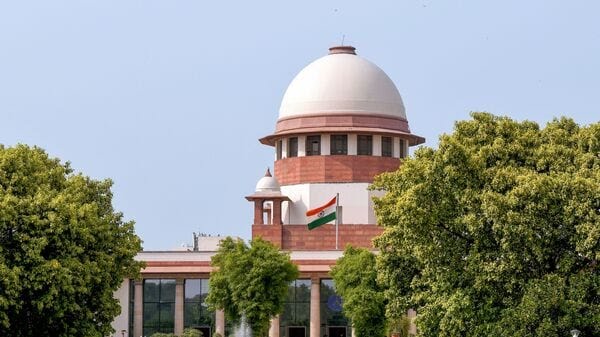
Expressing deep concern over the growing pendency of criminal trials involving gangsters and the chilling effect of protracted litigation, the Supreme Court of India on Wednesday urged the Union of India and the Delhi Government to consider establishing dedicated fast-track courts for speedy adjudication of gangster-related cases in the national capital.
A bench comprising Justices Surya Kant and Joymalya Bagchi made these observations during the hearing of a bail application in a case involving a hardened criminal facing over 55 criminal cases, including two convictions. The bench took serious note of the data presented by the Delhi Government indicating that 288 trials pertaining to gangster activity are pending in Delhi courts. Of these, charges have been framed in only 108 cases, and there exists a 3–4 year gap between framing of charges and the beginning of prosecution evidence.
Systemic Change Needed for Swift Justice
Justice Kant observed that the current judicial infrastructure is grossly inadequate to deal with such a serious volume of cases. The bench stressed the urgent need for additional courts exclusively handling gangster cases, operating on a day-to-day basis. Such an initiative, the Court said, would help in eliminating delays that allow hardened criminals to manipulate the justice system. “If a decision is taken by the competent authorities, it seems to us that all pending trials can be brought to an end,” Justice Kant said. The judges emphasized that only by creating dedicated judicial posts, allocating exclusive courtrooms, and streamlining trial procedure including stricter norms for adjournments and compulsory defense appearances can the justice system break the cycle of endless pendency in criminal trials.
Justice Delayed Weakens the Rule of Law
Referring to the disturbing figures provided by the Delhi government, Justice Kant remarked: “Only 25% of these cases have reached the prosecution evidence stage. That means 75% of cases are still in queue. When will this end? Even the trial courts can’t answer that.” Justice Bagchi expressed dismay at how the prolonged timelines effectively paralyze justice delivery in such sensitive cases, saying: "The game plan is to protract the trial so that witnesses can be won over and ultimately an acquittal is secured. This is systemic abuse.”
Fast-Track Courts: Not Just Necessary, But Urgent
The bench urged the Centre and Delhi Government to sit together and determine the number of special courts required to dispose of 288 gangster trials within one year from the filing of chargesheets. The Court suggested the revival of the earlier concept of fast-track courts exclusively handling such cases. “If we have dedicated adjudicatory mechanisms for these cases, it will send a strong message. People will feel safer. Courts won’t be compelled to grant bail in the face of repeated offenses. There will be a chilling effect on gangsters,” Justice Kant observed. The Court also appreciated the State of Andhra Pradesh, which recently notified special courts for gang-related offenses, calling it a model for others to follow.
Witness Protection: "Need of the Hour"
Taking strong exception to the risks faced by witnesses, especially in gangster trials, Justice Bagchi questioned the adequacy of existing witness protection measures. “You can keep the undertrial in jail, but you can’t keep the witness in jail. He lives in society. If your eyes and ears don’t function, justice collapses. A daylight murder on Delhi’s streets, and due to lack of evidence, the man walks free this is what erodes public confidence in rule of law.” The Court stressed that protecting witnesses must be a key component of any plan to speed up gangster trials, noting that witness intimidation is rampant and directly undermines criminal prosecutions.
Rising Lawlessness in NCR
Justice Kant also drew attention to the rising lawlessness in areas around Delhi, particularly in the NCR belt including Sonipat, Jhajjar, Gurugram, and Faridabad, and asked rhetorically: “What is happening just outside the borders of Delhi? These areas have become hotbeds for criminal gangs. We cannot allow the rule of law to be eroded so blatantly.” Both judges agreed that gangsters must be dealt with "ruthlessly, but in accordance with law", and that there should be no misplaced sympathy in granting them bail simply due to pendency or procedural delays. The Court also pointed to the overwhelming burden faced by public prosecutors, lamenting that one prosecutor is often assigned up to 50 cases, making day-to-day trials impossible. “Unfortunately, our criminal justice system starts with arrest and ends with bail. There is no conviction, no trial. This has to change,” said Justice Bagchi.
Background
The present matter arose from a special leave petition filed by Mahesh Khatri @ Bholi, who had sought bail in an FIR registered under Sections 307 (attempt to murder) and 386 (extortion) of the IPC, as well as Sections 25 and 27 of the Arms Act. Khatri had 55 cases pending against him, including two where he had already been convicted. In February 2025, the Supreme Court had denied him bail due to the gravity of charges but directed the prosecution to explain why a mechanism for speedy trial was not already in place. Wednesday’s hearing was in continuation of that order.
Case Title: Mahesh Khatri @ Bholi vs. State NCT of Delhi