Delhi High Court Reassigns Excise Policy Case After Justice Swarana Kanta Sharma’s Withdrawal
Lexpedia News · 18 May 2026 · 7 min read
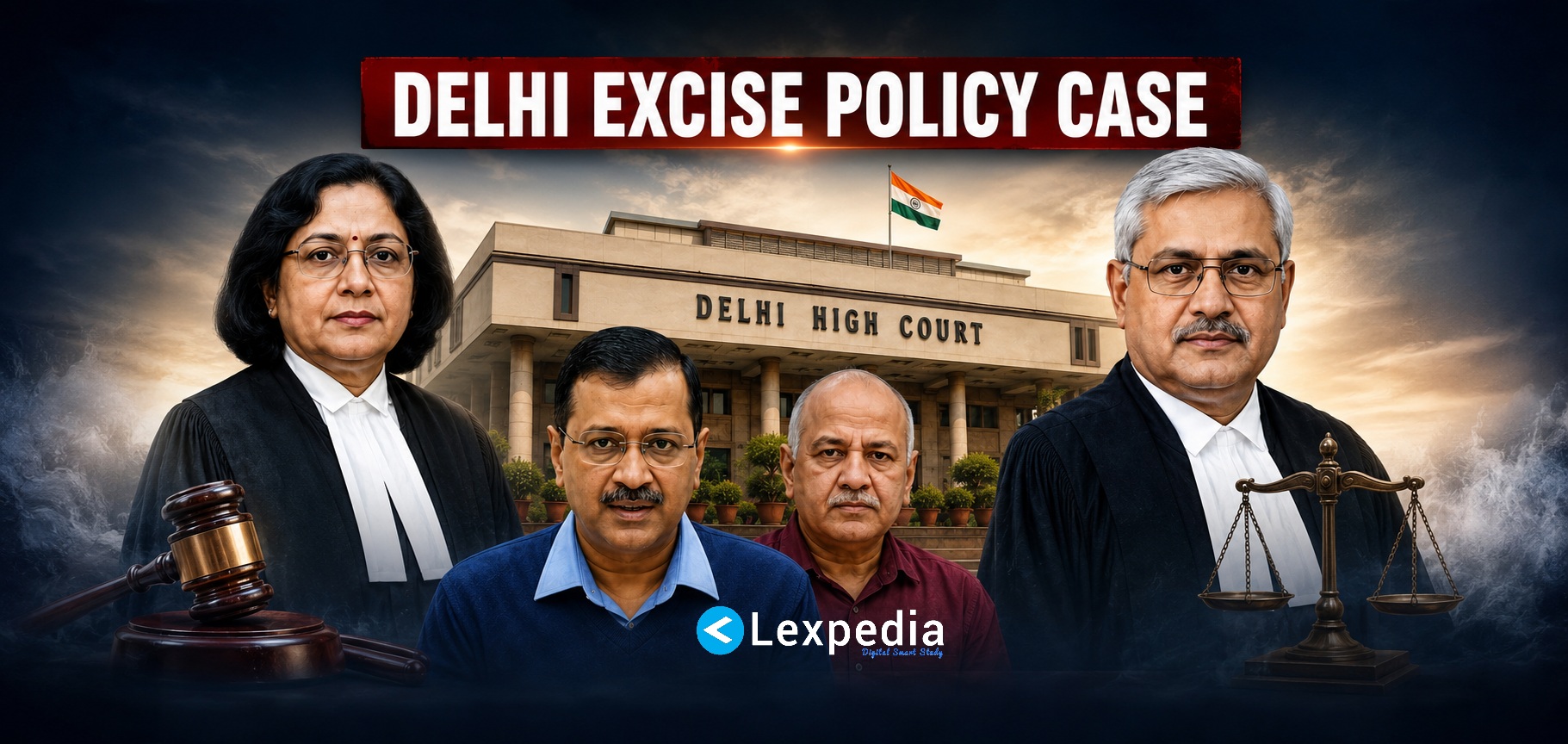
The politically sensitive Delhi Excise Policy case involving former Delhi Chief Minister Arvind Kejriwal, ex-Deputy Chief Minister Manish Sisodia, and several other accused persons will now be heard by Justice Manoj Jain of the Delhi High Court, following the withdrawal of Justice Swarana Kanta Sharma from the matter.
The reassignment comes amid a major controversy surrounding alleged defamatory social media campaigns and online criticism targeting Justice Sharma during the pendency of the proceedings. The case pertains to alleged corruption and irregularities in the formulation and implementation of the now-scrapped Delhi Excise Policy 2021-22, which has led to investigations by both the Central Bureau of Investigation (CBI) and the Enforcement Directorate (ED).
The present proceedings before the Delhi High Court arise from the challenge filed by the CBI against a trial court order that had discharged Kejriwal, Sisodia and certain other accused persons in the corruption case linked to the excise policy. The trial court had earlier questioned aspects of the investigation while granting relief to the accused, following which the CBI approached the High Court seeking reversal of the discharge order.
The matter had already witnessed significant courtroom developments after Kejriwal and Sisodia sought transfer of the case from Justice Sharma’s bench, expressing apprehensions regarding impartiality. However, Justice Sharma had firmly rejected the recusal request earlier, observing that the allegations against the judiciary were based on “conjectures and insinuations” and cautioning against attempts to convert courtrooms into “theatres of perception.”
The controversy intensified after several alleged social media posts and online comments were circulated against Justice Sharma during the hearing of the matter. During proceedings held last week, the judge observed in open court that defamatory and contemptuous content was being spread against her and the institution of the judiciary. She remarked that remaining silent in such circumstances would amount to failure of constitutional duty.
Subsequently, Justice Sharma initiated criminal contempt proceedings against certain individuals over the alleged online attacks and later stated that the excise policy case would now have to be placed before another bench. She clarified that the decision was not due to fear or pressure, but because continuation of the hearing after initiation of contempt proceedings could create allegations of personal bias or grievance.
According to the latest administrative listing and reports, the matter has now been assigned to Justice Manoj Jain for further hearing.
The excise policy case has remained one of the country’s most politically charged criminal litigations over the past two years. The investigation agencies have alleged that irregularities in the liquor policy caused wrongful gains to certain liquor businessmen and intermediaries, while AAP leaders have consistently denied wrongdoing and alleged political vendetta by the Union government.
Several top AAP leaders, including Arvind Kejriwal, Manish Sisodia and Sanjay Singh, were arrested at different stages of the investigation in cases registered by the CBI and ED. While many of them have subsequently obtained bail from constitutional courts, the litigation surrounding the policy continues across multiple forums, including trial courts, the Delhi High Court and the Supreme Court.
The reassignment of the matter to Justice Manoj Jain is expected to pave the way for continuation of hearings on the CBI’s challenge to the discharge order, while the separate contempt proceedings initiated by Justice Sharma regarding the alleged online attacks are expected to continue independently.
The developments have also triggered wider debate within legal circles regarding judicial independence, criticism of judges on social media, recusal jurisprudence, and the increasing influence of digital campaigns on ongoing judicial proceedings. Legal experts have pointed out that while judicial accountability remains essential in a constitutional democracy, targeted online vilification during pendency of cases raises serious concerns regarding institutional integrity and pressure on courts.
जस्टिस स्वर्ण कांता शर्मा के हटने के बाद दिल्ली आबकारी नीति मामला अब जस्टिस मनोज जैन सुनेंगे
पूर्व दिल्ली मुख्यमंत्री अरविंद केजरीवाल, पूर्व उपमुख्यमंत्री मनीष सिसोदिया और अन्य आरोपियों से जुड़े बहुचर्चित दिल्ली आबकारी नीति मामले की सुनवाई अब दिल्ली हाई कोर्ट के जस्टिस मनोज जैन करेंगे। यह बदलाव जस्टिस स्वर्ण कांता शर्मा द्वारा मामले की सुनवाई से स्वयं को अलग करने के बाद हुआ है।
यह पुनः आवंटन उस बड़े विवाद के बीच हुआ है जिसमें सुनवाई के दौरान जस्टिस शर्मा को निशाना बनाकर कथित मानहानिकारक सोशल मीडिया अभियान और ऑनलाइन टिप्पणियां की गईं। यह मामला अब रद्द की जा चुकी दिल्ली आबकारी नीति 2021-22 के निर्माण और क्रियान्वयन में कथित भ्रष्टाचार एवं अनियमितताओं से जुड़ा है, जिसकी जांच केंद्रीय अन्वेषण ब्यूरो (CBI) और प्रवर्तन निदेशालय (ED) दोनों कर रहे हैं।
दिल्ली हाई कोर्ट में वर्तमान कार्यवाही उस याचिका से संबंधित है जिसे CBI ने ट्रायल कोर्ट के उस आदेश के खिलाफ दायर किया था, जिसमें अरविंद केजरीवाल, मनीष सिसोदिया और कुछ अन्य आरोपियों को भ्रष्टाचार मामले में डिस्चार्ज कर दिया गया था। ट्रायल कोर्ट ने आरोपियों को राहत देते समय जांच प्रक्रिया के कुछ पहलुओं पर भी सवाल उठाए थे, जिसके बाद CBI ने हाई कोर्ट में चुनौती दी।
मामले ने उस समय और अधिक तूल पकड़ लिया जब केजरीवाल और सिसोदिया ने जस्टिस शर्मा की पीठ से मामले को स्थानांतरित करने की मांग की और निष्पक्षता को लेकर आशंका जताई। हालांकि, जस्टिस शर्मा ने पहले ही इस मांग को सख्ती से खारिज करते हुए कहा था कि न्यायपालिका के खिलाफ लगाए जा रहे आरोप “अनुमानों और संकेतों” पर आधारित हैं। उन्होंने यह भी कहा था कि अदालतों को “धारणाओं का मंच” नहीं बनाया जा सकता।
विवाद तब और बढ़ गया जब सुनवाई के दौरान जस्टिस शर्मा के खिलाफ कथित सोशल मीडिया पोस्ट और ऑनलाइन टिप्पणियां प्रसारित की जाने लगीं। पिछले सप्ताह हुई सुनवाई के दौरान न्यायाधीश ने खुली अदालत में कहा कि उनके और न्यायपालिका के खिलाफ मानहानिकारक तथा अवमाननापूर्ण सामग्री फैलाई जा रही है। उन्होंने कहा कि ऐसे मामलों में चुप रहना संवैधानिक कर्तव्य के प्रति विफलता होगी।
इसके बाद जस्टिस शर्मा ने कथित ऑनलाइन हमलों को लेकर कुछ व्यक्तियों के खिलाफ आपराधिक अवमानना कार्यवाही शुरू की और बाद में कहा कि आबकारी नीति मामले की सुनवाई अब किसी अन्य पीठ को करनी होगी। उन्होंने स्पष्ट किया कि यह निर्णय किसी डर या दबाव के कारण नहीं लिया गया, बल्कि इसलिए लिया गया ताकि आगे चलकर कोई पक्ष यह आरोप न लगाए कि उनके मन में व्यक्तिगत पूर्वाग्रह या शिकायत थी।
ताज़ा प्रशासनिक सूची और रिपोर्ट्स के अनुसार, यह मामला अब आगे की सुनवाई के लिए जस्टिस मनोज जैन को सौंप दिया गया है।
दिल्ली आबकारी नीति मामला पिछले दो वर्षों से देश के सबसे चर्चित और राजनीतिक रूप से संवेदनशील आपराधिक मुकदमों में से एक बना हुआ है। जांच एजेंसियों का आरोप है कि शराब नीति में अनियमितताओं के कारण कुछ कारोबारी समूहों और बिचौलियों को अनुचित लाभ पहुंचाया गया, जबकि आम आदमी पार्टी के नेताओं ने लगातार इन आरोपों से इनकार करते हुए इसे राजनीतिक प्रतिशोध बताया है।
इस मामले में अरविंद केजरीवाल, मनीष सिसोदिया और संजय सिंह सहित कई प्रमुख AAP नेताओं को जांच के विभिन्न चरणों में CBI और ED मामलों में गिरफ्तार किया गया था। हालांकि बाद में इनमें से कई नेताओं को संवैधानिक अदालतों से जमानत मिल गई, लेकिन आबकारी नीति से जुड़ी कानूनी लड़ाई अब भी ट्रायल कोर्ट, दिल्ली हाई कोर्ट और सुप्रीम कोर्ट सहित विभिन्न मंचों पर जारी है।
मामले को जस्टिस मनोज जैन को सौंपे जाने के बाद अब CBI द्वारा डिस्चार्ज आदेश को चुनौती देने वाली याचिका पर आगे सुनवाई होने की संभावना है, जबकि जस्टिस शर्मा द्वारा शुरू की गई अलग अवमानना कार्यवाही स्वतंत्र रूप से जारी रहेगी।
इस घटनाक्रम ने न्यायपालिका की स्वतंत्रता, सोशल मीडिया पर न्यायाधीशों की आलोचना, पुनर्विचार (recusal) से संबंधित न्यायशास्त्र और चल रही न्यायिक कार्यवाहियों पर डिजिटल अभियानों के प्रभाव को लेकर कानूनी जगत में नई बहस छेड़ दी है। विशेषज्ञों का मानना है कि जहां लोकतंत्र में न्यायिक जवाबदेही आवश्यक है, वहीं लंबित मामलों के दौरान न्यायाधीशों के खिलाफ लक्षित ऑनलाइन अभियानों से संस्थागत गरिमा और न्यायिक स्वतंत्रता पर गंभीर प्रश्न खड़े होते हैं।