Centre Opposes Reducing Age of Consent Under POCSO in Supreme Court Submission
Lexpedia · 29 July 2025 · 3 min read
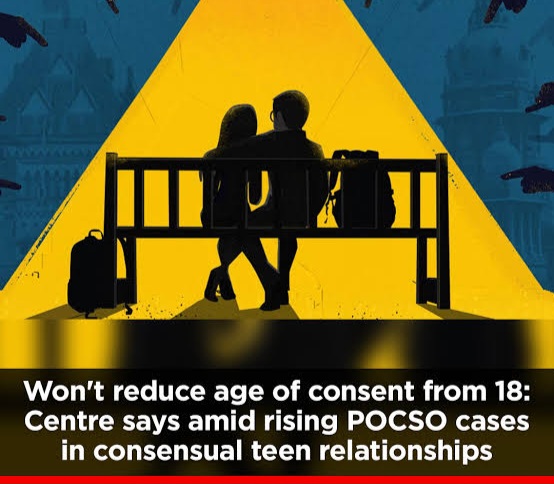
In a Public Interest Litigation (PIL) seeking reforms in the criminal justice system’s handling of sexual offences, the Union of India has firmly opposed any suggestion to reduce the statutory age of consent from 18 years under Indian law. The submissions were made before the Supreme Court in the case titled Nipun Saxena v. Union of India (Writ Petition (Civil) No. 565 of 2012).
Amicus Suggestion Opposed
The Government specifically disagreed with Senior Advocate Indira Jaising, who, in her capacity as Amicus Curiae, had recommended that the Court “read in” an exception to exclude consensual sexual activity between adolescents aged 16 to 18 from the scope of the POCSO Act. The aim of the suggestion was to prevent the criminalisation of voluntary adolescent relationships.
Centre’s Key Argument: No Dilution of Protection
The Centre asserted that introducing any such exception or reducing the age of consent would dilute the protective core of child sexual abuse laws. It stressed that the current age threshold of 18 years is rooted in a consistent legislative framework, grounded in constitutional principles, international obligations, and child protection goals.
The Government called this threshold a “bright-line rule”, stating that it provides an unambiguous zone of protection for minors, who are deemed incapable of giving informed consent to sexual activity due to their developmental stage.
Judicial Discretion, Not Legislative Exception
While acknowledging that courts may exercise judicial discretion in individual cases involving adolescent relationships, the Centre strongly opposed creating statutory exceptions. It argued that once exceptions are codified, it would weaken the deterrent nature of child protection laws like POCSO.
Impact on Victims and Risk of Misuse
The Centre warned that lowering the age of consent would result in re-victimisation of child survivors during the legal process. It would shift the trial’s focus from the accused to the credibility of the victim’s consent, thereby undermining the protective purpose of child-centric laws. In its words, “Such a shift would inevitably lead to the re-victimization of the child by shifting the focus from the unlawful conduct of the accused to the credibility of the child's version.”
Legislative History and Rejected Proposals
The Government noted that Parliament has consistently rejected proposals to reduce the age of consent:
-
The Justice Verma Committee (2013) suggested retaining 16 as the age of consent, but Parliament set it at 18 years under the Criminal Law (Amendment) Act.
-
The 240th Parliamentary Standing Committee Report (2011) and the 167th Report (2012) explicitly rejected recognising consent of minors.
-
The 243rd Law Commission Report (2023) warned that lowering the age of consent would make POCSO a “paper law”, harming the fight against child marriage and trafficking.
International and Constitutional Backing
The submission cited India’s international obligations under the UN Convention on the Rights of the Child (UNCRC) and the International Covenant on Civil and Political Rights (ICCPR), both of which define a child as someone under 18 years and mandate strong protections against exploitation.
It also highlighted constitutional concerns, stating that reducing the age would violate Articles 14 and 21 by treating victims with greater suspicion than offenders, thereby violating their right to dignity and equal protection.
Fresh Start for Offenders, Not Less Protection for Victims
The Centre also invoked the Juvenile Justice Act, 2015, pointing to its “fresh start” principle and confidentiality provisions for child offenders. It argued that while the law offers second chances to children in conflict with law, it must not reduce protections available to child victims. Summarising its stance, the Government said that any reduction in the age of consent would represent a regressive step, undermining decades of progress in child protection law. “Any departure from this standard would open the door to child abuse, coercion, and the misuse of consent in exploitative contexts,” the Centre stated.